












Hybrid catalysis for enantioselective Baeyer–Villiger oxidation and stereoselective epoxidation: a Cp*Ir complex to fuel FMN and FAD reduction for flavoprotein monooxygenase modules
Literature Information
Publication Date
2023-08-04
DOI
10.1039/D3RE00411B
Impact Factor
4.239
Authors
Robert Röllig, Caroline E. Paul, Pierre Rousselot-Pailley, Véronique Alphand
View Original
Abstract
Taking advantage of the unique properties of two-component flavo-monooxygenases and the ability of [Cp*Ir(bpy-OMe)H]+ to transfer hydrides to reduce flavins, we extended the scope of the pH- and oxygen–robust iridium(III)-complex to drive the enzymatic reaction of a FMN-dependent Baeyer–Villiger monooxygenase and a FAD-dependent styrene monooxygenase (respectively FPMO Group C and E), using formic acid as H-donor for NADH recycling.
Related Literature
Controllable nitrogen-doping of nanoporous carbons enabled by coordination frameworks
Wei Zhang, Saiyu Bu, Qinghong Yuan, Ming Hu
2018-12-13
Paper
DOI: 10.1039/C8TA09817D
Rational design of water-dispersible and biocompatible nanoprobes with H2S-triggered NIR emission for cancer cell imaging
Hengyan Liu, Ge Xu, Tianli Zhu, Rongchen Wang, Jiahui Tan, Chunchang Zhao, Xianfeng Gu
2020-06-29
Communication
DOI: 10.1039/D0TB00173B
Graphene nanosheets, carbon nanotubes, graphite, and activated carbon as anode materials for sodium-ion batteries
Xu-Feng Luo, Cheng-Hsien Yang, You-Yu Peng, Nen-Wen Pu, Ming-Der Ger, Chien-Te Hsieh, Jeng-Kuei Chang
2015-04-15
Paper
DOI: 10.1039/C5TA00727E
Effect of boron incorporation on the bioactivity, structure, and mechanical properties of ordered mesoporous bioactive glasses
Leonie Deilmann, Oliver Winter, Bianca Cerrutti, Henrik Bradtmüller, Christopher Herzig, Andreas Limbeck, Olaf Lahayne, Christian Hellmich, Dominik Eder
2020-01-09
Paper
DOI: 10.1039/C9TB01805K
Hollow double-layered polymer nanoparticles with S-nitrosothiols for tumor targeted therapy
Tuanwei Liu, Jingjing Hu, Xiaoye Ma, Bing Kong, Jilan Wang, Zhide Zhang, Dian-Shun Guo, Xinlin Yang
2017-08-17
Paper
DOI: 10.1039/C7TB01715D
In situ characterisation of phytohormones from wounded Arabidopsis leaves using desorption electrospray ionisation mass spectrometry imaging
Asta Žukauskaitė, Ivan Petřík, Aleš Pěnčík, Martin Hönig, Jiří Grúz, Jitka Široká, Ondřej Novák
2021-02-25
Paper
DOI: 10.1039/D0AN02118K
Signal enhancement and low oxidation potentials for miniaturized ECL biosensors via N-butyldiethanolamine
Stefanie Kirschbaum-Harriman, Michael Mayer, Axel Duerkop, Thomas Hirsch
2017-05-15
Paper
DOI: 10.1039/C7AN00261K
Development of a PCR-free electrochemical point of care test for clinical detection of methicillin resistant Staphylococcus aureus (MRSA)
H. Schulze, G. Henihan, A. Hardie, I. Ciani, G. Giraud, J. G. Terry, A. J. Walton, R. Pethig, P. Ghazal, K. E. Templeton, A. R. Mount, T. T. Bachmann
2013-10-04
Paper
DOI: 10.1039/C3AN01319G
Laminin-511 and recombinant vitronectin supplementation enables human pluripotent stem cell culture and differentiation on conventional tissue culture polystyrene surfaces in xeno-free conditions
Ya-Chu Liu, Lee-Kiat Ban, Hsin-Ting Lee, Yu-Tang Chang, Yun-Ting Lin, Her-Young Su, Shih-Tien Hsu
2021-09-24
Paper
DOI: 10.1039/D1TB01878G
You might also like
Compound Q&A
What is the market or research trend for N-(4-Methoxybenzyl)-2-pyridinamine (CAS: 52818-63-0)?
N-(4-Methoxybenzyl)-2-pyridinamine (CAS: 52818-63-0) is increasingly being used ...
52818-63-0N-(4-Methoxybenzyl)-...
Compound Q&A
What precautions should be taken when handling Ethyl 4-(2-chlorophenyl)-1,3-thiazole-2-carboxylate (CAS: 1050507-06-6)?
When handling Ethyl 4-(2-chlorophenyl)-1,3-thiazole-2-carboxylate, appropriate p...
1050507-06-6Ethyl 4-(2-chlorophe...
Compound Q&A
What regulatory guidelines apply to diethyldiselane (CAS: 628-39-7)?
Diethyldiselane (CAS: 628-39-7) is classified under the Globally Harmonized Syst...
628-39-7Diethyldiselane
Compound Q&A
What is the market or research trend for oxocopper (CAS: 12053-18-8)?
The market for oxocopper (CAS: 12053-18-8) is primarily driven by its use in cat...
12053-18-8oxocopper; oxo-(oxoc...
Compound Q&A
What is the market or research trend for 5-{[(2-Methyl-2-propanyl)oxy]carbonyl}-5-azaspiro[2.4]heptane-7-carboxylic acid?
The market for 5-{[(2-Methyl-2-propanyl)oxy]carbonyl}-5-azaspiro[2.4]heptane-7-c...
1268519-54-55-{[(2-Methyl-2-prop...
Compound Q&A
What is 2-(1-Pyrrolidinyl)-4-pyridinamine (CAS: 35981-63-6)?
2-(1-Pyrrolidinyl)-4-pyridinamine is a chemical compound with the CAS number 359...
35981-63-62-(1-Pyrrolidinyl)-4...
Compound Q&A
What are the physical and chemical properties of 2-(3-Pyridinyl)-1-azabicyclo[2.2.2]octane (CAS: 91556-75-1)?
2-(3-Pyridinyl)-1-azabicyclo[2.2.2]octane (CAS: 91556-75-1) is a crystalline sol...
91556-75-12-(3-Pyridinyl)-1-az...
Compound Q&A
How is (S)-Alpha-allyl-proline hydrochloride (CAS: 129704-91-2) typically synthesized?
(S)-Alpha-allyl-proline hydrochloride is usually synthesized via a Wittig reacti...
129704-91-2(S)-Alpha-allyl-prol...
Compound Q&A
What is 3-Methyl-1,2-oxazole-5-carboxylic acid (CAS: 4857-42-5)?
3-Methyl-1,2-oxazole-5-carboxylic acid (CAS: 4857-42-5) is an organic compound w...
4857-42-53-Methyl-1,2-oxazole...
Compound Q&A
How is Lys-SMCC-DM1 (CAS: 1281816-04-3) typically synthesized?
Lys-SMCC-DM1 is synthesized via a multi-step process involving the coupling of S...
1281816-04-3Lys-SMCC-DM1
Source Journal
Reaction Chemistry & Engineering

CiteScore:
0
Self-citation Rate:
8.8%
Articles per Year:
284
Reaction Chemistry & Engineering is an interdisciplinary journal reporting cutting-edge research focused on enhancing the understanding and efficiency of reactions. Reaction engineering leverages the interface where fundamental molecular chemistry meets chemical engineering and technology. Challenges in chemistry can be overcome by the application of new technologies, while engineers may find improved solutions for process development from the latest developments in reaction chemistry. Reaction Chemistry & Engineering is a unique forum for researchers whose interests span the broad areas of chemical engineering and chemical sciences to come together in solving problems of importance to wider society. All papers should be written to be approachable by readers across the engineering and chemical sciences. Papers that consider multiple scales, from the laboratory up to and including plant scale, are particularly encouraged.
Recommended Compounds
![(2R,6S)-6-[(Benzyloxy)methyl]-4-{[(2-methyl-2-propanyl)oxy]carbonyl}-2-morpholinecarboxylic acid structure](https://static.chemtradehub.com/structs/109/1093085-91-6-3382.webp "(2R,6S)-6-[(Benzyloxy)methyl]-4-{[(2-methyl-2-propanyl)oxy]carbonyl}-2-morpholinecarboxylic acid structure")
(2R,6S)-6-[(Benzyloxy)methyl]-4-{[(2-methyl-2-propanyl)oxy]carbonyl}-2-morpholinecarboxylic acid
CAS Number:
1093085-91-6
Molecular Formula:
C18H25NO6

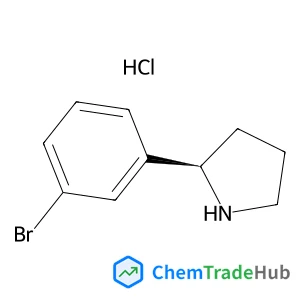
(2R)-2-(3-Bromophenyl)pyrrolidine hydrochloride (1:1)
CAS Number:
1391550-13-2
Molecular Formula:
C10H13BrClN
Recommended Suppliers





Disclaimer
This page provides academic journal information for reference and research purposes only. We are not affiliated with any journal publishers and do not handle publication submissions. For publication-related inquiries, please contact the respective journal publishers directly.
If you notice any inaccuracies in the information displayed, please contact us at support@chemtradehub.com. We will promptly review and address your concerns.