












Graphene nanosheets, carbon nanotubes, graphite, and activated carbon as anode materials for sodium-ion batteries
Literature Information
Publication Date
2015-04-15
DOI
10.1039/C5TA00727E
Impact Factor
12.732
Authors
Xu-Feng Luo, Cheng-Hsien Yang, You-Yu Peng, Nen-Wen Pu, Ming-Der Ger, Chien-Te Hsieh, Jeng-Kuei Chang
View Original
Abstract
The electrochemical sodium-ion storage properties of graphene nanosheets (GNSs), carbon nanotubes (CNTs), mesocarbon microbeads (MCMBs), and activated carbon (AC) are investigated. An irreversible oxidation occurs for the AC electrode during desodiation, limiting its use in sodium-ion batteries. The MCMB electrode shows a negligible capacity (∼2 mA h g−1), since the graphitic structure has a low surface area and is thus not capable of storing a sufficient amount of Na+. In contrast, the CNT and GNS electrodes exhibit reversible capacities of 82 and 220 mA h g−1, respectively, at a charge–discharge rate of 30 mA g−1. The high electro-adsorption/desorption area, large number of Na+ entrance/exit sites, and a large d-spacing of GNSs contribute to their superior Na+ storage capacity. At a high rate of 5 A g−1, the GNS electrode still delivers a capacity of as high as 105 mA h g−1, indicating great high-power ability. The charge storage mechanism of the electrode is examined using an ex situ X-ray diffraction technique.
Related Literature
Total synthesis of the thiopeptide amythiamicin D
Rachael A. Hughes, Stewart P. Thompson, Lilian Alcaraz, Christopher J. Moody
2004-03-16
Communication
DOI: 10.1039/B401580K
Coordinative and electrostatic forces in action: from the design of differential chromogenic anion sensors to selective carboxylate recognition
Beatriz García-Acosta, Xavier Albiach-Martí, Eduardo García, Luis Gil, Ramón Martínez-Máñez, Knut Rurack, Félix Sancenón, Juan Soto
2004-02-26
Communication
DOI: 10.1039/B314997H
Peptide-coated CdS quantum dots for the optical detection of copper(ii) and silver(i)‡
Kerim M. Gattás-Asfura, Roger M. Leblanc
2003-09-25
Communication
DOI: 10.1039/B308991F
High efficiency photocurrent generation by two-dimensional mixed J-aggregates of cyanine dyes
Mitsuo Kawasaki, Satoshi Aoyama
2004-03-19
Communication
DOI: 10.1039/B400071D
First example of high loaded polymer-stabilized nanoclusters immobilized on hydrotalcite: effects in alkynehydrogenation
Jules C. A. A. Roelofs, Peter H. Berben
2004-03-16
Communication
DOI: 10.1039/B400737A
Noncovalent attachment of oxidenanoparticles onto carbon nanotubes using water-in-oil microemulsions
Jing Sun, Lian Gao, Mikio Iwasa
2004-02-27
Communication
DOI: 10.1039/B400817K
A new class of C1-symmetric monosulfoximine ligands for enantioselective hetero Diels–Alder reactions
Carsten Bolm, Marinella Verrucci, Oliver Simic, Pier Giorgio Cozzi, Gerhard Raabe, Hiroaki Okamura
2003-10-13
Communication
DOI: 10.1039/B309556H
Facilitation of addition–elimination reactions in pyrimidines and purines using trifluoroacetic acid in trifluoroethanol
Hayley J. Whitfield, Roger J. Griffin, Ian R. Hardcastle, Andrew Henderson, Jerome Meneyrol, Veronique Mesguiche, Kerry L. Sayle, Bernard T. Golding
2003-10-14
Communication
DOI: 10.1039/B308948G
Synthesis of nearly monodisperse polystyrene–polypeptideblock copolymersviapolymerisation of N-carboxyanhydrides
Ivaylo Dimitrov, Helmut Schlaad
2003-10-17
Communication
DOI: 10.1039/B308990H
On the relative migratory aptitudes of carbon and heteroatoms in borate complexes. A surprising α-thia effect
Jonathan M. Stoddard, Kenneth J. Shea
2004-02-27
Communication
DOI: 10.1039/B311292F
You might also like
Compound Q&A
What is the market or research trend for N-(4-Methoxybenzyl)-2-pyridinamine (CAS: 52818-63-0)?
N-(4-Methoxybenzyl)-2-pyridinamine (CAS: 52818-63-0) is increasingly being used ...
52818-63-0N-(4-Methoxybenzyl)-...
Compound Q&A
What precautions should be taken when handling Ethyl 4-(2-chlorophenyl)-1,3-thiazole-2-carboxylate (CAS: 1050507-06-6)?
When handling Ethyl 4-(2-chlorophenyl)-1,3-thiazole-2-carboxylate, appropriate p...
1050507-06-6Ethyl 4-(2-chlorophe...
Compound Q&A
What regulatory guidelines apply to diethyldiselane (CAS: 628-39-7)?
Diethyldiselane (CAS: 628-39-7) is classified under the Globally Harmonized Syst...
628-39-7Diethyldiselane
Compound Q&A
What is the market or research trend for oxocopper (CAS: 12053-18-8)?
The market for oxocopper (CAS: 12053-18-8) is primarily driven by its use in cat...
12053-18-8oxocopper; oxo-(oxoc...
Compound Q&A
What is the market or research trend for 5-{[(2-Methyl-2-propanyl)oxy]carbonyl}-5-azaspiro[2.4]heptane-7-carboxylic acid?
The market for 5-{[(2-Methyl-2-propanyl)oxy]carbonyl}-5-azaspiro[2.4]heptane-7-c...
1268519-54-55-{[(2-Methyl-2-prop...
Compound Q&A
What is 2-(1-Pyrrolidinyl)-4-pyridinamine (CAS: 35981-63-6)?
2-(1-Pyrrolidinyl)-4-pyridinamine is a chemical compound with the CAS number 359...
35981-63-62-(1-Pyrrolidinyl)-4...
Compound Q&A
What are the physical and chemical properties of 2-(3-Pyridinyl)-1-azabicyclo[2.2.2]octane (CAS: 91556-75-1)?
2-(3-Pyridinyl)-1-azabicyclo[2.2.2]octane (CAS: 91556-75-1) is a crystalline sol...
91556-75-12-(3-Pyridinyl)-1-az...
Compound Q&A
How is (S)-Alpha-allyl-proline hydrochloride (CAS: 129704-91-2) typically synthesized?
(S)-Alpha-allyl-proline hydrochloride is usually synthesized via a Wittig reacti...
129704-91-2(S)-Alpha-allyl-prol...
Compound Q&A
What is 3-Methyl-1,2-oxazole-5-carboxylic acid (CAS: 4857-42-5)?
3-Methyl-1,2-oxazole-5-carboxylic acid (CAS: 4857-42-5) is an organic compound w...
4857-42-53-Methyl-1,2-oxazole...
Compound Q&A
How is Lys-SMCC-DM1 (CAS: 1281816-04-3) typically synthesized?
Lys-SMCC-DM1 is synthesized via a multi-step process involving the coupling of S...
1281816-04-3Lys-SMCC-DM1
Source Journal
Journal of Materials Chemistry A

CiteScore:
19.5
Self-citation Rate:
4.7%
Articles per Year:
2211
Journal of Materials Chemistry A, B & C cover high quality studies across all fields of materials chemistry. The journals focus on those theoretical or experimental studies that report new understanding, applications, properties and synthesis of materials. The journals have a strong history of publishing quality reports of interest to interdisciplinary communities and providing an efficient and rigorous service through peer review and publication. The journals are led by an international team of Editors-in-Chief and Associate Editors who are all active researchers in their fields. Journal of Materials Chemistry A, B & C are separated by the intended application of the material studied. Broadly, applications in energy and sustainability are of interest to Journal of Materials Chemistry A, applications in biology and medicine are of interest to Journal of Materials Chemistry B, and applications in optical, magnetic and electronic devices are of interest to Journal of Materials Chemistry C. More than one Journal of Materials Chemistry journal may be suitable for certain fields and researchers are encouraged to submit their paper to the journal that they feel best fits for their particular article. Example topic areas within the scope of Journal of Materials Chemistry A are listed below. This list is neither exhaustive nor exclusive. Artificial photosynthesis Batteries Carbon dioxide conversion Catalysis Fuel cells Gas capture/separation/storage Green/sustainable materials Hydrogen generation Hydrogen storage Photocatalysis Photovoltaics Self-cleaning materials Self-healing materials Sensors Supercapacitors Thermoelectrics Water splitting Water treatment
Recommended Compounds
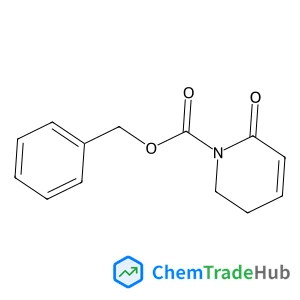
Benzyl 6-oxo-3,6-dihydro-1(2H)-pyridinecarboxylate
CAS Number:
725746-35-0
Molecular Formula:
C13H13NO3
![1-{3-[4-Amino-3-(4-phenoxyphenyl)-1H-pyrazolo[3,4-d]pyrimidin-1-yl]-1-piperidinyl}-2,3-dihydroxy-1-propanone structure](https://static.chemtradehub.com/structs/122/1226872-27-0-e037.webp "1-{3-[4-Amino-3-(4-phenoxyphenyl)-1H-pyrazolo[3,4-d]pyrimidin-1-yl]-1-piperidinyl}-2,3-dihydroxy-1-propanone structure")
1-{3-[4-Amino-3-(4-phenoxyphenyl)-1H-pyrazolo[3,4-d]pyrimidin-1-yl]-1-piperidinyl}-2,3-dihydroxy-1-propanone
CAS Number:
1226872-27-0
Molecular Formula:
C25H26N6O4
Recommended Suppliers






Disclaimer
This page provides academic journal information for reference and research purposes only. We are not affiliated with any journal publishers and do not handle publication submissions. For publication-related inquiries, please contact the respective journal publishers directly.
If you notice any inaccuracies in the information displayed, please contact us at support@chemtradehub.com. We will promptly review and address your concerns.