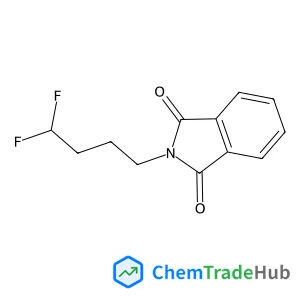
2-(4,4-Difluorobutyl)-1H-isoindole-1,3(2H)-dione
CAS Number:
1265341-14-7
Molecular Formula:
C12H11F2NO2
Ya-Chu Liu, Lee-Kiat Ban, Hsin-Ting Lee, Yu-Tang Chang, Yun-Ting Lin, Her-Young Su, Shih-Tien Hsu
Human pluripotent stem cells (hPSCs) are typically cultivated on extracellular matrix (ECM) protein-coated dishes in xeno-free culture conditions. We supplemented mixed ECM proteins (laminin-511 and recombinant vitronectin, rVT) in culture medium for hPSC culture on conventional polystyrene dishes. Three hPSC cell lines were successfully cultivated on uncoated polystyrene dishes in medium supplemented with optimal conditions of laminin-511 and rVT. Excellent colony shape and colony size as well as high expansion fold of hPSCs were found under these conditions, whereas the colony size was small and poor expansion fold was found solely on L-511-coated dishes. A small portion of L-511 in the culture medium supported hPSC adhesion and prevented the adhesion from being too strong on the uncoated dishes, and rVT in the culture medium further supported adhesion of hPSCs on the dishes by maintaining their pluripotency. Having the optimal composition of L-511 and rVT in the culture medium was important for generating good hPSC colony shapes and sizes as well as a high expansion fold. After long-term culture of hPSCs on uncoated dishes supplemented with the mixed proteins, the hPSCs successfully showed pluripotent markers and could differentiate into a specific lineage of cells, cardiomyocytes, with high efficiency.

Journal of Medicinal Chemistry

Science

Journal of Heterocyclic Chemistry

Organic Preparations and Procedures International

Pure and Applied Chemistry

Pharmacological Reviews

Proceedings of the National Academy of Sciences of the United States of America

Journal of Catalysis

Kinetics and Catalysis

Israel Journal of Chemistry
Xinjun Wang, Yi Xie, Qixun Guo
DOI: 10.1039/B308264D
John W. C. Cheing, William P. D. Goldring, Gerald Pattenden
DOI: 10.1039/B310753A
Jason A. Halfen, Victor G. Young, Jr.
DOI: 10.1039/B311520H
Martin D. Smith, Antonia F. Stepan, Chandrashekar Ramarao, Paul E. Brennan, Steven V. Ley
DOI: 10.1039/B308465E
Christophe Jeandon, Romain Ruppert, Henry J. Callot
DOI: 10.1039/B400812J
David C. Harrowven, Nathalie L'Helias, Jonathan D. Moseley, Nigel J. Blumire, Stuart R. Flanagan
DOI: 10.1039/B309496K
DOI: 10.1039/B313609D
Ivaylo Dimitrov, Helmut Schlaad
DOI: 10.1039/B308990H
C. Boissiere, D. Grosso, H. Amenitsch, A. Gibaud, A. Coupé, N. Baccile, C. Sanchez
DOI: 10.1039/B308694A
Amy L. Kieran, Andrew D. Bond, Ana M. Belenguer, Jeremy K. M. Sanders
DOI: 10.1039/B310438A
N-(4-Methoxybenzyl)-2-pyridinamine (CAS: 52818-63-0) is increasingly being used ...
When handling Ethyl 4-(2-chlorophenyl)-1,3-thiazole-2-carboxylate, appropriate p...
Diethyldiselane (CAS: 628-39-7) is classified under the Globally Harmonized Syst...
The market for oxocopper (CAS: 12053-18-8) is primarily driven by its use in cat...
The market for 5-{[(2-Methyl-2-propanyl)oxy]carbonyl}-5-azaspiro[2.4]heptane-7-c...
2-(1-Pyrrolidinyl)-4-pyridinamine is a chemical compound with the CAS number 359...
2-(3-Pyridinyl)-1-azabicyclo[2.2.2]octane (CAS: 91556-75-1) is a crystalline sol...
(S)-Alpha-allyl-proline hydrochloride is usually synthesized via a Wittig reacti...
3-Methyl-1,2-oxazole-5-carboxylic acid (CAS: 4857-42-5) is an organic compound w...
Lys-SMCC-DM1 is synthesized via a multi-step process involving the coupling of S...
Journal of Materials Chemistry A, B & C cover high quality studies across all fields of materials chemistry. The journals focus on those theoretical or experimental studies that report new understanding, applications, properties and synthesis of materials. The journals have a strong history of publishing quality reports of interest to interdisciplinary communities and providing an efficient and rigorous service through peer review and publication. The journals are led by an international team of Editors-in-Chief and Associate Editors who are all active researchers in their fields. Journal of Materials Chemistry A, B & C are separated by the intended application of the material studied. Broadly, applications in energy and sustainability are of interest to Journal of Materials Chemistry A, applications in biology and medicine are of interest to Journal of Materials Chemistry B, and applications in optical, magnetic and electronic devices are of interest to Journal of Materials Chemistry C. More than one Journal of Materials Chemistry journal may be suitable for certain fields and researchers are encouraged to submit their paper to the journal that they feel best fits for their particular article. Example topic areas within the scope of Journal of Materials Chemistry B are listed below. This list is neither exhaustive nor exclusive. Antifouling coatings Biocompatible materials Bioelectronics Bioimaging Biomimetics Biomineralisation Bionics Biosensors Diagnostics Drug delivery Gene delivery Immunobiology Nanomedicine Regenerative medicine & Tissue engineering Scaffolds Soft robotics Stem cells Therapeutic devices image block All articles published in Journal of Materials Chemistry B from 2019 onwards will be indexed in MEDLINE®. Articles that primarily focus on providing insight into the underlying science and performance of biomaterials within a biological environment are more suited to our companion journal, Biomaterials Science.
![1,10-bis(3,5-dimethylphenyl)-12-hydroxy-4,5,6,7-tetrahydroiindeno[7,1-de:1',7'-fg][1,3,2]dioxaphosphocine 12-oxide structure](https://static.chemtradehub.com/structs/141/1412439-82-7-b9a9.webp "1,10-bis(3,5-dimethylphenyl)-12-hydroxy-4,5,6,7-tetrahydroiindeno[7,1-de:1',7'-fg][1,3,2]dioxaphosphocine 12-oxide structure")
![1-{3-[4-Amino-3-(4-phenoxyphenyl)-1H-pyrazolo[3,4-d]pyrimidin-1-yl]-1-piperidinyl}-2,3-dihydroxy-1-propanone structure](https://static.chemtradehub.com/structs/122/1226872-27-0-e037.webp "1-{3-[4-Amino-3-(4-phenoxyphenyl)-1H-pyrazolo[3,4-d]pyrimidin-1-yl]-1-piperidinyl}-2,3-dihydroxy-1-propanone structure")