












![5'-Fluoro-[2,3'-biindolinylidene]-2',3-dione structure](https://static.chemtradehub.com/structs/251/251903-00-1-9cb1.webp "5'-Fluoro-[2,3'-biindolinylidene]-2',3-dione structure")
Development of a PCR-free electrochemical point of care test for clinical detection of methicillin resistant Staphylococcus aureus (MRSA)
Literature Information
Publication Date
2013-10-04
DOI
10.1039/C3AN01319G
Impact Factor
4.616
Authors
H. Schulze, G. Henihan, A. Hardie, I. Ciani, G. Giraud, J. G. Terry, A. J. Walton, R. Pethig, P. Ghazal, K. E. Templeton, A. R. Mount, T. T. Bachmann
View Original
Abstract
An MRSA assay requiring neither labeling nor amplification of target DNA has been developed. Sequence specific binding of fragments of bacterial genomic DNA is detected at femtomolar concentrations using electrochemical impedance spectroscopy (EIS). This has been achieved using systematic optimisation of probe chemistry (PNA self-assembled monolayer film on gold electrode), electrode film structure (the size and nature of the chemical spacer) and DNA fragmentation, as these are found to play an important role in assay performance. These sensitivity improvements allow the elimination of the PCR step and DNA labeling and facilitate the development of a simple and rapid point of care test for MRSA. Assay performance is then evaluated and specific direct detection of the MRSA diagnostic mecA gene from genomic DNA, extracted directly from bacteria without further treatment is demonstrated for bacteria spiked into saline (106 cells per mL) on gold macrodisc electrodes and into human wound fluid (104 cells per mL) on screen printed gold electrodes. The latter detection level is particularly relevant to clinical requirements and point of care testing where the general threshold for considering a wound to be infected is 105 cells per mL. By eliminating the PCR step typically employed in nucleic acid assays, using screen printed electrodes and achieving sequence specific discrimination under ambient conditions, the test is extremely simple to design and engineer. In combination with a time to result of a few minutes this means the assay is well placed for use in point of care testing.
Related Literature
Synthesis and X-ray structures of silver and gold guanidinate-like complexes. A Au(ii) complex with a 2.47 Å Au–Au distance
Michael D. Irwin, Hanan E. Abdou, Ahmed A. Mohamed, John P. Fackler, Jr.
2003-10-24
Communication
DOI: 10.1039/B309724M
Dynamic combinatorial libraries of metalloporphyrins: templated amplification of disulfide-linked oligomers
Amy L. Kieran, Andrew D. Bond, Ana M. Belenguer, Jeremy K. M. Sanders
2003-09-30
Communication
DOI: 10.1039/B310438A
Fluorescence studies of protein thermostability in ionic liquids
Sheila N. Baker, T. Mark McCleskey, Siddharth Pandey, Gary A. Baker
2004-03-19
Communication
DOI: 10.1039/B401304M
Ring selectivity and migratory aptitude of Cp*Ru+ complexation to acecorannulene
T. Jon Seiders, Joseph M. O'Connor
2004-03-12
Communication
DOI: 10.1039/B316061K
UV photopatterning of a highly metallized, cluster-containing poly(ferrocenylsilane)
Alison Y. Cheng, Scott B. Clendenning, Guocheng Yang, Zheng-Hong Lu, Christopher M. Yip, Ian Manners
2004-03-03
Communication
DOI: 10.1039/B316656B
Total synthesis of (±)-acetoxyodontoschismenol using zirconium chemistry
Ian R. Baldwin, Richard J. Whitby
2003-10-11
Communication
DOI: 10.1039/B309848F
Synthesis and structure of [Na11(OtBu)10(OH)]: 1H NMR shift of a hydroxide ion encapsulated in a 21-vertex alcoholate cage
2003-10-17
Communication
DOI: 10.1039/B308105B
ZnS bubble clusters with onion-like structures
Eleonora Spanó, Said Hamad, C. Richard A. Catlow
2004-02-27
Communication
DOI: 10.1039/B314104G
Supported choline hydroxide (ionic liquid) as heterogeneous catalyst for aldol condensation reactions
Sònia Abelló, Francisco Medina, Xavier Rodríguez, Yolanda Cesteros, Pilar Salagre, Jesús E. Sueiras, Didier Tichit, Bernard Coq
2004-04-01
Communication
DOI: 10.1039/B401448K
“Green”-enzymatic synthesis of pegylated phenolic macromer and polymer
Ferdinando Bruno, Virinder S. Parmar, Jayant Kumar, Arthur C. Watterson, Kethinni G. Chittibabu, Lynne A. Samuelson
2004-03-02
Communication
DOI: 10.1039/B400404C
You might also like
Compound Q&A
What is the market or research trend for N-(4-Methoxybenzyl)-2-pyridinamine (CAS: 52818-63-0)?
N-(4-Methoxybenzyl)-2-pyridinamine (CAS: 52818-63-0) is increasingly being used ...
52818-63-0N-(4-Methoxybenzyl)-...
Compound Q&A
What precautions should be taken when handling Ethyl 4-(2-chlorophenyl)-1,3-thiazole-2-carboxylate (CAS: 1050507-06-6)?
When handling Ethyl 4-(2-chlorophenyl)-1,3-thiazole-2-carboxylate, appropriate p...
1050507-06-6Ethyl 4-(2-chlorophe...
Compound Q&A
What regulatory guidelines apply to diethyldiselane (CAS: 628-39-7)?
Diethyldiselane (CAS: 628-39-7) is classified under the Globally Harmonized Syst...
628-39-7Diethyldiselane
Compound Q&A
What is the market or research trend for oxocopper (CAS: 12053-18-8)?
The market for oxocopper (CAS: 12053-18-8) is primarily driven by its use in cat...
12053-18-8oxocopper; oxo-(oxoc...
Compound Q&A
What is the market or research trend for 5-{[(2-Methyl-2-propanyl)oxy]carbonyl}-5-azaspiro[2.4]heptane-7-carboxylic acid?
The market for 5-{[(2-Methyl-2-propanyl)oxy]carbonyl}-5-azaspiro[2.4]heptane-7-c...
1268519-54-55-{[(2-Methyl-2-prop...
Compound Q&A
What is 2-(1-Pyrrolidinyl)-4-pyridinamine (CAS: 35981-63-6)?
2-(1-Pyrrolidinyl)-4-pyridinamine is a chemical compound with the CAS number 359...
35981-63-62-(1-Pyrrolidinyl)-4...
Compound Q&A
What are the physical and chemical properties of 2-(3-Pyridinyl)-1-azabicyclo[2.2.2]octane (CAS: 91556-75-1)?
2-(3-Pyridinyl)-1-azabicyclo[2.2.2]octane (CAS: 91556-75-1) is a crystalline sol...
91556-75-12-(3-Pyridinyl)-1-az...
Compound Q&A
How is (S)-Alpha-allyl-proline hydrochloride (CAS: 129704-91-2) typically synthesized?
(S)-Alpha-allyl-proline hydrochloride is usually synthesized via a Wittig reacti...
129704-91-2(S)-Alpha-allyl-prol...
Compound Q&A
What is 3-Methyl-1,2-oxazole-5-carboxylic acid (CAS: 4857-42-5)?
3-Methyl-1,2-oxazole-5-carboxylic acid (CAS: 4857-42-5) is an organic compound w...
4857-42-53-Methyl-1,2-oxazole...
Compound Q&A
How is Lys-SMCC-DM1 (CAS: 1281816-04-3) typically synthesized?
Lys-SMCC-DM1 is synthesized via a multi-step process involving the coupling of S...
1281816-04-3Lys-SMCC-DM1
Source Journal
Analyst

CiteScore:
7.8
Self-citation Rate:
5.6%
Articles per Year:
653
Analyst publishes analytical and bioanalytical research that reports premier fundamental discoveries and inventions, and the applications of those discoveries, unconfined by traditional discipline barriers.
Recommended Compounds
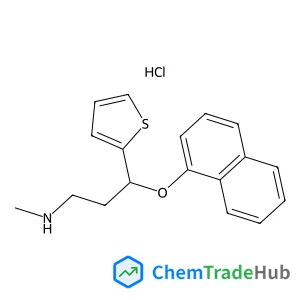
N-Methyl-3-(1-naphthyloxy)-3-(2-thienyl)-1-propanamine hydrochloride (1:1)
CAS Number:
1188266-11-6
Molecular Formula:
C18H20ClNOS
![1,10-bis(3,5-dimethylphenyl)-12-hydroxy-4,5,6,7-tetrahydroiindeno[7,1-de:1',7'-fg][1,3,2]dioxaphosphocine 12-oxide structure](https://static.chemtradehub.com/structs/141/1412439-82-7-b9a9.webp "1,10-bis(3,5-dimethylphenyl)-12-hydroxy-4,5,6,7-tetrahydroiindeno[7,1-de:1',7'-fg][1,3,2]dioxaphosphocine 12-oxide structure")
1,10-bis(3,5-dimethylphenyl)-12-hydroxy-4,5,6,7-tetrahydroiindeno[7,1-de:1',7'-fg][1,3,2]dioxaphosphocine 12-oxide
CAS Number:
1412439-82-7
Molecular Formula:
C33H31O4P
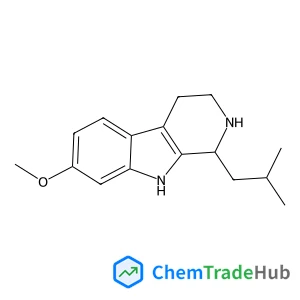
1-Isobutyl-7-methoxy-2,3,4,9-tetrahydro-1H-beta-carboline
CAS Number:
175975-76-5
Molecular Formula:
C16H22N2O
Recommended Suppliers






Disclaimer
This page provides academic journal information for reference and research purposes only. We are not affiliated with any journal publishers and do not handle publication submissions. For publication-related inquiries, please contact the respective journal publishers directly.
If you notice any inaccuracies in the information displayed, please contact us at support@chemtradehub.com. We will promptly review and address your concerns.