












![5'-Fluoro-[2,3'-biindolinylidene]-2',3-dione structure](https://static.chemtradehub.com/structs/251/251903-00-1-9cb1.webp "5'-Fluoro-[2,3'-biindolinylidene]-2',3-dione structure")
Controllable nitrogen-doping of nanoporous carbons enabled by coordination frameworks
Literature Information
Publication Date
2018-12-13
DOI
10.1039/C8TA09817D
Impact Factor
12.732
Authors
Wei Zhang, Saiyu Bu, Qinghong Yuan, Ming Hu
View Original
Abstract
Doping nitrogen into nanoporous carbons is of great significance in various applications. However, in situ synthesis of N-doped nanoporous carbons with controllable/predictable N configurations remains a challenge. On the basis of first-principles calculations, we developed a temperature-control strategy to tailor the N configurations in nanoporous carbons based on the different thermal stabilities of the N dopants. By annealing the coordinated 2-methylimidazole molecules in a range of temperatures, the content of the N dopants in the obtained nanoporous carbons can be controlled, eventually leading to a maximized percentage of pyridinic-N. The K-ion storage capacity of the N-doped nanoporous carbons showed a strong correlation with the N configurations according to a carbon/K half-cell test. The nanoporous carbon with the maximum percentage of pyridinic-N showed a remarkable rate performance and cycling stability, matching with the prediction of the first-principles calculations.
Related Literature
From luminescence quenching to high-efficiency phosphorescence: a theoretical study on the monomeric and dimeric forms of platinum(ii) complexes with both 2-pyridylimidazol-2-ylidene and bipyrazolate chelates
Bo-Hua Zhang, Jun-An Li, Min Wang, Ai-Min Ren, Teng-Fei He, Pan-Pan Lin, Yun-Li Zhang, Xiao-Yue Xi, Lu-Yi Zou
2021-01-19
Paper
DOI: 10.1039/D0CP06269C
The influence of external electric fields on proton transfer tautomerism in the guanine–cytosine base pair
Alexander Gheorghiu
2021-02-23
Paper
DOI: 10.1039/D0CP06218A
Nitrogen as a pnicogen?: evidence for π-hole driven novel pnicogen bonding interactions in nitromethane–ammonia aggregates using matrix isolation infrared spectroscopy and ab initio computations
Swaroop Chandra, B. Suryaprasad, N. Ramanathan, K. Sundararajan
2021-02-18
Paper
DOI: 10.1039/D0CP06273A
New insights into the 1D carbon chain through the RPA
Benjamin Ramberger, Georg Kresse
2021-02-25
Paper
DOI: 10.1039/D0CP06607A
Homogeneous nucleation of carbon dioxide in supersonic nozzles II: molecular dynamics simulations and properties of nucleating clusters
Roope Halonen, Valtteri Tikkanen, Bernhard Reischl, Kayane K. Dingilian, Hanna Vehkamäki
2021-02-05
Paper
DOI: 10.1039/D0CP05653G
High resolution ro–vibrational analysis of molecules in doublet electronic states: the ν1 fundamental of chlorine dioxide (16O35Cl16O) in the X2B1 electronic ground state
Oleg N. Ulenikov, Elena S. Bekhtereva, Olga V. Gromova, Martin Quack, Kirill B. Berezkin, Christian Sydow, Sigurd Bauerecker
2021-02-23
Paper
DOI: 10.1039/D0CP05515H
Magnetism manipulated by ferroelectric polarization and epitaxial strain in a La0.75Sr0.25MnO3/BaTiO3 system
Dong Chen, Chun-Lei Wang
2021-02-25
Paper
DOI: 10.1039/D0CP05961G
Sulfur Kβ X-ray emission spectroscopy: comparison with sulfur K-edge X-ray absorption spectroscopy for speciation of organosulfur compounds
Muhammad Qureshi, Stanisław H. Nowak, Linda I. Vogt, Julien J. H. Cotelesage, Natalia V. Dolgova, Samin Sharifi, Thomas Kroll, Dennis Nordlund, Roberto Alonso-Mori, Dimosthenis Sokaras
2020-12-09
Paper
DOI: 10.1039/D0CP05323F
You might also like
Compound Q&A
What is the market or research trend for N-(4-Methoxybenzyl)-2-pyridinamine (CAS: 52818-63-0)?
N-(4-Methoxybenzyl)-2-pyridinamine (CAS: 52818-63-0) is increasingly being used ...
52818-63-0N-(4-Methoxybenzyl)-...
Compound Q&A
What precautions should be taken when handling Ethyl 4-(2-chlorophenyl)-1,3-thiazole-2-carboxylate (CAS: 1050507-06-6)?
When handling Ethyl 4-(2-chlorophenyl)-1,3-thiazole-2-carboxylate, appropriate p...
1050507-06-6Ethyl 4-(2-chlorophe...
Compound Q&A
What regulatory guidelines apply to diethyldiselane (CAS: 628-39-7)?
Diethyldiselane (CAS: 628-39-7) is classified under the Globally Harmonized Syst...
628-39-7Diethyldiselane
Compound Q&A
What is the market or research trend for oxocopper (CAS: 12053-18-8)?
The market for oxocopper (CAS: 12053-18-8) is primarily driven by its use in cat...
12053-18-8oxocopper; oxo-(oxoc...
Compound Q&A
What is the market or research trend for 5-{[(2-Methyl-2-propanyl)oxy]carbonyl}-5-azaspiro[2.4]heptane-7-carboxylic acid?
The market for 5-{[(2-Methyl-2-propanyl)oxy]carbonyl}-5-azaspiro[2.4]heptane-7-c...
1268519-54-55-{[(2-Methyl-2-prop...
Compound Q&A
What is 2-(1-Pyrrolidinyl)-4-pyridinamine (CAS: 35981-63-6)?
2-(1-Pyrrolidinyl)-4-pyridinamine is a chemical compound with the CAS number 359...
35981-63-62-(1-Pyrrolidinyl)-4...
Compound Q&A
What are the physical and chemical properties of 2-(3-Pyridinyl)-1-azabicyclo[2.2.2]octane (CAS: 91556-75-1)?
2-(3-Pyridinyl)-1-azabicyclo[2.2.2]octane (CAS: 91556-75-1) is a crystalline sol...
91556-75-12-(3-Pyridinyl)-1-az...
Compound Q&A
How is (S)-Alpha-allyl-proline hydrochloride (CAS: 129704-91-2) typically synthesized?
(S)-Alpha-allyl-proline hydrochloride is usually synthesized via a Wittig reacti...
129704-91-2(S)-Alpha-allyl-prol...
Compound Q&A
What is 3-Methyl-1,2-oxazole-5-carboxylic acid (CAS: 4857-42-5)?
3-Methyl-1,2-oxazole-5-carboxylic acid (CAS: 4857-42-5) is an organic compound w...
4857-42-53-Methyl-1,2-oxazole...
Compound Q&A
How is Lys-SMCC-DM1 (CAS: 1281816-04-3) typically synthesized?
Lys-SMCC-DM1 is synthesized via a multi-step process involving the coupling of S...
1281816-04-3Lys-SMCC-DM1
Source Journal
Journal of Materials Chemistry A

CiteScore:
19.5
Self-citation Rate:
4.7%
Articles per Year:
2211
Journal of Materials Chemistry A, B & C cover high quality studies across all fields of materials chemistry. The journals focus on those theoretical or experimental studies that report new understanding, applications, properties and synthesis of materials. The journals have a strong history of publishing quality reports of interest to interdisciplinary communities and providing an efficient and rigorous service through peer review and publication. The journals are led by an international team of Editors-in-Chief and Associate Editors who are all active researchers in their fields. Journal of Materials Chemistry A, B & C are separated by the intended application of the material studied. Broadly, applications in energy and sustainability are of interest to Journal of Materials Chemistry A, applications in biology and medicine are of interest to Journal of Materials Chemistry B, and applications in optical, magnetic and electronic devices are of interest to Journal of Materials Chemistry C. More than one Journal of Materials Chemistry journal may be suitable for certain fields and researchers are encouraged to submit their paper to the journal that they feel best fits for their particular article. Example topic areas within the scope of Journal of Materials Chemistry A are listed below. This list is neither exhaustive nor exclusive. Artificial photosynthesis Batteries Carbon dioxide conversion Catalysis Fuel cells Gas capture/separation/storage Green/sustainable materials Hydrogen generation Hydrogen storage Photocatalysis Photovoltaics Self-cleaning materials Self-healing materials Sensors Supercapacitors Thermoelectrics Water splitting Water treatment
Recommended Compounds
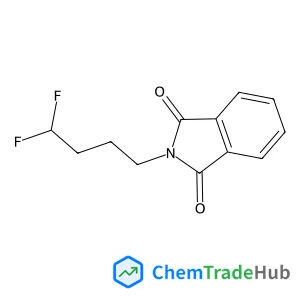
2-(4,4-Difluorobutyl)-1H-isoindole-1,3(2H)-dione
CAS Number:
1265341-14-7
Molecular Formula:
C12H11F2NO2
Recommended Suppliers






Disclaimer
This page provides academic journal information for reference and research purposes only. We are not affiliated with any journal publishers and do not handle publication submissions. For publication-related inquiries, please contact the respective journal publishers directly.
If you notice any inaccuracies in the information displayed, please contact us at support@chemtradehub.com. We will promptly review and address your concerns.