


In situ characterisation of phytohormones from wounded Arabidopsis leaves using desorption electrospray ionisation mass spectrometry imaging
Literature Information
Publication Date
2021-02-25
DOI
10.1039/D0AN02118K
Impact Factor
4.616
Authors
Asta Žukauskaitė, Ivan Petřík, Aleš Pěnčík, Martin Hönig, Jiří Grúz, Jitka Široká, Ondřej Novák
View Original
Abstract
Phytohormones (plant hormones) are a group of small signalling molecules that act as important endogenous regulators in plant development and stress responses. Previous research has identified the phytohormone species, jasmonates, auxins and abscisic acid, and their related compounds in stressed leaf extracts. However, in situ visualisations of endogenous phytohormones from intact plant tissues remain elusive without the usage of labels or reporters. Mass spectrometry imaging is a label-free analytical technique that has been successfully applied for the direct detection of plant proteins, lipids, carbohydrates and many other biomolecules. In this study, desorption electrospray ionisation mass spectrometry imaging (DESI-MSI) was used for high throughput visualisation and evaluation of wound-induced phytohormones inside Arabidopsis thaliana leaves. The results showed higher levels of jasmonates, salicylic acid, abscisic acid and indole-3-acetic acid in their ion intensity maps established from wounded leaves compared to control leaves, which have been validated in the parallel liquid chromatography–mass spectrometry quantification, and the untainted distributions of the identified phytohormones in leaves were confirmed by mass spectrometry imaging of instant leaf imprinted thin-layer chromatography plate samples. Further statistical analysis has not only demonstrated a significant increase of jasmonic acid and its precursor compounds in wounded leaves/regions but also highlighted a potential correlation in different phytohormone species. Our results suggest that DESI-MSI can be used to in situ characterise multiple phytohormone compounds from intact leaves with 200 μm spatial resolution to provide insight into phytohormone distributions in wounded leaves, along with their correlated precursors and metabolites under mechanical stress.
Recommended Journals

Nature

Journal of Physics and Chemistry of Solids

Russian Chemical Reviews

Science

Proceedings of the National Academy of Sciences of the United States of America

Journal of Organometallic Chemistry

Israel Journal of Chemistry

Organic Preparations and Procedures International

Molecular Pharmacology

Fibre Chemistry
Related Literature
Vapour diffusion hydrolysis of a self-assembled silylated organogel, the OG–HG transcription process: a new way to cast and handle fluorescent silsesquioxane
Olivier J. Dautel, Jean-Pierre Lère-Porte, Joël J. E. Moreau, Michel Wong Chi Man
2003-09-24
Communication
DOI: 10.1039/B308703D
Patterning of DNA nanostructures on silicon surface by electron beam lithography of self-assembled monolayer
Guo-Jun Zhang, Takashi Tanii
2004-03-05
Communication
DOI: 10.1039/B315278B
Heteropoly acid as a novel nitrene transfer agent: a facile and practical aziridination of olefins with Chloramine-T
G. D. Kishore Kumar, Sundarababu Baskaran
2004-03-23
Communication
DOI: 10.1039/B402371D
Long-term pervaporation performance of microporous methylated silica membranes
Jean Campaniello, Charles W. R. Engelen, Wim G. Haije, Paul P. A. C. Pex, Jaap F. Vente
2004-02-27
Communication
DOI: 10.1039/B401496K
Assembly of a polyoxometalate into an anisotropic gel
Sophie Favette, Bernold Hasenknopf, Jacqueline Vaissermann, Pierre Gouzerh, Cécile Roux
2003-09-25
Communication
DOI: 10.1039/B308889H
Formation of a bifunctional zirconocene complex that favours intramolecular –B(C6F5)2 addition to a Cp ring over σ-ligand abstraction
Michael Hill, Gerald Kehr, Gerhard Erker, Olga Kataeva, Roland Fröhlich
2004-03-23
Communication
DOI: 10.1039/B400228H
The photonic opal – the jewel in the crown of optical information processing
2003-10-07
Focus
DOI: 10.1039/B306771H
Peptide-coated CdS quantum dots for the optical detection of copper(ii) and silver(i)‡
Kerim M. Gattás-Asfura, Roger M. Leblanc
2003-09-25
Communication
DOI: 10.1039/B308991F
Medium ring synthesis by radical ipso-substitution
David C. Harrowven, Nathalie L'Helias, Jonathan D. Moseley, Nigel J. Blumire, Stuart R. Flanagan
2003-10-01
Communication
DOI: 10.1039/B309496K
You might also like
Compound Q&A
What is the market or research trend for N-(4-Methoxybenzyl)-2-pyridinamine (CAS: 52818-63-0)?
N-(4-Methoxybenzyl)-2-pyridinamine (CAS: 52818-63-0) is increasingly being used ...
52818-63-0N-(4-Methoxybenzyl)-...
Compound Q&A
What precautions should be taken when handling Ethyl 4-(2-chlorophenyl)-1,3-thiazole-2-carboxylate (CAS: 1050507-06-6)?
When handling Ethyl 4-(2-chlorophenyl)-1,3-thiazole-2-carboxylate, appropriate p...
1050507-06-6Ethyl 4-(2-chlorophe...
Compound Q&A
What regulatory guidelines apply to diethyldiselane (CAS: 628-39-7)?
Diethyldiselane (CAS: 628-39-7) is classified under the Globally Harmonized Syst...
628-39-7Diethyldiselane
Compound Q&A
What is the market or research trend for oxocopper (CAS: 12053-18-8)?
The market for oxocopper (CAS: 12053-18-8) is primarily driven by its use in cat...
12053-18-8oxocopper; oxo-(oxoc...
Compound Q&A
What is the market or research trend for 5-{[(2-Methyl-2-propanyl)oxy]carbonyl}-5-azaspiro[2.4]heptane-7-carboxylic acid?
The market for 5-{[(2-Methyl-2-propanyl)oxy]carbonyl}-5-azaspiro[2.4]heptane-7-c...
1268519-54-55-{[(2-Methyl-2-prop...
Compound Q&A
What is 2-(1-Pyrrolidinyl)-4-pyridinamine (CAS: 35981-63-6)?
2-(1-Pyrrolidinyl)-4-pyridinamine is a chemical compound with the CAS number 359...
35981-63-62-(1-Pyrrolidinyl)-4...
Compound Q&A
What are the physical and chemical properties of 2-(3-Pyridinyl)-1-azabicyclo[2.2.2]octane (CAS: 91556-75-1)?
2-(3-Pyridinyl)-1-azabicyclo[2.2.2]octane (CAS: 91556-75-1) is a crystalline sol...
91556-75-12-(3-Pyridinyl)-1-az...
Compound Q&A
How is (S)-Alpha-allyl-proline hydrochloride (CAS: 129704-91-2) typically synthesized?
(S)-Alpha-allyl-proline hydrochloride is usually synthesized via a Wittig reacti...
129704-91-2(S)-Alpha-allyl-prol...
Compound Q&A
What is 3-Methyl-1,2-oxazole-5-carboxylic acid (CAS: 4857-42-5)?
3-Methyl-1,2-oxazole-5-carboxylic acid (CAS: 4857-42-5) is an organic compound w...
4857-42-53-Methyl-1,2-oxazole...
Compound Q&A
How is Lys-SMCC-DM1 (CAS: 1281816-04-3) typically synthesized?
Lys-SMCC-DM1 is synthesized via a multi-step process involving the coupling of S...
1281816-04-3Lys-SMCC-DM1
Source Journal
Analyst

CiteScore:
7.8
Self-citation Rate:
5.6%
Articles per Year:
653
Analyst publishes analytical and bioanalytical research that reports premier fundamental discoveries and inventions, and the applications of those discoveries, unconfined by traditional discipline barriers.
Recommended Compounds
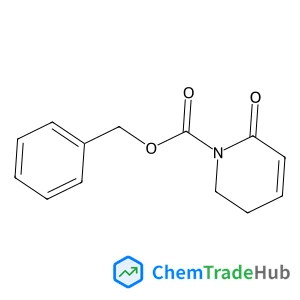
Benzyl 6-oxo-3,6-dihydro-1(2H)-pyridinecarboxylate
CAS Number:
725746-35-0
Molecular Formula:
C13H13NO3
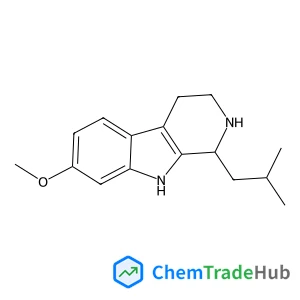
1-Isobutyl-7-methoxy-2,3,4,9-tetrahydro-1H-beta-carboline
CAS Number:
175975-76-5
Molecular Formula:
C16H22N2O
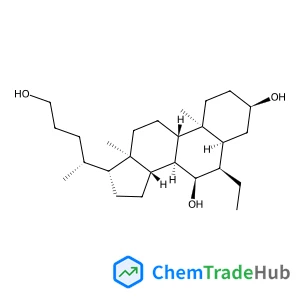
(3alpha,5beta,6alpha,7alpha)-6-Ethylcholane-3,7,24-triol
CAS Number:
1537866-49-1
Molecular Formula:
C26H46O3
Recommended Suppliers




Disclaimer
This page provides academic journal information for reference and research purposes only. We are not affiliated with any journal publishers and do not handle publication submissions. For publication-related inquiries, please contact the respective journal publishers directly.
If you notice any inaccuracies in the information displayed, please contact us at support@chemtradehub.com. We will promptly review and address your concerns.