












Effect of boron incorporation on the bioactivity, structure, and mechanical properties of ordered mesoporous bioactive glasses
Literature Information
Publication Date
2020-01-09
DOI
10.1039/C9TB01805K
Impact Factor
6.331
Authors
Leonie Deilmann, Oliver Winter, Bianca Cerrutti, Henrik Bradtmüller, Christopher Herzig, Andreas Limbeck, Olaf Lahayne, Christian Hellmich, Dominik Eder
View Original
Abstract
B2O3 doped (0.5–15 mol%) ordered mesoporous bioactive glasses (MBG) with the composition 80% SiO2–15% CaO–5% P2O5 were synthesized via a sol–gel based evaporation-induced self-assembly process using the block-copolymer P123 as a structure directing agent and characterized by biokinetic, mechanical and structural investigations. Nitrogen physisorption isotherms and electron microscopy indicate no detrimental effect of B2O3 on the ordered hexagonal pore structure. Boron incorporation increases both the bulk modulus and hardness of the glasses. In vitro bioactivity tests reveal a rapid initial release of Ca2+ and PO43− ions, followed by formation of hydroxyapatite carbonate within a few hours. Contrary to the tight incorporation of Al in Al-doped MBGs, the rapid release of borate species into simulated-body-fluid suggests loosely bound species localized at the internal surfaces of the mesopores. 29Si, 11B, 31P, and 1H solid state NMR spectroscopy reveal that the majority of the borate is present as anionic BO4/2− species. The need for charge compensation leads to an increase in the average degree of polymerization of the phosphate species for high boron contents. 11B{31P} rotational echo double resonance NMR results reveal the absence of B–O–P linkages. This structural model explains the rapid release of borate and the enhanced dissolution kinetics of the Ca2+ and phosphate species.
Related Literature
Use of allene in 1,3-dipolar addition to a carbonyl ylide: syntheses of 3-hydroxy-cis-nemorensic acid and nemorensic acid
David M. Hodgson, Frédéric Le Strat
2004-02-24
Communication
DOI: 10.1039/B316908A
Porphyrin ring contraction: a one-pot reaction leading to divalent corroles
Christophe Jeandon, Romain Ruppert, Henry J. Callot
2004-04-02
Communication
DOI: 10.1039/B400812J
Crystalline molecular alloys
Sylvie Ferlay, Wais Hosseini
2004-03-05
Communication
DOI: 10.1039/B400295B
Effects of base pairing on the one-electron reduction rate of cytosine
Kiyohiko Kawai, Aya Yokoohji, Sachiko Tojo, Tetsuro Majima
2003-10-11
Communication
DOI: 10.1039/B310579B
Fluorescence studies of protein thermostability in ionic liquids
Sheila N. Baker, T. Mark McCleskey, Siddharth Pandey, Gary A. Baker
2004-03-19
Communication
DOI: 10.1039/B401304M
UV photopatterning of a highly metallized, cluster-containing poly(ferrocenylsilane)
Alison Y. Cheng, Scott B. Clendenning, Guocheng Yang, Zheng-Hong Lu, Christopher M. Yip, Ian Manners
2004-03-03
Communication
DOI: 10.1039/B316656B
A rationally designed novel receptor for probing cooperative interaction between metal ions and bivalent tryptophan side chain in solution
Yitong Li, Chi Ming Yang
2003-10-22
Communication
DOI: 10.1039/B310543A
Manganese N-confused porphyrin reactivity: CH bond activation and meso carbon reduction
John D. Harvey, Christopher J. Ziegler
2003-10-22
Communication
DOI: 10.1039/B310522A
Thiazole orange as fluorescent universal base in peptide nucleic acids
Olaf Köhler, Oliver Seitz
2003-10-21
Communication
DOI: 10.1039/B308299G
Highly stereoselective synthesis of (−)-monatin, a high-intensity sweetener, using chelation-controlled nitrone cycloaddition
Osamu Tamura, Tomoya Shiro, Atsushi Toyao, Hiroyuki Ishibashi
2003-09-24
Communication
DOI: 10.1039/B306791M
You might also like
Compound Q&A
What is the market or research trend for N-(4-Methoxybenzyl)-2-pyridinamine (CAS: 52818-63-0)?
N-(4-Methoxybenzyl)-2-pyridinamine (CAS: 52818-63-0) is increasingly being used ...
52818-63-0N-(4-Methoxybenzyl)-...
Compound Q&A
What precautions should be taken when handling Ethyl 4-(2-chlorophenyl)-1,3-thiazole-2-carboxylate (CAS: 1050507-06-6)?
When handling Ethyl 4-(2-chlorophenyl)-1,3-thiazole-2-carboxylate, appropriate p...
1050507-06-6Ethyl 4-(2-chlorophe...
Compound Q&A
What regulatory guidelines apply to diethyldiselane (CAS: 628-39-7)?
Diethyldiselane (CAS: 628-39-7) is classified under the Globally Harmonized Syst...
628-39-7Diethyldiselane
Compound Q&A
What is the market or research trend for oxocopper (CAS: 12053-18-8)?
The market for oxocopper (CAS: 12053-18-8) is primarily driven by its use in cat...
12053-18-8oxocopper; oxo-(oxoc...
Compound Q&A
What is the market or research trend for 5-{[(2-Methyl-2-propanyl)oxy]carbonyl}-5-azaspiro[2.4]heptane-7-carboxylic acid?
The market for 5-{[(2-Methyl-2-propanyl)oxy]carbonyl}-5-azaspiro[2.4]heptane-7-c...
1268519-54-55-{[(2-Methyl-2-prop...
Compound Q&A
What is 2-(1-Pyrrolidinyl)-4-pyridinamine (CAS: 35981-63-6)?
2-(1-Pyrrolidinyl)-4-pyridinamine is a chemical compound with the CAS number 359...
35981-63-62-(1-Pyrrolidinyl)-4...
Compound Q&A
What are the physical and chemical properties of 2-(3-Pyridinyl)-1-azabicyclo[2.2.2]octane (CAS: 91556-75-1)?
2-(3-Pyridinyl)-1-azabicyclo[2.2.2]octane (CAS: 91556-75-1) is a crystalline sol...
91556-75-12-(3-Pyridinyl)-1-az...
Compound Q&A
How is (S)-Alpha-allyl-proline hydrochloride (CAS: 129704-91-2) typically synthesized?
(S)-Alpha-allyl-proline hydrochloride is usually synthesized via a Wittig reacti...
129704-91-2(S)-Alpha-allyl-prol...
Compound Q&A
What is 3-Methyl-1,2-oxazole-5-carboxylic acid (CAS: 4857-42-5)?
3-Methyl-1,2-oxazole-5-carboxylic acid (CAS: 4857-42-5) is an organic compound w...
4857-42-53-Methyl-1,2-oxazole...
Compound Q&A
How is Lys-SMCC-DM1 (CAS: 1281816-04-3) typically synthesized?
Lys-SMCC-DM1 is synthesized via a multi-step process involving the coupling of S...
1281816-04-3Lys-SMCC-DM1
Source Journal
Journal of Materials Chemistry B

CiteScore:
12
Self-citation Rate:
4.9%
Articles per Year:
831
Journal of Materials Chemistry A, B & C cover high quality studies across all fields of materials chemistry. The journals focus on those theoretical or experimental studies that report new understanding, applications, properties and synthesis of materials. The journals have a strong history of publishing quality reports of interest to interdisciplinary communities and providing an efficient and rigorous service through peer review and publication. The journals are led by an international team of Editors-in-Chief and Associate Editors who are all active researchers in their fields. Journal of Materials Chemistry A, B & C are separated by the intended application of the material studied. Broadly, applications in energy and sustainability are of interest to Journal of Materials Chemistry A, applications in biology and medicine are of interest to Journal of Materials Chemistry B, and applications in optical, magnetic and electronic devices are of interest to Journal of Materials Chemistry C. More than one Journal of Materials Chemistry journal may be suitable for certain fields and researchers are encouraged to submit their paper to the journal that they feel best fits for their particular article. Example topic areas within the scope of Journal of Materials Chemistry B are listed below. This list is neither exhaustive nor exclusive. Antifouling coatings Biocompatible materials Bioelectronics Bioimaging Biomimetics Biomineralisation Bionics Biosensors Diagnostics Drug delivery Gene delivery Immunobiology Nanomedicine Regenerative medicine & Tissue engineering Scaffolds Soft robotics Stem cells Therapeutic devices image block All articles published in Journal of Materials Chemistry B from 2019 onwards will be indexed in MEDLINE®. Articles that primarily focus on providing insight into the underlying science and performance of biomaterials within a biological environment are more suited to our companion journal, Biomaterials Science.
Recommended Compounds
![1-[6-(1H-Imidazol-1-yl)-3-pyridinyl]methanamine structure](https://static.chemtradehub.com/structs/914/914637-08-4-8825.webp "1-[6-(1H-Imidazol-1-yl)-3-pyridinyl]methanamine structure")
![1-(1-Benzyl-1,2,3,6-tetrahydropyridin-4-yl)-1H-benzo[d]imidazol-2(3H)-one structure](https://static.chemtradehub.com/structs/603/60373-71-9-7dfb.webp "1-(1-Benzyl-1,2,3,6-tetrahydropyridin-4-yl)-1H-benzo[d]imidazol-2(3H)-one structure")
1-(1-Benzyl-1,2,3,6-tetrahydropyridin-4-yl)-1H-benzo[d]imidazol-2(3H)-one
CAS Number:
60373-71-9
Molecular Formula:
C19H19N3O
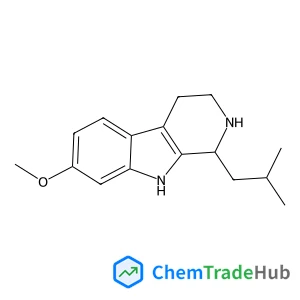
1-Isobutyl-7-methoxy-2,3,4,9-tetrahydro-1H-beta-carboline
CAS Number:
175975-76-5
Molecular Formula:
C16H22N2O
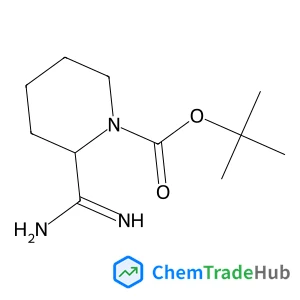
2-Methyl-2-propanyl 2-carbamimidoyl-1-piperidinecarboxylate
CAS Number:
1258640-98-0
Molecular Formula:
C11H21N3O2
Recommended Suppliers





Disclaimer
This page provides academic journal information for reference and research purposes only. We are not affiliated with any journal publishers and do not handle publication submissions. For publication-related inquiries, please contact the respective journal publishers directly.
If you notice any inaccuracies in the information displayed, please contact us at support@chemtradehub.com. We will promptly review and address your concerns.