


![1-oxaspiro[4.4]nonan-6-one structure](https://static.chemtradehub.com/structs/134/134179-01-4-e051.webp "1-oxaspiro[4.4]nonan-6-one structure")
Hollow double-layered polymer nanoparticles with S-nitrosothiols for tumor targeted therapy
Literature Information
Publication Date
2017-08-17
DOI
10.1039/C7TB01715D
Impact Factor
6.331
Authors
Tuanwei Liu, Jingjing Hu, Xiaoye Ma, Bing Kong, Jilan Wang, Zhide Zhang, Dian-Shun Guo, Xinlin Yang
View Original
Abstract
Tumor targeted hollow double-layered polymer nanoparticles (HDPNs) with S-nitrosothiols for nitric oxide (NO)-release as chemotherapy were described. Via a two-stage distillation precipitation co-polymerization, simple post-treatment and S-nitrosothiol modification, the S-nitroso HDPNs showed pH and glucose dual responsiveness. This would benefit accurate binding with the sialic acid over-expressed cancer cells, providing prerequisites for the disulfide polymer assisted cell uptake, intracellular GSH induced decomposition and rapid NO release. Confocal microscopy and cytotoxicity assay with normal versus tumor cells demonstrated in vitro recognition, intracellular delivery ability and tumor cell targeting cytotoxicity. Especially worth mentioning, the inevitable small amount of NO leakage in the transmission would take part in normal physiological activities and not cause serious side effects, providing a possible solution to avoid the intolerable side effects of traditional chemotherapy treatments for cancer.
Recommended Journals

Helvetica Chimica Acta

Science Progress

Israel Journal of Chemistry

European Journal of Wood and Wood Products

Organic Preparations and Procedures International

Proceedings of the National Academy of Sciences of the United States of America

Pharmacological Reviews

Science

Journal of Organometallic Chemistry

Pure and Applied Chemistry
Related Literature
High efficiency photocurrent generation by two-dimensional mixed J-aggregates of cyanine dyes
Mitsuo Kawasaki, Satoshi Aoyama
2004-03-19
Communication
DOI: 10.1039/B400071D
Use of allene in 1,3-dipolar addition to a carbonyl ylide: syntheses of 3-hydroxy-cis-nemorensic acid and nemorensic acid
David M. Hodgson, Frédéric Le Strat
2004-02-24
Communication
DOI: 10.1039/B316908A
Fluorescence studies of protein thermostability in ionic liquids
Sheila N. Baker, T. Mark McCleskey, Siddharth Pandey, Gary A. Baker
2004-03-19
Communication
DOI: 10.1039/B401304M
Enzyme-facilitated enantioselective transport of (S)-ibuprofen through a supported liquid membrane based on ionic liquids
Eijiro Miyako, Tatsuo Maruyama, Noriho Kamiya, Masahiro Goto
2003-10-29
Communication
DOI: 10.1039/B310990A
Highly stereoselective synthesis of (−)-monatin, a high-intensity sweetener, using chelation-controlled nitrone cycloaddition
Osamu Tamura, Tomoya Shiro, Atsushi Toyao, Hiroyuki Ishibashi
2003-09-24
Communication
DOI: 10.1039/B306791M
The generation and trapping of organozinc carbenoids from N-diethoxymethyl amides: a new amidocyclopropanation reaction
Guillaume Bégis, David Cladingboel, William B. Motherwell
2003-10-03
Communication
DOI: 10.1039/B309887G
Unexpected features of stretched Si–H⋯Mo β-agostic interactions‡
Stanislav K. Ignatov, Nicholas H. Rees, Stuart R. Dubberley, Alexei G. Razuvaev, Philip Mountford, Georgii I. Nikonov
2004-03-10
Communication
DOI: 10.1039/B315517J
UV photopatterning of a highly metallized, cluster-containing poly(ferrocenylsilane)
Alison Y. Cheng, Scott B. Clendenning, Guocheng Yang, Zheng-Hong Lu, Christopher M. Yip, Ian Manners
2004-03-03
Communication
DOI: 10.1039/B316656B
Facilitation of addition–elimination reactions in pyrimidines and purines using trifluoroacetic acid in trifluoroethanol
Hayley J. Whitfield, Roger J. Griffin, Ian R. Hardcastle, Andrew Henderson, Jerome Meneyrol, Veronique Mesguiche, Kerry L. Sayle, Bernard T. Golding
2003-10-14
Communication
DOI: 10.1039/B308948G
Significant promotional effect of CCl4 on fullerene yield in the graphite arc-discharge reaction
Fei Gao, Su-Yuan Xie, Rong-Bin Huang, Lan-Sun Zheng
2003-09-24
Communication
DOI: 10.1039/B306921B
You might also like
Compound Q&A
What is the market or research trend for N-(4-Methoxybenzyl)-2-pyridinamine (CAS: 52818-63-0)?
N-(4-Methoxybenzyl)-2-pyridinamine (CAS: 52818-63-0) is increasingly being used ...
52818-63-0N-(4-Methoxybenzyl)-...
Compound Q&A
What precautions should be taken when handling Ethyl 4-(2-chlorophenyl)-1,3-thiazole-2-carboxylate (CAS: 1050507-06-6)?
When handling Ethyl 4-(2-chlorophenyl)-1,3-thiazole-2-carboxylate, appropriate p...
1050507-06-6Ethyl 4-(2-chlorophe...
Compound Q&A
What regulatory guidelines apply to diethyldiselane (CAS: 628-39-7)?
Diethyldiselane (CAS: 628-39-7) is classified under the Globally Harmonized Syst...
628-39-7Diethyldiselane
Compound Q&A
What is the market or research trend for oxocopper (CAS: 12053-18-8)?
The market for oxocopper (CAS: 12053-18-8) is primarily driven by its use in cat...
12053-18-8oxocopper; oxo-(oxoc...
Compound Q&A
What is the market or research trend for 5-{[(2-Methyl-2-propanyl)oxy]carbonyl}-5-azaspiro[2.4]heptane-7-carboxylic acid?
The market for 5-{[(2-Methyl-2-propanyl)oxy]carbonyl}-5-azaspiro[2.4]heptane-7-c...
1268519-54-55-{[(2-Methyl-2-prop...
Compound Q&A
What is 2-(1-Pyrrolidinyl)-4-pyridinamine (CAS: 35981-63-6)?
2-(1-Pyrrolidinyl)-4-pyridinamine is a chemical compound with the CAS number 359...
35981-63-62-(1-Pyrrolidinyl)-4...
Compound Q&A
What are the physical and chemical properties of 2-(3-Pyridinyl)-1-azabicyclo[2.2.2]octane (CAS: 91556-75-1)?
2-(3-Pyridinyl)-1-azabicyclo[2.2.2]octane (CAS: 91556-75-1) is a crystalline sol...
91556-75-12-(3-Pyridinyl)-1-az...
Compound Q&A
How is (S)-Alpha-allyl-proline hydrochloride (CAS: 129704-91-2) typically synthesized?
(S)-Alpha-allyl-proline hydrochloride is usually synthesized via a Wittig reacti...
129704-91-2(S)-Alpha-allyl-prol...
Compound Q&A
What is 3-Methyl-1,2-oxazole-5-carboxylic acid (CAS: 4857-42-5)?
3-Methyl-1,2-oxazole-5-carboxylic acid (CAS: 4857-42-5) is an organic compound w...
4857-42-53-Methyl-1,2-oxazole...
Compound Q&A
How is Lys-SMCC-DM1 (CAS: 1281816-04-3) typically synthesized?
Lys-SMCC-DM1 is synthesized via a multi-step process involving the coupling of S...
1281816-04-3Lys-SMCC-DM1
Source Journal
Journal of Materials Chemistry B
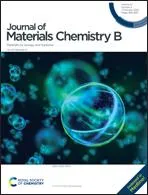
CiteScore:
12
Self-citation Rate:
4.9%
Articles per Year:
831
Journal of Materials Chemistry A, B & C cover high quality studies across all fields of materials chemistry. The journals focus on those theoretical or experimental studies that report new understanding, applications, properties and synthesis of materials. The journals have a strong history of publishing quality reports of interest to interdisciplinary communities and providing an efficient and rigorous service through peer review and publication. The journals are led by an international team of Editors-in-Chief and Associate Editors who are all active researchers in their fields. Journal of Materials Chemistry A, B & C are separated by the intended application of the material studied. Broadly, applications in energy and sustainability are of interest to Journal of Materials Chemistry A, applications in biology and medicine are of interest to Journal of Materials Chemistry B, and applications in optical, magnetic and electronic devices are of interest to Journal of Materials Chemistry C. More than one Journal of Materials Chemistry journal may be suitable for certain fields and researchers are encouraged to submit their paper to the journal that they feel best fits for their particular article. Example topic areas within the scope of Journal of Materials Chemistry B are listed below. This list is neither exhaustive nor exclusive. Antifouling coatings Biocompatible materials Bioelectronics Bioimaging Biomimetics Biomineralisation Bionics Biosensors Diagnostics Drug delivery Gene delivery Immunobiology Nanomedicine Regenerative medicine & Tissue engineering Scaffolds Soft robotics Stem cells Therapeutic devices image block All articles published in Journal of Materials Chemistry B from 2019 onwards will be indexed in MEDLINE®. Articles that primarily focus on providing insight into the underlying science and performance of biomaterials within a biological environment are more suited to our companion journal, Biomaterials Science.
Recommended Compounds
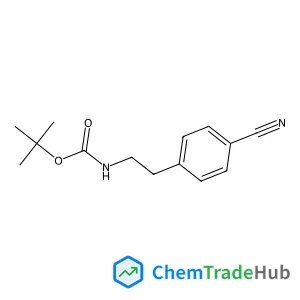
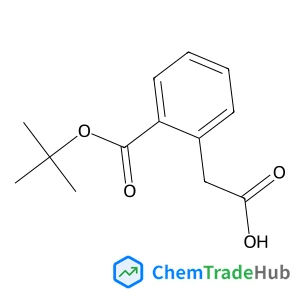
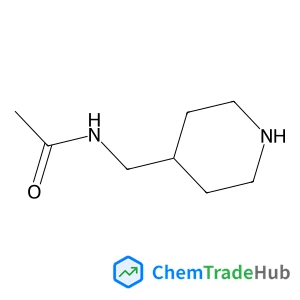

(2R)-2-(3-Bromophenyl)pyrrolidine hydrochloride (1:1)
CAS Number:
1391550-13-2
Molecular Formula:
C10H13BrClN
Recommended Suppliers




Disclaimer
This page provides academic journal information for reference and research purposes only. We are not affiliated with any journal publishers and do not handle publication submissions. For publication-related inquiries, please contact the respective journal publishers directly.
If you notice any inaccuracies in the information displayed, please contact us at support@chemtradehub.com. We will promptly review and address your concerns.