












Simple enrichment and analysis of plasma lysophosphatidic acids
Literature Information
Publication Date
2013-09-26
DOI
10.1039/C3AN01168B
Impact Factor
4.616
Authors
Jialu Wang, Martha Sibrian-Vazquez, Jorge O. Escobedo, Mark Lowry, Lei Wang, Yu-Hsuan Chu, Richard G. Moore, Robert M. Strongin
View Original
Abstract
A simple and highly efficient technique for the analysis of lysophosphatidic acid (LPA) subspecies in human plasma is described. The streamlined sample preparation protocol furnishes the five major LPA subspecies with excellent recoveries. Extensive analysis of the enriched sample reveals only trace levels of other phospholipids. This level of purity not only improves MS analyses, but enables HPLC post-column detection in the visible region with a commercially available fluorescent phospholipids probe. Human plasma samples from different donors were analyzed using the above method and validated by LC-ESI/MS/MS.
Related Literature
Synthetic studies towards congeners of phomactin A. Re-examination of the structure of Sch 49028
John W. C. Cheing, William P. D. Goldring, Gerald Pattenden
2003-10-11
Communication
DOI: 10.1039/B310753A
Supported choline hydroxide (ionic liquid) as heterogeneous catalyst for aldol condensation reactions
Sònia Abelló, Francisco Medina, Xavier Rodríguez, Yolanda Cesteros, Pilar Salagre, Jesús E. Sueiras, Didier Tichit, Bernard Coq
2004-04-01
Communication
DOI: 10.1039/B401448K
Detecting proximities between quadrupolar nuclei by double-quantum NMR
Gregor Mali, Francis Taulelle
2004-02-27
Communication
DOI: 10.1039/B316807G
Free-standing mesoporous titania films with anatase nanocrystallites synthesized at 80 °C
2004-03-23
Communication
DOI: 10.1039/B313609D
Dynamic combinatorial libraries of metalloporphyrins: templated amplification of disulfide-linked oligomers
Amy L. Kieran, Andrew D. Bond, Ana M. Belenguer, Jeremy K. M. Sanders
2003-09-30
Communication
DOI: 10.1039/B310438A
A cationic 24-MC-8 manganese cluster with ring metals possessing three oxidation states [MnII4MnIII6MnIV2(μ4-O)2(μ3-O)4(μ3-OH)4(μ3-OCH3)2(pko)12](OH)(ClO4)3‡
Catherine Dendrinou-Samara, Curtis M. Zaleski, Andri Evagorou, Jeff W. Kampf, Vincent L. Pecoraro, Dimitris P. Kessissoglou
2003-09-30
Communication
DOI: 10.1039/B309439A
Fluorescence studies of protein thermostability in ionic liquids
Sheila N. Baker, T. Mark McCleskey, Siddharth Pandey, Gary A. Baker
2004-03-19
Communication
DOI: 10.1039/B401304M
Molecular recognition. Self-assembly of molecular trigonal prisms and their host–guest adducts
James D. Crowley, Andrew J. Goshe, Brice Bosnich
2003-10-17
Communication
DOI: 10.1039/B307385H
Long-term pervaporation performance of microporous methylated silica membranes
Jean Campaniello, Charles W. R. Engelen, Wim G. Haije, Paul P. A. C. Pex, Jaap F. Vente
2004-02-27
Communication
DOI: 10.1039/B401496K
Nanoprobe implantation into mammalian cells by cationic transfection
Yan Zhao, Bryce Sadtler, Min Lin, Gregory H. Hockerman, Alexander Wei
2004-03-04
Communication
DOI: 10.1039/B317061F
You might also like
Compound Q&A
What is the market or research trend for N-(4-Methoxybenzyl)-2-pyridinamine (CAS: 52818-63-0)?
N-(4-Methoxybenzyl)-2-pyridinamine (CAS: 52818-63-0) is increasingly being used ...
52818-63-0N-(4-Methoxybenzyl)-...
Compound Q&A
What precautions should be taken when handling Ethyl 4-(2-chlorophenyl)-1,3-thiazole-2-carboxylate (CAS: 1050507-06-6)?
When handling Ethyl 4-(2-chlorophenyl)-1,3-thiazole-2-carboxylate, appropriate p...
1050507-06-6Ethyl 4-(2-chlorophe...
Compound Q&A
What regulatory guidelines apply to diethyldiselane (CAS: 628-39-7)?
Diethyldiselane (CAS: 628-39-7) is classified under the Globally Harmonized Syst...
628-39-7Diethyldiselane
Compound Q&A
What is the market or research trend for oxocopper (CAS: 12053-18-8)?
The market for oxocopper (CAS: 12053-18-8) is primarily driven by its use in cat...
12053-18-8oxocopper; oxo-(oxoc...
Compound Q&A
What is the market or research trend for 5-{[(2-Methyl-2-propanyl)oxy]carbonyl}-5-azaspiro[2.4]heptane-7-carboxylic acid?
The market for 5-{[(2-Methyl-2-propanyl)oxy]carbonyl}-5-azaspiro[2.4]heptane-7-c...
1268519-54-55-{[(2-Methyl-2-prop...
Compound Q&A
What is 2-(1-Pyrrolidinyl)-4-pyridinamine (CAS: 35981-63-6)?
2-(1-Pyrrolidinyl)-4-pyridinamine is a chemical compound with the CAS number 359...
35981-63-62-(1-Pyrrolidinyl)-4...
Compound Q&A
What are the physical and chemical properties of 2-(3-Pyridinyl)-1-azabicyclo[2.2.2]octane (CAS: 91556-75-1)?
2-(3-Pyridinyl)-1-azabicyclo[2.2.2]octane (CAS: 91556-75-1) is a crystalline sol...
91556-75-12-(3-Pyridinyl)-1-az...
Compound Q&A
How is (S)-Alpha-allyl-proline hydrochloride (CAS: 129704-91-2) typically synthesized?
(S)-Alpha-allyl-proline hydrochloride is usually synthesized via a Wittig reacti...
129704-91-2(S)-Alpha-allyl-prol...
Compound Q&A
What is 3-Methyl-1,2-oxazole-5-carboxylic acid (CAS: 4857-42-5)?
3-Methyl-1,2-oxazole-5-carboxylic acid (CAS: 4857-42-5) is an organic compound w...
4857-42-53-Methyl-1,2-oxazole...
Compound Q&A
How is Lys-SMCC-DM1 (CAS: 1281816-04-3) typically synthesized?
Lys-SMCC-DM1 is synthesized via a multi-step process involving the coupling of S...
1281816-04-3Lys-SMCC-DM1
Source Journal
Analyst

CiteScore:
7.8
Self-citation Rate:
5.6%
Articles per Year:
653
Analyst publishes analytical and bioanalytical research that reports premier fundamental discoveries and inventions, and the applications of those discoveries, unconfined by traditional discipline barriers.
Recommended Compounds
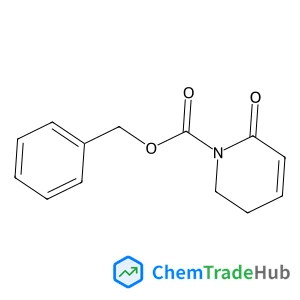
Benzyl 6-oxo-3,6-dihydro-1(2H)-pyridinecarboxylate
CAS Number:
725746-35-0
Molecular Formula:
C13H13NO3
![N-{[(2-Methyl-2-propanyl)oxy]carbonyl}-L-methionylglycine structure](https://static.chemtradehub.com/structs/234/23446-03-9-e1e5.webp "N-{[(2-Methyl-2-propanyl)oxy]carbonyl}-L-methionylglycine structure")
N-{[(2-Methyl-2-propanyl)oxy]carbonyl}-L-methionylglycine
CAS Number:
23446-03-9
Molecular Formula:
C12H22N2O5S
Recommended Suppliers







Disclaimer
This page provides academic journal information for reference and research purposes only. We are not affiliated with any journal publishers and do not handle publication submissions. For publication-related inquiries, please contact the respective journal publishers directly.
If you notice any inaccuracies in the information displayed, please contact us at support@chemtradehub.com. We will promptly review and address your concerns.