












Synthetic studies towards congeners of phomactin A. Re-examination of the structure of Sch 49028
Literature Information
Publication Date
2003-10-11
DOI
10.1039/B310753A
Impact Factor
6.222
Authors
John W. C. Cheing, William P. D. Goldring, Gerald Pattenden
View Original
Abstract
The total syntheses of the epoxy cyclic hemiacetal structures 8 and 9, which are isomeric with the structure 6 proposed for the phomactin known as Sch 49028 isolated from the marine fungus Phoma sp. are described. Neither of these structures showed spectroscopic data consistent with those reported for the purported natural product, adding credibility to the proposal that the structure Sch 49028 does not exist in nature and that its NMR spectroscopic data should have been assigned as phomactin A (1).
Related Literature
Monitoring the reversible photoisomerization of an azobenzene-functionalized molecular triazatriangulene platform on Au(111) by IRRAS
Hanne Jacob, Sandra Ulrich, Ulrich Jung, Sonja Lemke, Talina Rusch, Christian Schütt, Finn Petersen, Thomas Strunskus, Olaf Magnussen, Rainer Herges, Felix Tuczek
2014-09-17
Paper
DOI: 10.1039/C4CP03438D
On the dual character of charged metal–molecule hybrids and the opposite behaviour of the forward and reverse CT processes
J. Roman-Perez, S. P. Centeno, M. R. López-Ramírez, J. F. Arenas, J. Soto, I. López-Tocón, J. C. Otero
2014-09-17
Communication
DOI: 10.1039/C4CP03984J
Photoelectrochemical reduction of aqueous protons with a CuO|CuBi2O4 heterojunction under visible light irradiation
Hyun S. Park, Chong-Yong Lee, Erwin Reisner
2014-09-05
Communication
DOI: 10.1039/C4CP03883E
Direct measurements of the total rate constant of the reaction NCN + H and implications for the product branching ratio and the enthalpy of formation of NCN
Nancy Faßheber, Johannes Dammeier, Gernot Friedrichs
2014-04-29
Paper
DOI: 10.1039/C4CP01107D
Doping indium in β-Bi2O3 to tune the electronic structure and improve the photocatalytic activities: first-principles calculations and experimental investigation
Junying Zhang, Wenqiang Dang, Xingchen Yan, Hong Gao, Zhimin Ao
2014-09-30
Paper
DOI: 10.1039/C4CP02656J
A three-dimensional hierarchical TiO2 urchin as a photoelectrochemical anode with omnidirectional anti-reflectance properties
Weina Ren, Haifeng Zhang, Dezhi Kong, Bo Liu, Yaping Yang
2014-09-12
Communication
DOI: 10.1039/C4CP03043E
Ammonia-modified Co(ii) sites in zeolites: IR spectroscopy and spin-resolved charge transfer analysis of NO adsorption complexes
Kinga Góra-Marek, Adam Stępniewski, Mariusz Radoń, Ewa Broclawik
2014-09-11
Paper
DOI: 10.1039/C4CP03350G
Hydrogen-bond memory and water-skin supersolidity resolving the Mpemba paradox
Yongli Huang, Zengsheng Ma, Yichun Zhou, Ji Zhou, Weitao Zheng, Qing Jiang, Chang Q. Sun
2014-09-09
Paper
DOI: 10.1039/C4CP03669G
SERS spectroscopic evidence for the integrity of surface-deposited self-assembled coordination cages
Marina Frank, Sebastian Funke, Hainer Wackerbarth, Guido H. Clever
2014-08-29
Communication
DOI: 10.1039/C4CP02188F
You might also like
Compound Q&A
What is the market or research trend for N-(4-Methoxybenzyl)-2-pyridinamine (CAS: 52818-63-0)?
N-(4-Methoxybenzyl)-2-pyridinamine (CAS: 52818-63-0) is increasingly being used ...
52818-63-0N-(4-Methoxybenzyl)-...
Compound Q&A
What precautions should be taken when handling Ethyl 4-(2-chlorophenyl)-1,3-thiazole-2-carboxylate (CAS: 1050507-06-6)?
When handling Ethyl 4-(2-chlorophenyl)-1,3-thiazole-2-carboxylate, appropriate p...
1050507-06-6Ethyl 4-(2-chlorophe...
Compound Q&A
What regulatory guidelines apply to diethyldiselane (CAS: 628-39-7)?
Diethyldiselane (CAS: 628-39-7) is classified under the Globally Harmonized Syst...
628-39-7Diethyldiselane
Compound Q&A
What is the market or research trend for oxocopper (CAS: 12053-18-8)?
The market for oxocopper (CAS: 12053-18-8) is primarily driven by its use in cat...
12053-18-8oxocopper; oxo-(oxoc...
Compound Q&A
What is the market or research trend for 5-{[(2-Methyl-2-propanyl)oxy]carbonyl}-5-azaspiro[2.4]heptane-7-carboxylic acid?
The market for 5-{[(2-Methyl-2-propanyl)oxy]carbonyl}-5-azaspiro[2.4]heptane-7-c...
1268519-54-55-{[(2-Methyl-2-prop...
Compound Q&A
What is 2-(1-Pyrrolidinyl)-4-pyridinamine (CAS: 35981-63-6)?
2-(1-Pyrrolidinyl)-4-pyridinamine is a chemical compound with the CAS number 359...
35981-63-62-(1-Pyrrolidinyl)-4...
Compound Q&A
What are the physical and chemical properties of 2-(3-Pyridinyl)-1-azabicyclo[2.2.2]octane (CAS: 91556-75-1)?
2-(3-Pyridinyl)-1-azabicyclo[2.2.2]octane (CAS: 91556-75-1) is a crystalline sol...
91556-75-12-(3-Pyridinyl)-1-az...
Compound Q&A
How is (S)-Alpha-allyl-proline hydrochloride (CAS: 129704-91-2) typically synthesized?
(S)-Alpha-allyl-proline hydrochloride is usually synthesized via a Wittig reacti...
129704-91-2(S)-Alpha-allyl-prol...
Compound Q&A
What is 3-Methyl-1,2-oxazole-5-carboxylic acid (CAS: 4857-42-5)?
3-Methyl-1,2-oxazole-5-carboxylic acid (CAS: 4857-42-5) is an organic compound w...
4857-42-53-Methyl-1,2-oxazole...
Compound Q&A
How is Lys-SMCC-DM1 (CAS: 1281816-04-3) typically synthesized?
Lys-SMCC-DM1 is synthesized via a multi-step process involving the coupling of S...
1281816-04-3Lys-SMCC-DM1
Source Journal
Chemical Communications

CiteScore:
8.6
Self-citation Rate:
4.7%
Articles per Year:
2458
ChemComm publishes urgent research which is of outstanding significance and interest to experts in the field, while also appealing to the journal’s broad chemistry readership. Our communication format is ideally suited to short, urgent studies that are of such importance that they require accelerated publication. Our scope covers all topics in chemistry, and research at the interface of chemistry and other disciplines (such as materials science, nanoscience, physics, engineering and biology) where there is a significant novelty in the chemistry aspects. Major topic areas covered include: Analytical Chemistry Catalysis Chemical Biology and medicinal chemistry Computational Chemistry and Machine Learning Energy and sustainable chemistry Environmental Chemistry Green Chemistry Inorganic Chemistry Materials Chemistry Nanoscience Organic Chemistry Physical Chemistry Polymer Chemistry Supramolecular Chemistry
Recommended Compounds
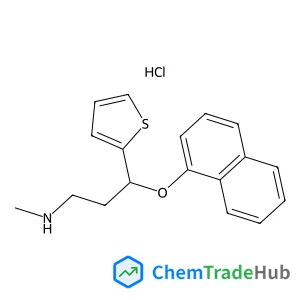
N-Methyl-3-(1-naphthyloxy)-3-(2-thienyl)-1-propanamine hydrochloride (1:1)
CAS Number:
1188266-11-6
Molecular Formula:
C18H20ClNOS
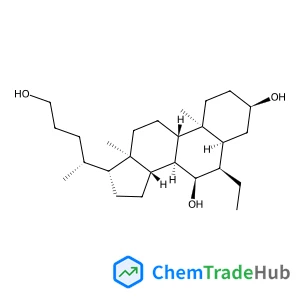
(3alpha,5beta,6alpha,7alpha)-6-Ethylcholane-3,7,24-triol
CAS Number:
1537866-49-1
Molecular Formula:
C26H46O3
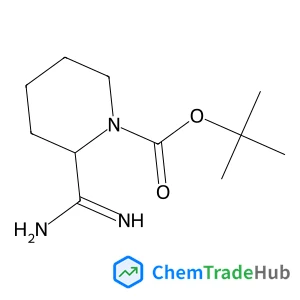
2-Methyl-2-propanyl 2-carbamimidoyl-1-piperidinecarboxylate
CAS Number:
1258640-98-0
Molecular Formula:
C11H21N3O2
Recommended Suppliers




Disclaimer
This page provides academic journal information for reference and research purposes only. We are not affiliated with any journal publishers and do not handle publication submissions. For publication-related inquiries, please contact the respective journal publishers directly.
If you notice any inaccuracies in the information displayed, please contact us at support@chemtradehub.com. We will promptly review and address your concerns.