












Detecting proximities between quadrupolar nuclei by double-quantum NMR
Literature Information
Publication Date
2004-02-27
DOI
10.1039/B316807G
Impact Factor
6.222
Authors
Gregor Mali, Francis Taulelle
View Original
Abstract
A robust, easy to optimize, and efficient homonuclear correlation NMR experiment for half-integer quadrupolar nuclei in solids is described and has been experimentally tested on anhydrous Na2HPO4 (23Na, S = 3/2 nucleus) and as-synthesized AlPO4-14 (27Al, S = 5/2 nucleus), an aluminophosphate molecular sieve.
Related Literature
Physicochemical properties of pentaglyme–sodium bis(trifluoromethanesulfonyl)amide solvate ionic liquid
Shoshi Terada, Toshihiko Mandai, Risa Nozawa, Kazuki Yoshida, Kazuhide Ueno, Seiji Tsuzuki, Masayoshi Watanabe
2014-04-25
Paper
DOI: 10.1039/C4CP00746H
Complexation of DNA with ruthenium organometallic compounds: the high complexation ratio limit
Stéphane Despax, Fuchao Jia, Michel Pfeffer, Pascal Hébraud
2014-03-28
Paper
DOI: 10.1039/C4CP00726C
Description of heteroaromaticity on the basis of π-electron density anisotropy
Rohoullah Firouzi, Sahar Sharifi Ardani
2014-04-25
Paper
DOI: 10.1039/C4CP01125B
Experimental and first-principles study of guanine adsorption on ZnO clusters
V. L. Chandraboss, B. Karthikeyan, S. Senthilvelan
2014-09-22
Paper
DOI: 10.1039/C4CP03274H
Synthesis of Au130(SR)50 and Au130−xAgx(SR)50 nanomolecules through core size conversion of larger metal clusters
Vijay Reddy Jupally, Amala Dass
2014-04-15
Paper
DOI: 10.1039/C3CP54343A
Tavorite-FeSO4F as a potential cathode material for Mg ion batteries: a first principles calculation
Jiandong Wu, Guohua Gao, Guangming Wu, Bo Liu, Huiyu Yang, Xiaowei Zhou, Jichao Wang
2014-09-03
Communication
DOI: 10.1039/C4CP03176H
Nanoparticle catalysts for proton exchange membrane fuel cells: can surfactant effects be beneficial for electrocatalysis?
J. E. Newton, J. A. Preece, N. V. Rees, S. L. Horswell
2014-05-07
Paper
DOI: 10.1039/C4CP00991F
Mesoscopic modeling of Li insertion in phase-separating electrode materials: application to lithium iron phosphate
Mohammad Farkhondeh, Mark Pritzker, Michael Fowler, Mohammadhosein Safari, Charles Delacourt
2014-09-09
Paper
DOI: 10.1039/C4CP03530E
You might also like
Compound Q&A
What is the market or research trend for N-(4-Methoxybenzyl)-2-pyridinamine (CAS: 52818-63-0)?
N-(4-Methoxybenzyl)-2-pyridinamine (CAS: 52818-63-0) is increasingly being used ...
52818-63-0N-(4-Methoxybenzyl)-...
Compound Q&A
What precautions should be taken when handling Ethyl 4-(2-chlorophenyl)-1,3-thiazole-2-carboxylate (CAS: 1050507-06-6)?
When handling Ethyl 4-(2-chlorophenyl)-1,3-thiazole-2-carboxylate, appropriate p...
1050507-06-6Ethyl 4-(2-chlorophe...
Compound Q&A
What regulatory guidelines apply to diethyldiselane (CAS: 628-39-7)?
Diethyldiselane (CAS: 628-39-7) is classified under the Globally Harmonized Syst...
628-39-7Diethyldiselane
Compound Q&A
What is the market or research trend for oxocopper (CAS: 12053-18-8)?
The market for oxocopper (CAS: 12053-18-8) is primarily driven by its use in cat...
12053-18-8oxocopper; oxo-(oxoc...
Compound Q&A
What is the market or research trend for 5-{[(2-Methyl-2-propanyl)oxy]carbonyl}-5-azaspiro[2.4]heptane-7-carboxylic acid?
The market for 5-{[(2-Methyl-2-propanyl)oxy]carbonyl}-5-azaspiro[2.4]heptane-7-c...
1268519-54-55-{[(2-Methyl-2-prop...
Compound Q&A
What is 2-(1-Pyrrolidinyl)-4-pyridinamine (CAS: 35981-63-6)?
2-(1-Pyrrolidinyl)-4-pyridinamine is a chemical compound with the CAS number 359...
35981-63-62-(1-Pyrrolidinyl)-4...
Compound Q&A
What are the physical and chemical properties of 2-(3-Pyridinyl)-1-azabicyclo[2.2.2]octane (CAS: 91556-75-1)?
2-(3-Pyridinyl)-1-azabicyclo[2.2.2]octane (CAS: 91556-75-1) is a crystalline sol...
91556-75-12-(3-Pyridinyl)-1-az...
Compound Q&A
How is (S)-Alpha-allyl-proline hydrochloride (CAS: 129704-91-2) typically synthesized?
(S)-Alpha-allyl-proline hydrochloride is usually synthesized via a Wittig reacti...
129704-91-2(S)-Alpha-allyl-prol...
Compound Q&A
What is 3-Methyl-1,2-oxazole-5-carboxylic acid (CAS: 4857-42-5)?
3-Methyl-1,2-oxazole-5-carboxylic acid (CAS: 4857-42-5) is an organic compound w...
4857-42-53-Methyl-1,2-oxazole...
Compound Q&A
How is Lys-SMCC-DM1 (CAS: 1281816-04-3) typically synthesized?
Lys-SMCC-DM1 is synthesized via a multi-step process involving the coupling of S...
1281816-04-3Lys-SMCC-DM1
Source Journal
Chemical Communications

CiteScore:
8.6
Self-citation Rate:
4.7%
Articles per Year:
2458
ChemComm publishes urgent research which is of outstanding significance and interest to experts in the field, while also appealing to the journal’s broad chemistry readership. Our communication format is ideally suited to short, urgent studies that are of such importance that they require accelerated publication. Our scope covers all topics in chemistry, and research at the interface of chemistry and other disciplines (such as materials science, nanoscience, physics, engineering and biology) where there is a significant novelty in the chemistry aspects. Major topic areas covered include: Analytical Chemistry Catalysis Chemical Biology and medicinal chemistry Computational Chemistry and Machine Learning Energy and sustainable chemistry Environmental Chemistry Green Chemistry Inorganic Chemistry Materials Chemistry Nanoscience Organic Chemistry Physical Chemistry Polymer Chemistry Supramolecular Chemistry
Recommended Compounds
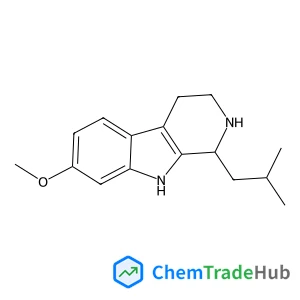
1-Isobutyl-7-methoxy-2,3,4,9-tetrahydro-1H-beta-carboline
CAS Number:
175975-76-5
Molecular Formula:
C16H22N2O
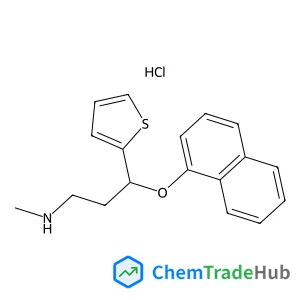
N-Methyl-3-(1-naphthyloxy)-3-(2-thienyl)-1-propanamine hydrochloride (1:1)
CAS Number:
1188266-11-6
Molecular Formula:
C18H20ClNOS
Recommended Suppliers




Disclaimer
This page provides academic journal information for reference and research purposes only. We are not affiliated with any journal publishers and do not handle publication submissions. For publication-related inquiries, please contact the respective journal publishers directly.
If you notice any inaccuracies in the information displayed, please contact us at support@chemtradehub.com. We will promptly review and address your concerns.