












Excision of CN− and OCN− from acetamide and some amide derivatives triggered by low energy electrons
Literature Information
Publication Date
2008-10-14
DOI
10.1039/B812130C
Impact Factor
3.676
Authors
Constanze Koenig-Lehmann, Janina Kopyra, Iwona Dąbkowska, Jaroslav Kočišek, Eugen Illenberger
View Original
Abstract
Low energy electron attachment to acetamide and some of its derivatives shows unique features in that the unimolecular reactions of the transient anions are remarkably complex, involving multiple bond cleavages and the formation of new molecules. Each of the three compounds acetamide (CH3C(O)NH2), glycolamide (CH2OHC(O)NH2) and cyanoacetamide (CH2CNC(O)NH2) shows a pronounced resonance located near 2 eV and decomposing into CN− along a concerted reaction forming a neutral H2O molecule and the corresponding radical (methyl and methoxy). From glycolamide an additional reaction pathway resulting in the loss of water is operative, in this case generating two fragments and observable via the complementary anion (M–H2O)−. The pseudohalogen OCN− is formed at comparatively lower intensity having a specific energy profile for each of the target molecules. In dibromocyanoacetamide (CBr2CNC(O)NH2) the situation changes completely as now comparatively intense CN− and OCN− signals appear already near zero eV. Electronic structure calculations predict that in dibromocyanoacetamide the extra electron resides in a molecular orbital (MO) which is strongly localized at the Br sites. For the other compounds, the relevant MOs are appreciably delocalized showing π*C=O character.
Related Literature
Charge-transfer state dynamics in all-polymer solar cells: formation, dissociation and decoherence
Jiaqing Huang, Yijie Mo, Yao Yao
2019-01-03
Paper
DOI: 10.1039/C8CP06467A
Single tungsten atom supported on N-doped graphyne as a high-performance electrocatalyst for nitrogen fixation under ambient conditions
Tianwei He, Sri Kasi Matta, Aijun Du
2018-12-12
Paper
DOI: 10.1039/C8CP06978F
Thermodiffusion of citrate-coated γ-Fe2O3 nanoparticles in aqueous dispersions with tuned counter-ions – anisotropy of the Soret coefficient under a magnetic field
M. Kouyaté, G. Demouchy, G. Mériguet, S. Nakamae, V. Peyre, M. Roger, A. Cēbers, J. Depeyrot, E. Dubois, R. Perzynski
2018-12-28
Paper
DOI: 10.1039/C8CP06858E
Swelling behaviour of core–shell microgels in H2O, analysed by temperature-dependent FTIR spectroscopy
Lars Wiehemeier, Oliver Wrede, Julian Oberdisse, Thomas Hellweg, Tilman Kottke
2018-12-03
Paper
DOI: 10.1039/C8CP05911J
A simple model for calculating atomic charges in molecules
Anton J. Stasyuk
2018-08-25
Paper
DOI: 10.1039/C8CP03764G
Doping effect on the local structure of metamagnetic Co doped Ni/NiO:GO core–shell nanoparticles using X-ray absorption spectroscopy and the pair distribution function
U. P. Gawai, D. K. Gaikwad, M. R. Bodke, H. A. Khawal, K. K. Pandey, A. K. Yadav, S. N. Jha, D. Bhattacharyya, B. N. Dole
2018-12-05
Paper
DOI: 10.1039/C8CP05267K
Theoretical study of the bandgap regulation of a two-dimensional GeSn alloy under biaxial strain and uniaxial strain along the armchair direction
Wenqi Huang, Hong Yang, Buwen Cheng, Chunlai Xue
2018-08-20
Paper
DOI: 10.1039/C8CP03570A
Achieving a direct band gap and high power conversion efficiency in an SbI3/BiI3 type-II vdW heterostructure via interlayer compression and electric field application
Jiayu Dai
2019-01-03
Paper
DOI: 10.1039/C8CP07298A
Charge-patching method for the calculation of electronic structure of polypeptides
Fu Ding, Lin-Wang Wang
2018-08-17
Paper
DOI: 10.1039/C8CP01803K
You might also like
Compound Q&A
How is 3-(2-Bromoimidazo[2,1-b]thiazol-6-yl)propanoic acid hydrochloride (CAS: 1187830-80-3) typically synthesized?
3-(2-Bromoimidazo[2,1-b]thiazol-6-yl)propanoic acid hydrochloride is typically s...
1187830-80-33-(2-Bromoimidazo[2,...
Compound Q&A
How is 2-Isopropyl-1,3-dioxane-5-carboxylic acid (CAS: 116193-72-7) typically synthesized?
2-Isopropyl-1,3-dioxane-5-carboxylic acid is typically synthesized by the carbox...
116193-72-72-Isopropyl-1,3-diox...
Compound Q&A
What is Alisporivir (CAS: 254435-95-5)?
Alisporivir (CAS: 254435-95-5) is an antiviral medication used in the treatment ...
254435-95-5Alisporivir
Compound Q&A
What are the physical and chemical properties of [1,2,4]triazolo[3,4-a]phthalazine (CAS: 234-80-0)?
[1,2,4]triazolo[3,4-a]phthalazine (CAS: 234-80-0) is a crystalline compound with...
234-80-0[1,2,4]triazolo[3,4-...
Compound Q&A
What regulatory guidelines apply to (2S)-5-Hydroxy-2-(4-hydroxyphenyl)-4-oxo-3,4-dihydro-2H-chromen-7-yl methyl beta-D-glucopyranosiduronate (CAS: 1985597-72-5)?
Regulatory guidelines for (2S)-5-Hydroxy-2-(4-hydroxyphenyl)-4-oxo-3,4-dihydro-2...
1985597-72-5(2S)-5-Hydroxy-2-(4-...
Compound Q&A
Is 2,2-Difluorocyclohexanamine hydrochloride (CAS: 921602-83-7) safe?
2,2-Difluorocyclohexanamine hydrochloride is generally safe when handled under p...
921602-83-72,2-Difluorocyclohex...
Compound Q&A
What are the main uses of 3-Nitro-2-phenylthiophene (CAS: 18150-94-2)?
3-Nitro-2-phenylthiophene is primarily used in the synthesis of other organic co...
18150-94-23-Nitro-2-phenylthio...
Compound Q&A
What is 1-(Trifluoroacetyl)-4-piperidinecarbonitrile (CAS: 77940-79-5)?
1-(Trifluoroacetyl)-4-piperidinecarbonitrile (CAS: 77940-79-5) is a colorless to...
77940-79-51-(Trifluoroacetyl)-...
Compound Q&A
What is the market or research trend for 1,3,6,8-Tetranitro-9H-carbazole (CAS: 4543-33-3)?
Research and market trends for 1,3,6,8-Tetranitro-9H-carbazole (CAS: 4543-33-3) ...
4543-33-31,3,6,8-Tetranitro-9...
Compound Q&A
How should waste containing Dibenzo[b,d]thiophen-1-ylboronic acid (CAS: 1245943-60-5) be handled?
Waste containing Dibenzo[b,d]thiophen-1-ylboronic acid (CAS: 1245943-60-5) shoul...
1245943-60-5Dibenzo[b,d]thiophen...
Source Journal
Physical Chemistry Chemical Physics

CiteScore:
5.5
Self-citation Rate:
10.3%
Articles per Year:
3036
Physical Chemistry Chemical Physics (PCCP) is an international journal co-owned by 19 physical chemistry and physics societies from around the world. This journal publishes original, cutting-edge research in physical chemistry, chemical physics and biophysical chemistry. To be suitable for publication in PCCP, articles must include significant innovation and/or insight into physical chemistry; this is the most important criterion that reviewers and Editors will judge against when evaluating submissions. The journal has a broad scope and welcomes contributions spanning experiment, theory, computation and data science. Topical coverage includes spectroscopy, dynamics, kinetics, statistical mechanics, thermodynamics, electrochemistry, catalysis, surface science, quantum mechanics, quantum computing and machine learning. Interdisciplinary research areas such as polymers and soft matter, materials, nanoscience, energy, surfaces/interfaces, and biophysical chemistry are welcomed if they demonstrate significant innovation and/or insight into physical chemistry. Joined experimental/theoretical studies are particularly appreciated when complementary and based on up-to-date approaches.
Recommended Compounds
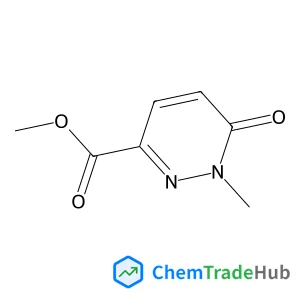
Methyl 1-methyl-6-oxo-1,6-dihydro-3-pyridazinecarboxylate
CAS Number:
74173-58-3
Molecular Formula:
C7H8N2O3
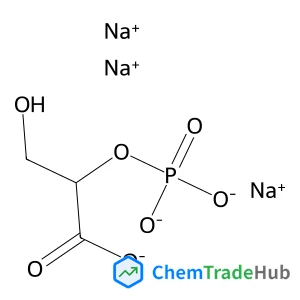
Sodium (1R)-1-carboxy-2-hydroxyethyl phosphate hydrate (2:1:1)
CAS Number:
70195-25-4
Molecular Formula:
C3H7Na2O8P
Recommended Suppliers







Disclaimer
This page provides academic journal information for reference and research purposes only. We are not affiliated with any journal publishers and do not handle publication submissions. For publication-related inquiries, please contact the respective journal publishers directly.
If you notice any inaccuracies in the information displayed, please contact us at support@chemtradehub.com. We will promptly review and address your concerns.