


A simple model for calculating atomic charges in molecules
Literature Information
Publication Date
2018-08-25
DOI
10.1039/C8CP03764G
Impact Factor
3.676
Authors
Anton J. Stasyuk
View Original
Abstract
We propose a new atomic-charge analysis, termed adjusted charge partitioning (ACP) scheme. To partition the molecular electronic density into atomic components, weighting factors cAr2n−2exp(−αAr) with atomic parameters cA and αA are used. Extensive numerical tests were performed for 540 molecules containing 17 main-group elements H, Li to F, Na to Cl, Br, and I. The estimated dipole moments and atomic charges are compared with the data provided by a large number of alternative atomic-charge schemes including the Mulliken, Löwdin, Hirshfeld, Hirshfeld Iterative, CM5, ESP, NPA, and QTAIM population analyses. These tests show that the resulting atomic charges are insensitive to basis sets used, chemically consistent and accurately reproduce experimental dipole moments.
Recommended Journals

Russian Journal of Applied Chemistry

Russian Journal of Bioorganic Chemistry

New Journal of Chemistry

Chemistry Education Research and Practice

Acta Materialia

Journal of Peptide Science

Russian Chemical Bulletin

Current Opinion in Colloid & Interface Science

Organic Process Research & Development

Crystallography Reports
Related Literature
Blind prediction of toluene/water partition coefficients using COSMO-RS: results from the SAMPL9 challenge
Thomas Nevolianis, Raja A. Ahmed, Arnim Hellweg, Michael Diedenhofen, Kai Leonhard
2023-11-15
Paper
DOI: 10.1039/D3CP04077A
Single-molecule scale quantification reveals interactions underlying protein–protein interface: from forces to non-covalent bonds
Heng Sun, Yichen Tian, Yuna Fu, Yongrong Lei, Yani Wang, Xinrui Yan, Jianhua Wang
2023-11-07
Paper
DOI: 10.1039/D3CP04351G
Graphene-edge-supported iron dual-atom for oxygen reduction electrocatalysts
Nadya Amalia, Fiki T. Akbar, Hadi T. Yudistira, Nadhratun N. Mobarak
2023-11-14
Paper
DOI: 10.1039/D3CP03642A
A highly efficient Mn4+ activated Nb-based oxyfluoride red fluorescent material with excellent water stability: preparation and performance analysis
Wenjie Shi
2023-11-14
Paper
DOI: 10.1039/D3CP04631A
Comment on “Cumulant mapping as the basis of multi-dimensional spectrometry” by Leszek J. Frasinski, Phys. Chem. Chem. Phys., 2022, 24, 20776–20787
2023-11-22
Comment
DOI: 10.1039/D3CP02525J
Prediction of superconductivity in metallic boron–carbon compounds from 0 to 100 GPa by high-throughput screening
Yang Sun, Renhai Wang, Yimei Fang, Shunqing Wu, Qiubao Lin, Kai-Ming Ho
2023-11-14
Paper
DOI: 10.1039/D3CP03844K
Osmolyte induced protein stabilization: modulation of associated water dynamics might be a key factor
Kuldeep Singh Negi, Nilimesh Das, Tanmoy Khan, Pratik Sen
2023-11-27
Paper
DOI: 10.1039/D3CP03357K
You might also like
Compound Q&A
Are there alternatives to 1-(4-Chlorophenyl)-N-hydroxymethanimine (CAS: 3848-36-0) in synthesis?
When considering alternatives to 1-(4-Chlorophenyl)-N-hydroxymethanimine (CAS: 3...
3848-36-01-(4-Chlorophenyl)-N...
Compound Q&A
How should (1R,9S,10S,12S,14E,16S,19R,20R,21S,22R)-3,9,21-Trihydroxy-5,10,12,14,16,20,22-heptamethyl-23,24-dioxatetracyclo[17.3.1.1~6,9~.0~2,7~]tetracosa-2,5,7,14-tetraen-4-one (CAS: 183202-73-5) be stored?
This compound should be stored in a cool, dry place away from direct sunlight. I...
183202-73-5(1R,9S,10S,12S,14E,1...
Compound Q&A
How is 3-(4-Bromophenyl)-5-(2-fluorophenyl)-1,2,4-oxadiazole (CAS: 419553-16-5) typically synthesized?
3-(4-Bromophenyl)-5-(2-fluorophenyl)-1,2,4-oxadiazole is synthesized through a m...
419553-16-53-(4-Bromophenyl)-5-...
Compound Q&A
How is 5-Chloro-2-(4-chlorophenyl)-4-methyl-6-[3-(1-piperidinyl)propoxy]pyrimidine (CAS: 1639220-19-1) typically synthesized?
5-Chloro-2-(4-chlorophenyl)-4-methyl-6-[3-(1-piperidinyl)propoxy]pyrimidine (CAS...
1639220-19-15-Chloro-2-(4-chloro...
Compound Q&A
What industries use 2-Chloro-4-(difluoromethoxy)pyridine (CAS: 1206978-15-5)?
2-Chloro-4-(difluoromethoxy)pyridine is used in the pharmaceutical industry for ...
1206978-15-52-Chloro-4-(difluoro...
Compound Q&A
What regulatory guidelines apply to 3-Chloro-6-methylpyridazine (CAS: 1121-79-5)?
3-Chloro-6-methylpyridazine (CAS: 1121-79-5) is classified under the Globally Ha...
1121-79-53-Chloro-6-methylpyr...
Compound Q&A
Are there alternatives to Methyl 4,5-dimethyl-2-nitrobenzoate in synthesis?
Several alternatives can be used in the synthesis of Methyl 4,5-dimethyl-2-nitro...
90922-74-0Methyl 4,5-dimethyl-...
Compound Q&A
Are there alternatives to (2E,2'E)-3,3'-(1,4-Phenylene)bisacrylaldehyde in synthesis?
Alternatives to (2E,2'E)-3,3'-(1,4-Phenylene)bisacrylaldehyde include other acry...
63405-68-5(2E,2'E)-3,3'-(1,4-P...
Compound Q&A
What is 3-Amino-5-chloropyridin-2-ol hydrochloride (CAS: 1261906-29-9)?
3-Amino-5-chloropyridin-2-ol hydrochloride is an organic compound with the CAS n...
1261906-29-93-Amino-5-chloropyri...
Compound Q&A
What precautions should be taken when handling 6,7-Difluoro-2,3-dihydro-4H-chromen-4-one (CAS: 1092349-93-3)?
When handling 6,7-Difluoro-2,3-dihydro-4H-chromen-4-one, it is essential to wear...
1092349-93-36,7-Difluoro-2,3-dih...
Source Journal
Physical Chemistry Chemical Physics

CiteScore:
5.5
Self-citation Rate:
10.3%
Articles per Year:
3036
Physical Chemistry Chemical Physics (PCCP) is an international journal co-owned by 19 physical chemistry and physics societies from around the world. This journal publishes original, cutting-edge research in physical chemistry, chemical physics and biophysical chemistry. To be suitable for publication in PCCP, articles must include significant innovation and/or insight into physical chemistry; this is the most important criterion that reviewers and Editors will judge against when evaluating submissions. The journal has a broad scope and welcomes contributions spanning experiment, theory, computation and data science. Topical coverage includes spectroscopy, dynamics, kinetics, statistical mechanics, thermodynamics, electrochemistry, catalysis, surface science, quantum mechanics, quantum computing and machine learning. Interdisciplinary research areas such as polymers and soft matter, materials, nanoscience, energy, surfaces/interfaces, and biophysical chemistry are welcomed if they demonstrate significant innovation and/or insight into physical chemistry. Joined experimental/theoretical studies are particularly appreciated when complementary and based on up-to-date approaches.
Recommended Compounds
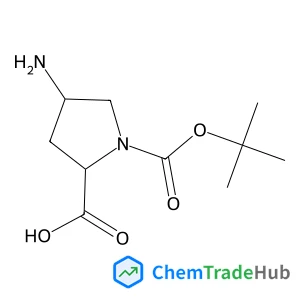
(2R,4R)-1-Boc-4-Aminopyrrolidine-2-carboxylic acid
CAS Number:
132622-98-1
Molecular Formula:
C10H18N2O4
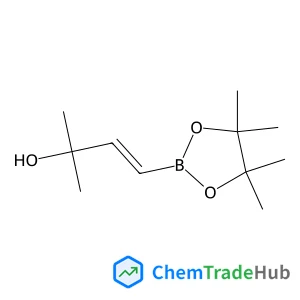
(E)-2-methyl-4-(4,4,5,5-tetramethyl-1,3,2-dioxaborolan-2-yl)but-3-en-2-ol
CAS Number:
581802-26-8
Molecular Formula:
C11H21BO3
Recommended Suppliers





Disclaimer
This page provides academic journal information for reference and research purposes only. We are not affiliated with any journal publishers and do not handle publication submissions. For publication-related inquiries, please contact the respective journal publishers directly.
If you notice any inaccuracies in the information displayed, please contact us at support@chemtradehub.com. We will promptly review and address your concerns.