


Doping effect on the local structure of metamagnetic Co doped Ni/NiO:GO core–shell nanoparticles using X-ray absorption spectroscopy and the pair distribution function
Literature Information
Publication Date
2018-12-05
DOI
10.1039/C8CP05267K
Impact Factor
3.676
Authors
U. P. Gawai, D. K. Gaikwad, M. R. Bodke, H. A. Khawal, K. K. Pandey, A. K. Yadav, S. N. Jha, D. Bhattacharyya, B. N. Dole
View Original
Abstract
Core–shell nanoparticles of Co (0%, 3%, and 5%) doped Ni/NiO and incorporated (5 mg) graphene oxide (GO) sheets were synthesized by a sol–gel auto-combustion method. X-ray absorption near edge structure (XANES), extended X-ray absorption fine structure (EXAFS) and pair distribution function measurements were employed for the determination of the local structure and structural properties of the samples. Due to the effect of Co doping the bond lengths of all coordinate atoms were varied. The microstructural features in the core–shell structured particles were evaluated with high-resolution transmission electron microscopy (HRTEM). Magnetic properties of the samples revealed that both the interface of Ni/Co and NiO crystal lattices and the weight fraction of Ni have significant impact on their magnetic properties at 5 K to 300 K. Experimental results show that Co doping and GO incorporation into Ni/NiO suppress the antiferromagnetic charge ordering and lead to a spin-flop metamagnetic behavior at 5 K to 300 K temperatures. Above 5 K, the step-like transitions transform into broad ones. This step-like feature is correlated with the collapse of the balance between the magnetic energy and elastic energy at the core–shell interface. It is confirmed from M–T measurements that the blocking temperature of Ni/NiO was reduced with Co content.
Recommended Journals

Saudi Pharmaceutical Journal

Acta Materialia

Russian Journal of Organic Chemistry

Chemistry Education Research and Practice

Chemical Communications

Current Opinion in Solid State & Materials Science

Crystallography Reports

Journal of Saudi Chemical Society

Russian Journal of Bioorganic Chemistry

Journal of Peptide Science
Related Literature
High-pressure structural studies and pressure-induced sensitisation of 3,4,5-trinitro-1H-pyrazole
Jack Hemingway, Xiaojiao Liu, Adam A. L. Michalchuk, Carole A. Morrison, Colin R. Pulham
2023-11-09
Paper
DOI: 10.1039/D3CP04526A
Co-aggregation of α-synuclein with amyloid-β stabilizes β-sheet-rich oligomers and enhances the formation of β-barrels
Fengjuan Huang, Yuying Liu, Ying Wang, Jia Xu, Jiangfang Lian, Yu Zou, Chuang Wang, Feng Ding
2023-11-02
Paper
DOI: 10.1039/D3CP04138G
XANES analysis of phosphate glasses melted with Tb4O7 and SnO: evaluating the impact of valence states on structural, thermal, and luminescent properties
José A. Jiménez, Dugan Hayes, Cali Antolini, Benjamin J. Reinhart
2023-11-28
Paper
DOI: 10.1039/D3CP04784A
van der Waals induced ice growth on partially melted ice nuclei in mist and fog
M. Boström, I. Brevik, O. I. Malyi
2023-11-15
Paper
DOI: 10.1039/D3CP04157C
Insight into the interface engineering between methylammonium lead halide perovskites and gallium oxide: a first-principles approach
Yao Guo, Qiang Li, Xiaojing Bai, Yuanbin Xue, Changwei Lai, Yuhua Wang
2023-10-28
Paper
DOI: 10.1039/D3CP04090A
You might also like
Compound Q&A
Are there alternatives to 1-(4-Chlorophenyl)-N-hydroxymethanimine (CAS: 3848-36-0) in synthesis?
When considering alternatives to 1-(4-Chlorophenyl)-N-hydroxymethanimine (CAS: 3...
3848-36-01-(4-Chlorophenyl)-N...
Compound Q&A
How should (1R,9S,10S,12S,14E,16S,19R,20R,21S,22R)-3,9,21-Trihydroxy-5,10,12,14,16,20,22-heptamethyl-23,24-dioxatetracyclo[17.3.1.1~6,9~.0~2,7~]tetracosa-2,5,7,14-tetraen-4-one (CAS: 183202-73-5) be stored?
This compound should be stored in a cool, dry place away from direct sunlight. I...
183202-73-5(1R,9S,10S,12S,14E,1...
Compound Q&A
How is 3-(4-Bromophenyl)-5-(2-fluorophenyl)-1,2,4-oxadiazole (CAS: 419553-16-5) typically synthesized?
3-(4-Bromophenyl)-5-(2-fluorophenyl)-1,2,4-oxadiazole is synthesized through a m...
419553-16-53-(4-Bromophenyl)-5-...
Compound Q&A
How is 5-Chloro-2-(4-chlorophenyl)-4-methyl-6-[3-(1-piperidinyl)propoxy]pyrimidine (CAS: 1639220-19-1) typically synthesized?
5-Chloro-2-(4-chlorophenyl)-4-methyl-6-[3-(1-piperidinyl)propoxy]pyrimidine (CAS...
1639220-19-15-Chloro-2-(4-chloro...
Compound Q&A
What industries use 2-Chloro-4-(difluoromethoxy)pyridine (CAS: 1206978-15-5)?
2-Chloro-4-(difluoromethoxy)pyridine is used in the pharmaceutical industry for ...
1206978-15-52-Chloro-4-(difluoro...
Compound Q&A
What regulatory guidelines apply to 3-Chloro-6-methylpyridazine (CAS: 1121-79-5)?
3-Chloro-6-methylpyridazine (CAS: 1121-79-5) is classified under the Globally Ha...
1121-79-53-Chloro-6-methylpyr...
Compound Q&A
Are there alternatives to Methyl 4,5-dimethyl-2-nitrobenzoate in synthesis?
Several alternatives can be used in the synthesis of Methyl 4,5-dimethyl-2-nitro...
90922-74-0Methyl 4,5-dimethyl-...
Compound Q&A
Are there alternatives to (2E,2'E)-3,3'-(1,4-Phenylene)bisacrylaldehyde in synthesis?
Alternatives to (2E,2'E)-3,3'-(1,4-Phenylene)bisacrylaldehyde include other acry...
63405-68-5(2E,2'E)-3,3'-(1,4-P...
Compound Q&A
What is 3-Amino-5-chloropyridin-2-ol hydrochloride (CAS: 1261906-29-9)?
3-Amino-5-chloropyridin-2-ol hydrochloride is an organic compound with the CAS n...
1261906-29-93-Amino-5-chloropyri...
Compound Q&A
What precautions should be taken when handling 6,7-Difluoro-2,3-dihydro-4H-chromen-4-one (CAS: 1092349-93-3)?
When handling 6,7-Difluoro-2,3-dihydro-4H-chromen-4-one, it is essential to wear...
1092349-93-36,7-Difluoro-2,3-dih...
Source Journal
Physical Chemistry Chemical Physics

CiteScore:
5.5
Self-citation Rate:
10.3%
Articles per Year:
3036
Physical Chemistry Chemical Physics (PCCP) is an international journal co-owned by 19 physical chemistry and physics societies from around the world. This journal publishes original, cutting-edge research in physical chemistry, chemical physics and biophysical chemistry. To be suitable for publication in PCCP, articles must include significant innovation and/or insight into physical chemistry; this is the most important criterion that reviewers and Editors will judge against when evaluating submissions. The journal has a broad scope and welcomes contributions spanning experiment, theory, computation and data science. Topical coverage includes spectroscopy, dynamics, kinetics, statistical mechanics, thermodynamics, electrochemistry, catalysis, surface science, quantum mechanics, quantum computing and machine learning. Interdisciplinary research areas such as polymers and soft matter, materials, nanoscience, energy, surfaces/interfaces, and biophysical chemistry are welcomed if they demonstrate significant innovation and/or insight into physical chemistry. Joined experimental/theoretical studies are particularly appreciated when complementary and based on up-to-date approaches.
Recommended Compounds
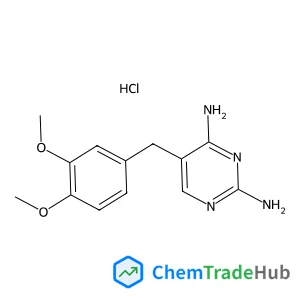
5-(3,4-Dimethoxybenzyl)-2,4-pyrimidinediamine hydrochloride (1:1)
CAS Number:
2507-23-5
Molecular Formula:
C13H17ClN4O2
![6-Bromo-2,3-dihydro-1H-pyrido[2,3-b][1,4]oxazine structure](https://static.chemtradehub.com/structs/120/1203499-17-5-b4d1.webp "6-Bromo-2,3-dihydro-1H-pyrido[2,3-b][1,4]oxazine structure")
6-Bromo-2,3-dihydro-1H-pyrido[2,3-b][1,4]oxazine
CAS Number:
1203499-17-5
Molecular Formula:
C7H7BrN2O

(E)-2-methyl-4-(4,4,5,5-tetramethyl-1,3,2-dioxaborolan-2-yl)but-3-en-2-ol
CAS Number:
581802-26-8
Molecular Formula:
C11H21BO3
Recommended Suppliers





Disclaimer
This page provides academic journal information for reference and research purposes only. We are not affiliated with any journal publishers and do not handle publication submissions. For publication-related inquiries, please contact the respective journal publishers directly.
If you notice any inaccuracies in the information displayed, please contact us at support@chemtradehub.com. We will promptly review and address your concerns.