












HCO formation in the thermal unimolecular decomposition of glyoxal: rotational and weak collision effects
Literature Information
Publication Date
2008-09-29
DOI
10.1039/B809992H
Impact Factor
3.676
Authors
Gernot Friedrichs, Mark Colberg, Johannes Dammeier, Tobias Bentz, Matthias Olzmann
View Original
Abstract
The multi-channel thermal unimolecular decomposition of glyoxal was experimentally investigated in the temperature range 1106 K < T < 2320 K and at total densities of 1.7 × 10⁻⁶ mol cm−3 < ρ < 1.9 × 10⁻⁵ mol cm−3 by monitoring HCO (frequency modulation spectroscopy, FMS), (CHO)2 (UV absorption), and H atom (atom resonance absorption spectroscopy, H-ARAS) concentration–time profiles behind shock waves. With a branching fraction of 48% at T = 2300 K and ρ = 1.6 × 10⁻⁵ mol cm−3, the so-far-neglected, energetically unfavourable HCO-forming decomposition channel, (CHO)2→ 2HCO, was found to play a crucial role and in fact represents the major decomposition pathway at high temperatures and high total densities. A theoretical analysis of the experimental results in terms of Rice–Ramsperger–Kassel–Marcus theory (RRKM), the simplified statistical adiabatic channel model (SACM), and an energy-grained master equation (ME) was based on input parameters from ab initio calculations (G3 and MP2/6-311G(d,p)) and literature data on branching ratios from collision-free photolysis experiments. A consistent description of the temperature and density dependences was achieved, revealing that both rotational and weak collision effects are reflected in the measured branching ratios. Overall, a product channel switching occurs with the CH2O-forming channel, (CHO)2→ CH2O + CO, dominating at low temperatures/densities and the HCO-forming channel dominating at high temperatures/densities. Additionally, the so-called triple-whammy channel, (CHO)2→ 2CO + H2, significantly contributes to the total decomposition rate at intermediate temperatures/densities whereas the HCOH-forming pathway, (CHO)2→ HCOH + CO, is predicted to be the least important one. The temperature and pressure dependences of the different decomposition channels are parametrized in terms of two-dimensional Chebyshev polynomials.
Related Literature
Atomically-defined model catalysts in ultrahigh vacuum and in liquid electrolytes: particle size-dependent CO adsorption on Pt nanoparticles on ordered Co3O4(111) films
Firas Faisal, Corinna Stumm, Manon Bertram, Tobias Wähler, Ralf Schuster, Feifei Xiang, Ole Lytken, Ioannis Katsounaros, Karl J. J. Mayrhofer, M. Alexander Schneider, Olaf Brummel
2018-08-29
Paper
DOI: 10.1039/C8CP03770A
The prediction of far-infrared spectra for planetary nitrile ices using periodic density functional theory with comparison to thin film experiments
C. Ennis, D. R. T. Appadoo, E. G. Robertson
2018-09-07
Paper
DOI: 10.1039/C8CP04219E
Identification of the maze in the conformational landscape of fenchol
E. M. Neeman, T. R. Huet
2018-09-12
Paper
DOI: 10.1039/C8CP04011G
Origin of high thermoelectric performance with a wide range of compositions for BixSb2−xTe3 single quintuple layers
Zhen Li, Siyu Han, Yuanchun Pan, Jian Zhou, Huibin Xu
2018-12-10
Paper
DOI: 10.1039/C8CP06534A
Theoretical study on the reaction mechanism and selectivity of acetylene semi-hydrogenation on Ni–Sn intermetallic catalysts
Tao Sun, Yu-Sen Yang, Pan Yin, Min Pu, Hong Yan, Min Wei
2018-12-12
Paper
DOI: 10.1039/C8CP06032K
Catalytic polymerization of naphthalene by HF/BF3 super acid: an ab initio density functional theory study
Po-Yu Yang, Hsing-Yin Chen, Chia-Lin Chang, Gao-Shee Leu, Che-Hsin Lin
2018-08-18
Paper
DOI: 10.1039/C8CP02777C
Effect of the triazole ring in zinc porphyrin-fullerene dyads on the charge transfer processes in NiO-based devices
Vasilis Nikolaou, Fabian Plass, Aurélien Planchat, Asterios Charisiadis, Georgios Charalambidis, Panagiotis A. Angaridis, Fabrice Odobel, Athanassios G. Coutsolelos
2018-08-28
Paper
DOI: 10.1039/C8CP04060E
TD DFT insights into unusual properties of excited sandwich complexes: structural transformations and vibronic interactions in Rydberg-state bis(η6-benzene)chromium
Sergey Y. Ketkov, Elena A. Rychagova, Sheng-Yuan Tzeng, Wen-Bih Tzeng
2018-09-04
Paper
DOI: 10.1039/C8CP04845B
Swelling behaviour of core–shell microgels in H2O, analysed by temperature-dependent FTIR spectroscopy
Lars Wiehemeier, Oliver Wrede, Julian Oberdisse, Thomas Hellweg, Tilman Kottke
2018-12-03
Paper
DOI: 10.1039/C8CP05911J
You might also like
Compound Q&A
How is 3-(2-Bromoimidazo[2,1-b]thiazol-6-yl)propanoic acid hydrochloride (CAS: 1187830-80-3) typically synthesized?
3-(2-Bromoimidazo[2,1-b]thiazol-6-yl)propanoic acid hydrochloride is typically s...
1187830-80-33-(2-Bromoimidazo[2,...
Compound Q&A
How is 2-Isopropyl-1,3-dioxane-5-carboxylic acid (CAS: 116193-72-7) typically synthesized?
2-Isopropyl-1,3-dioxane-5-carboxylic acid is typically synthesized by the carbox...
116193-72-72-Isopropyl-1,3-diox...
Compound Q&A
What is Alisporivir (CAS: 254435-95-5)?
Alisporivir (CAS: 254435-95-5) is an antiviral medication used in the treatment ...
254435-95-5Alisporivir
Compound Q&A
What are the physical and chemical properties of [1,2,4]triazolo[3,4-a]phthalazine (CAS: 234-80-0)?
[1,2,4]triazolo[3,4-a]phthalazine (CAS: 234-80-0) is a crystalline compound with...
234-80-0[1,2,4]triazolo[3,4-...
Compound Q&A
What regulatory guidelines apply to (2S)-5-Hydroxy-2-(4-hydroxyphenyl)-4-oxo-3,4-dihydro-2H-chromen-7-yl methyl beta-D-glucopyranosiduronate (CAS: 1985597-72-5)?
Regulatory guidelines for (2S)-5-Hydroxy-2-(4-hydroxyphenyl)-4-oxo-3,4-dihydro-2...
1985597-72-5(2S)-5-Hydroxy-2-(4-...
Compound Q&A
Is 2,2-Difluorocyclohexanamine hydrochloride (CAS: 921602-83-7) safe?
2,2-Difluorocyclohexanamine hydrochloride is generally safe when handled under p...
921602-83-72,2-Difluorocyclohex...
Compound Q&A
What are the main uses of 3-Nitro-2-phenylthiophene (CAS: 18150-94-2)?
3-Nitro-2-phenylthiophene is primarily used in the synthesis of other organic co...
18150-94-23-Nitro-2-phenylthio...
Compound Q&A
What is 1-(Trifluoroacetyl)-4-piperidinecarbonitrile (CAS: 77940-79-5)?
1-(Trifluoroacetyl)-4-piperidinecarbonitrile (CAS: 77940-79-5) is a colorless to...
77940-79-51-(Trifluoroacetyl)-...
Compound Q&A
What is the market or research trend for 1,3,6,8-Tetranitro-9H-carbazole (CAS: 4543-33-3)?
Research and market trends for 1,3,6,8-Tetranitro-9H-carbazole (CAS: 4543-33-3) ...
4543-33-31,3,6,8-Tetranitro-9...
Compound Q&A
How should waste containing Dibenzo[b,d]thiophen-1-ylboronic acid (CAS: 1245943-60-5) be handled?
Waste containing Dibenzo[b,d]thiophen-1-ylboronic acid (CAS: 1245943-60-5) shoul...
1245943-60-5Dibenzo[b,d]thiophen...
Source Journal
Physical Chemistry Chemical Physics

CiteScore:
5.5
Self-citation Rate:
10.3%
Articles per Year:
3036
Physical Chemistry Chemical Physics (PCCP) is an international journal co-owned by 19 physical chemistry and physics societies from around the world. This journal publishes original, cutting-edge research in physical chemistry, chemical physics and biophysical chemistry. To be suitable for publication in PCCP, articles must include significant innovation and/or insight into physical chemistry; this is the most important criterion that reviewers and Editors will judge against when evaluating submissions. The journal has a broad scope and welcomes contributions spanning experiment, theory, computation and data science. Topical coverage includes spectroscopy, dynamics, kinetics, statistical mechanics, thermodynamics, electrochemistry, catalysis, surface science, quantum mechanics, quantum computing and machine learning. Interdisciplinary research areas such as polymers and soft matter, materials, nanoscience, energy, surfaces/interfaces, and biophysical chemistry are welcomed if they demonstrate significant innovation and/or insight into physical chemistry. Joined experimental/theoretical studies are particularly appreciated when complementary and based on up-to-date approaches.
Recommended Compounds
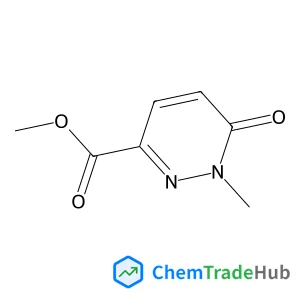
Methyl 1-methyl-6-oxo-1,6-dihydro-3-pyridazinecarboxylate
CAS Number:
74173-58-3
Molecular Formula:
C7H8N2O3


Methyl 1-(4-bromophenyl)cyclopentanecarboxylate
CAS Number:
1236357-64-4
Molecular Formula:
C13H15BrO2

Recommended Suppliers





Disclaimer
This page provides academic journal information for reference and research purposes only. We are not affiliated with any journal publishers and do not handle publication submissions. For publication-related inquiries, please contact the respective journal publishers directly.
If you notice any inaccuracies in the information displayed, please contact us at support@chemtradehub.com. We will promptly review and address your concerns.