



Origin of high thermoelectric performance with a wide range of compositions for BixSb2−xTe3 single quintuple layers
Literature Information
Publication Date
2018-12-10
DOI
10.1039/C8CP06534A
Impact Factor
3.676
Authors
Zhen Li, Siyu Han, Yuanchun Pan, Jian Zhou, Huibin Xu
View Original
Abstract
Composition regulation of semiconductors can engineer the band structures and hence optimize their properties for better applications. Herein, we report a BixSb2−xTe3 (BST) single QL with high ZT values (∼1.2 to ∼1.5) at 300 K across a wide range of compositions 0 < x ≤ 1. The improved description of band structures by the unfold method reveals the multi-valley bands near the Fermi energy. The high power factor of a p-type BST single QL originates from the robust multi-valley character of valence bands. The wide composition range is ensured by the valence band maximum dominated by the antibonding states of Sb–Te2 bonds, which would be affected little by the disorder. The optimal composition for the BST single QL is attributed to the different contributions from Sb and Bi to the valence band edge. This work paves the way for the further combination of a large power factor and low thermal conductivity across a wide range of compositions.
Recommended Journals

Journal of Peptide Science

Organic Process Research & Development

Drug Discovery Today

Crystallography Reports

Current Opinion in Solid State & Materials Science

Journal of Natural Medicines

Russian Chemical Bulletin

Current Opinion in Colloid & Interface Science

Nature Medicine

Journal of Saudi Chemical Society
Related Literature
Double strengthening induced by grain boundary segregation of solute elements in gradient nano Ni–Co alloys
Wei Zhang, Xin Guo, Junqiang Ren, Junchen Li, Hongtao Xue, Fuling Tang, Peiqing La, Xuefeng Lu
2023-11-21
Paper
DOI: 10.1039/D3CP03613H
A highly efficient Mn4+ activated Nb-based oxyfluoride red fluorescent material with excellent water stability: preparation and performance analysis
Wenjie Shi
2023-11-14
Paper
DOI: 10.1039/D3CP04631A
Styrylpyrimidine chromophores with bulky electron-donating substituents: experimental and theoretical investigation
Maxime Hodée, Julien Massue, Sylvain Achelle, Arnaud Fihey, Gilles Ulrich, Françoise Robin-le Guen, Claudine Katan
2023-11-15
Paper
DOI: 10.1039/D3CP03705C
High-performance and self-powered photodetectors from an S-scheme Cs2SnI2Cl2/Cs2TiI6 heterojunction: a DFT+NAMD study
Ruiqin Li
2023-11-15
Paper
DOI: 10.1039/D3CP04415G
Blocking recombination centers by controlling the charge density of a sulfur vacancy in antimony trisulfide
Xiao Han, Qi Zhao, Xiaodan Yan, Ting Meng, Jinlu He
2023-11-15
Paper
DOI: 10.1039/D3CP05217F
Carbon-doped boron nitride nanosheets as an efficient metal-free catalyst for the selective oxidation of H2S
Ganchang Lei, Sihui Qi, Haiyan Li, Yinjiang Xue, Xiaohai Zheng, Shiping Wang, Yanning Cao, Yingying Zhan
2023-11-15
Communication
DOI: 10.1039/D3CP04495E
You might also like
Compound Q&A
Are there alternatives to 1-(4-Chlorophenyl)-N-hydroxymethanimine (CAS: 3848-36-0) in synthesis?
When considering alternatives to 1-(4-Chlorophenyl)-N-hydroxymethanimine (CAS: 3...
3848-36-01-(4-Chlorophenyl)-N...
Compound Q&A
How should (1R,9S,10S,12S,14E,16S,19R,20R,21S,22R)-3,9,21-Trihydroxy-5,10,12,14,16,20,22-heptamethyl-23,24-dioxatetracyclo[17.3.1.1~6,9~.0~2,7~]tetracosa-2,5,7,14-tetraen-4-one (CAS: 183202-73-5) be stored?
This compound should be stored in a cool, dry place away from direct sunlight. I...
183202-73-5(1R,9S,10S,12S,14E,1...
Compound Q&A
How is 3-(4-Bromophenyl)-5-(2-fluorophenyl)-1,2,4-oxadiazole (CAS: 419553-16-5) typically synthesized?
3-(4-Bromophenyl)-5-(2-fluorophenyl)-1,2,4-oxadiazole is synthesized through a m...
419553-16-53-(4-Bromophenyl)-5-...
Compound Q&A
How is 5-Chloro-2-(4-chlorophenyl)-4-methyl-6-[3-(1-piperidinyl)propoxy]pyrimidine (CAS: 1639220-19-1) typically synthesized?
5-Chloro-2-(4-chlorophenyl)-4-methyl-6-[3-(1-piperidinyl)propoxy]pyrimidine (CAS...
1639220-19-15-Chloro-2-(4-chloro...
Compound Q&A
What industries use 2-Chloro-4-(difluoromethoxy)pyridine (CAS: 1206978-15-5)?
2-Chloro-4-(difluoromethoxy)pyridine is used in the pharmaceutical industry for ...
1206978-15-52-Chloro-4-(difluoro...
Compound Q&A
What regulatory guidelines apply to 3-Chloro-6-methylpyridazine (CAS: 1121-79-5)?
3-Chloro-6-methylpyridazine (CAS: 1121-79-5) is classified under the Globally Ha...
1121-79-53-Chloro-6-methylpyr...
Compound Q&A
Are there alternatives to Methyl 4,5-dimethyl-2-nitrobenzoate in synthesis?
Several alternatives can be used in the synthesis of Methyl 4,5-dimethyl-2-nitro...
90922-74-0Methyl 4,5-dimethyl-...
Compound Q&A
Are there alternatives to (2E,2'E)-3,3'-(1,4-Phenylene)bisacrylaldehyde in synthesis?
Alternatives to (2E,2'E)-3,3'-(1,4-Phenylene)bisacrylaldehyde include other acry...
63405-68-5(2E,2'E)-3,3'-(1,4-P...
Compound Q&A
What is 3-Amino-5-chloropyridin-2-ol hydrochloride (CAS: 1261906-29-9)?
3-Amino-5-chloropyridin-2-ol hydrochloride is an organic compound with the CAS n...
1261906-29-93-Amino-5-chloropyri...
Compound Q&A
What precautions should be taken when handling 6,7-Difluoro-2,3-dihydro-4H-chromen-4-one (CAS: 1092349-93-3)?
When handling 6,7-Difluoro-2,3-dihydro-4H-chromen-4-one, it is essential to wear...
1092349-93-36,7-Difluoro-2,3-dih...
Source Journal
Physical Chemistry Chemical Physics

CiteScore:
5.5
Self-citation Rate:
10.3%
Articles per Year:
3036
Physical Chemistry Chemical Physics (PCCP) is an international journal co-owned by 19 physical chemistry and physics societies from around the world. This journal publishes original, cutting-edge research in physical chemistry, chemical physics and biophysical chemistry. To be suitable for publication in PCCP, articles must include significant innovation and/or insight into physical chemistry; this is the most important criterion that reviewers and Editors will judge against when evaluating submissions. The journal has a broad scope and welcomes contributions spanning experiment, theory, computation and data science. Topical coverage includes spectroscopy, dynamics, kinetics, statistical mechanics, thermodynamics, electrochemistry, catalysis, surface science, quantum mechanics, quantum computing and machine learning. Interdisciplinary research areas such as polymers and soft matter, materials, nanoscience, energy, surfaces/interfaces, and biophysical chemistry are welcomed if they demonstrate significant innovation and/or insight into physical chemistry. Joined experimental/theoretical studies are particularly appreciated when complementary and based on up-to-date approaches.
Recommended Compounds

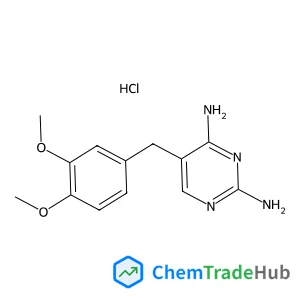
5-(3,4-Dimethoxybenzyl)-2,4-pyrimidinediamine hydrochloride (1:1)
CAS Number:
2507-23-5
Molecular Formula:
C13H17ClN4O2
Recommended Suppliers





Disclaimer
This page provides academic journal information for reference and research purposes only. We are not affiliated with any journal publishers and do not handle publication submissions. For publication-related inquiries, please contact the respective journal publishers directly.
If you notice any inaccuracies in the information displayed, please contact us at support@chemtradehub.com. We will promptly review and address your concerns.