


Identification of the maze in the conformational landscape of fenchol
Literature Information
Publication Date
2018-09-12
DOI
10.1039/C8CP04011G
Impact Factor
3.676
Authors
E. M. Neeman, T. R. Huet
View Original
Abstract
The rotational spectrum of the bicyclic molecule fenchol (C10H18O, 1,3,3-trimethylbicyclo[2.2.1]heptan-2-ol) – a biogenic volatile organic compound – was recorded in the gas phase using an impulse Fourier transform microwave spectrometer coupled to a supersonic jet expansion over the 2–20 GHz range. Quantum chemical calculations were performed to characterize the conformational landscape of the two diastereoisomers, endo-fenchol and exo-fenchol, with respect to the orientation of the hydroxyl group. The three most stable structures for each diastereoisomer were optimized at the MP2/6-311++G(2df,p) level of theory. Two of them were found to be very close in energy. Molecular parameters obtained from the analysis of observed signals led to the observation of one conformer per diastereoisomer. For the endo-fenchol molecule the rs geometry associated with the hydroxyl group was obtained, from the observation and analysis of the rotational spectra associated with the deuterated hydroxyl group. The nuclear quadrupolar hyperfine signature was identified. The hydroxyl group was found to be oriented into the direction of the methyl groups attached to C3, for the more stable conformer of endo-fenchol. For exo-fenchol, it is oriented into the methyl group attached to C1.
Recommended Journals

Nature Medicine

Russian Journal of Applied Chemistry

Crystallography Reports

Russian Chemical Bulletin

Journal of Peptide Science

Chemical Communications

Russian Journal of Bioorganic Chemistry

Russian Journal of General Chemistry

Saudi Pharmaceutical Journal

Current Opinion in Solid State & Materials Science
Related Literature
Osmolyte induced protein stabilization: modulation of associated water dynamics might be a key factor
Kuldeep Singh Negi, Nilimesh Das, Tanmoy Khan, Pratik Sen
2023-11-27
Paper
DOI: 10.1039/D3CP03357K
Impacts of QM region sizes and conformation numbers on modelling enzyme reactions: a case study of polyethylene terephthalate hydrolase
Mingna Zheng, Yanwei Li, Qingzhu Zhang, Wenxing Wang
2023-10-24
Paper
DOI: 10.1039/D3CP04519F
A white light emitting single halochromic hydrazine bridged bis(3-pyrrolyl BODIPY) fluorophore
Kanhu Charan Behera, Mangalampalli Ravikanth
2023-11-15
Paper
DOI: 10.1039/D3CP04234K
You might also like
Compound Q&A
Are there alternatives to 1-(4-Chlorophenyl)-N-hydroxymethanimine (CAS: 3848-36-0) in synthesis?
When considering alternatives to 1-(4-Chlorophenyl)-N-hydroxymethanimine (CAS: 3...
3848-36-01-(4-Chlorophenyl)-N...
Compound Q&A
How should (1R,9S,10S,12S,14E,16S,19R,20R,21S,22R)-3,9,21-Trihydroxy-5,10,12,14,16,20,22-heptamethyl-23,24-dioxatetracyclo[17.3.1.1~6,9~.0~2,7~]tetracosa-2,5,7,14-tetraen-4-one (CAS: 183202-73-5) be stored?
This compound should be stored in a cool, dry place away from direct sunlight. I...
183202-73-5(1R,9S,10S,12S,14E,1...
Compound Q&A
How is 3-(4-Bromophenyl)-5-(2-fluorophenyl)-1,2,4-oxadiazole (CAS: 419553-16-5) typically synthesized?
3-(4-Bromophenyl)-5-(2-fluorophenyl)-1,2,4-oxadiazole is synthesized through a m...
419553-16-53-(4-Bromophenyl)-5-...
Compound Q&A
How is 5-Chloro-2-(4-chlorophenyl)-4-methyl-6-[3-(1-piperidinyl)propoxy]pyrimidine (CAS: 1639220-19-1) typically synthesized?
5-Chloro-2-(4-chlorophenyl)-4-methyl-6-[3-(1-piperidinyl)propoxy]pyrimidine (CAS...
1639220-19-15-Chloro-2-(4-chloro...
Compound Q&A
What industries use 2-Chloro-4-(difluoromethoxy)pyridine (CAS: 1206978-15-5)?
2-Chloro-4-(difluoromethoxy)pyridine is used in the pharmaceutical industry for ...
1206978-15-52-Chloro-4-(difluoro...
Compound Q&A
What regulatory guidelines apply to 3-Chloro-6-methylpyridazine (CAS: 1121-79-5)?
3-Chloro-6-methylpyridazine (CAS: 1121-79-5) is classified under the Globally Ha...
1121-79-53-Chloro-6-methylpyr...
Compound Q&A
Are there alternatives to Methyl 4,5-dimethyl-2-nitrobenzoate in synthesis?
Several alternatives can be used in the synthesis of Methyl 4,5-dimethyl-2-nitro...
90922-74-0Methyl 4,5-dimethyl-...
Compound Q&A
Are there alternatives to (2E,2'E)-3,3'-(1,4-Phenylene)bisacrylaldehyde in synthesis?
Alternatives to (2E,2'E)-3,3'-(1,4-Phenylene)bisacrylaldehyde include other acry...
63405-68-5(2E,2'E)-3,3'-(1,4-P...
Compound Q&A
What is 3-Amino-5-chloropyridin-2-ol hydrochloride (CAS: 1261906-29-9)?
3-Amino-5-chloropyridin-2-ol hydrochloride is an organic compound with the CAS n...
1261906-29-93-Amino-5-chloropyri...
Compound Q&A
What precautions should be taken when handling 6,7-Difluoro-2,3-dihydro-4H-chromen-4-one (CAS: 1092349-93-3)?
When handling 6,7-Difluoro-2,3-dihydro-4H-chromen-4-one, it is essential to wear...
1092349-93-36,7-Difluoro-2,3-dih...
Source Journal
Physical Chemistry Chemical Physics

CiteScore:
5.5
Self-citation Rate:
10.3%
Articles per Year:
3036
Physical Chemistry Chemical Physics (PCCP) is an international journal co-owned by 19 physical chemistry and physics societies from around the world. This journal publishes original, cutting-edge research in physical chemistry, chemical physics and biophysical chemistry. To be suitable for publication in PCCP, articles must include significant innovation and/or insight into physical chemistry; this is the most important criterion that reviewers and Editors will judge against when evaluating submissions. The journal has a broad scope and welcomes contributions spanning experiment, theory, computation and data science. Topical coverage includes spectroscopy, dynamics, kinetics, statistical mechanics, thermodynamics, electrochemistry, catalysis, surface science, quantum mechanics, quantum computing and machine learning. Interdisciplinary research areas such as polymers and soft matter, materials, nanoscience, energy, surfaces/interfaces, and biophysical chemistry are welcomed if they demonstrate significant innovation and/or insight into physical chemistry. Joined experimental/theoretical studies are particularly appreciated when complementary and based on up-to-date approaches.
Recommended Compounds

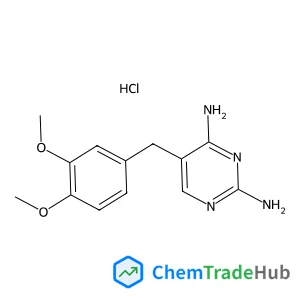
5-(3,4-Dimethoxybenzyl)-2,4-pyrimidinediamine hydrochloride (1:1)
CAS Number:
2507-23-5
Molecular Formula:
C13H17ClN4O2
![[4-(Isobutyrylamino)phenyl]boronic acid structure](https://static.chemtradehub.com/structs/874/874219-50-8-6ab5.webp "[4-(Isobutyrylamino)phenyl]boronic acid structure")
Recommended Suppliers







Disclaimer
This page provides academic journal information for reference and research purposes only. We are not affiliated with any journal publishers and do not handle publication submissions. For publication-related inquiries, please contact the respective journal publishers directly.
If you notice any inaccuracies in the information displayed, please contact us at support@chemtradehub.com. We will promptly review and address your concerns.