


The prediction of far-infrared spectra for planetary nitrile ices using periodic density functional theory with comparison to thin film experiments
Literature Information
Publication Date
2018-09-07
DOI
10.1039/C8CP04219E
Impact Factor
3.676
Authors
C. Ennis, D. R. T. Appadoo, E. G. Robertson
View Original
Abstract
Future spacecraft missions to planetary systems, Trans-Neptunian objects, and cometary bodies could implement far-infrared surveys to confirm the presence of condensed-phase species via their unique lattice features. For composite molecular ices of astrophysical significance, laboratory reference spectra are required to provide absorption coefficients used to quantify solid-state abundances. However, due to strong intermolecular interactions in polar ice systems, laboratory data of mixed-phase ices are difficult to interpret. In this study we have applied periodic density functional theory code to model bulk molecular crystals. This method allows for more accurate simulation of thin-film spectra than approaches simulating small clusters. For this proof-of-principle study on a series of pure nitrile ices of planetary interest, our simulated far-infrared spectra show excellent agreement to data from thin film studies performed at the Australian Synchrotron (crystalline acetonitrile and propionitrile) and to previously published spectra (hydrogen cyanide, acrylonitrile, cyanoacetylene, and cyanogen). The combined theoretical and experimental approach has provided a new explanation for the asymmetric profile of the hydrogen cyanide lattice feature and a more systematic assignment of nitrile ice absorption bands to low-frequency lattice modes. We nominate prominent absorption features for the detection of crystalline nitrile carriers located on planetary surfaces.
Recommended Journals

Acta Materialia

Russian Journal of Bioorganic Chemistry

Russian Journal of Organic Chemistry

Current Opinion in Solid State & Materials Science

Russian Journal of Applied Chemistry

Journal of Saudi Chemical Society

Drug Discovery Today

Journal of Natural Medicines

New Journal of Chemistry

Current Opinion in Colloid & Interface Science
Related Literature
A white light emitting single halochromic hydrazine bridged bis(3-pyrrolyl BODIPY) fluorophore
Kanhu Charan Behera, Mangalampalli Ravikanth
2023-11-15
Paper
DOI: 10.1039/D3CP04234K
Styrylpyrimidine chromophores with bulky electron-donating substituents: experimental and theoretical investigation
Maxime Hodée, Julien Massue, Sylvain Achelle, Arnaud Fihey, Gilles Ulrich, Françoise Robin-le Guen, Claudine Katan
2023-11-15
Paper
DOI: 10.1039/D3CP03705C
Graphene-edge-supported iron dual-atom for oxygen reduction electrocatalysts
Nadya Amalia, Fiki T. Akbar, Hadi T. Yudistira, Nadhratun N. Mobarak
2023-11-14
Paper
DOI: 10.1039/D3CP03642A
Two-body dissociation of isoxazole following double photoionization – an experimental PEPIPICO and theoretical DFT and MP2 study
Tomasz J. Wasowicz, Iwona Dąbkowska, Antti Kivimäki, Robert Richter
2023-11-03
Paper
DOI: 10.1039/D3CP03760F
Electronic, optoelectronic, and thermoelectric properties of single molecular devices of 2D fullerenes with zigzag graphene nanoribbons as electrodes
Ping Zhou, Guohao Li, Mengtao Sun
2023-10-31
Paper
DOI: 10.1039/D3CP04725C
You might also like
Compound Q&A
Are there alternatives to 1-(4-Chlorophenyl)-N-hydroxymethanimine (CAS: 3848-36-0) in synthesis?
When considering alternatives to 1-(4-Chlorophenyl)-N-hydroxymethanimine (CAS: 3...
3848-36-01-(4-Chlorophenyl)-N...
Compound Q&A
How should (1R,9S,10S,12S,14E,16S,19R,20R,21S,22R)-3,9,21-Trihydroxy-5,10,12,14,16,20,22-heptamethyl-23,24-dioxatetracyclo[17.3.1.1~6,9~.0~2,7~]tetracosa-2,5,7,14-tetraen-4-one (CAS: 183202-73-5) be stored?
This compound should be stored in a cool, dry place away from direct sunlight. I...
183202-73-5(1R,9S,10S,12S,14E,1...
Compound Q&A
How is 3-(4-Bromophenyl)-5-(2-fluorophenyl)-1,2,4-oxadiazole (CAS: 419553-16-5) typically synthesized?
3-(4-Bromophenyl)-5-(2-fluorophenyl)-1,2,4-oxadiazole is synthesized through a m...
419553-16-53-(4-Bromophenyl)-5-...
Compound Q&A
How is 5-Chloro-2-(4-chlorophenyl)-4-methyl-6-[3-(1-piperidinyl)propoxy]pyrimidine (CAS: 1639220-19-1) typically synthesized?
5-Chloro-2-(4-chlorophenyl)-4-methyl-6-[3-(1-piperidinyl)propoxy]pyrimidine (CAS...
1639220-19-15-Chloro-2-(4-chloro...
Compound Q&A
What industries use 2-Chloro-4-(difluoromethoxy)pyridine (CAS: 1206978-15-5)?
2-Chloro-4-(difluoromethoxy)pyridine is used in the pharmaceutical industry for ...
1206978-15-52-Chloro-4-(difluoro...
Compound Q&A
What regulatory guidelines apply to 3-Chloro-6-methylpyridazine (CAS: 1121-79-5)?
3-Chloro-6-methylpyridazine (CAS: 1121-79-5) is classified under the Globally Ha...
1121-79-53-Chloro-6-methylpyr...
Compound Q&A
Are there alternatives to Methyl 4,5-dimethyl-2-nitrobenzoate in synthesis?
Several alternatives can be used in the synthesis of Methyl 4,5-dimethyl-2-nitro...
90922-74-0Methyl 4,5-dimethyl-...
Compound Q&A
Are there alternatives to (2E,2'E)-3,3'-(1,4-Phenylene)bisacrylaldehyde in synthesis?
Alternatives to (2E,2'E)-3,3'-(1,4-Phenylene)bisacrylaldehyde include other acry...
63405-68-5(2E,2'E)-3,3'-(1,4-P...
Compound Q&A
What is 3-Amino-5-chloropyridin-2-ol hydrochloride (CAS: 1261906-29-9)?
3-Amino-5-chloropyridin-2-ol hydrochloride is an organic compound with the CAS n...
1261906-29-93-Amino-5-chloropyri...
Compound Q&A
What precautions should be taken when handling 6,7-Difluoro-2,3-dihydro-4H-chromen-4-one (CAS: 1092349-93-3)?
When handling 6,7-Difluoro-2,3-dihydro-4H-chromen-4-one, it is essential to wear...
1092349-93-36,7-Difluoro-2,3-dih...
Source Journal
Physical Chemistry Chemical Physics

CiteScore:
5.5
Self-citation Rate:
10.3%
Articles per Year:
3036
Physical Chemistry Chemical Physics (PCCP) is an international journal co-owned by 19 physical chemistry and physics societies from around the world. This journal publishes original, cutting-edge research in physical chemistry, chemical physics and biophysical chemistry. To be suitable for publication in PCCP, articles must include significant innovation and/or insight into physical chemistry; this is the most important criterion that reviewers and Editors will judge against when evaluating submissions. The journal has a broad scope and welcomes contributions spanning experiment, theory, computation and data science. Topical coverage includes spectroscopy, dynamics, kinetics, statistical mechanics, thermodynamics, electrochemistry, catalysis, surface science, quantum mechanics, quantum computing and machine learning. Interdisciplinary research areas such as polymers and soft matter, materials, nanoscience, energy, surfaces/interfaces, and biophysical chemistry are welcomed if they demonstrate significant innovation and/or insight into physical chemistry. Joined experimental/theoretical studies are particularly appreciated when complementary and based on up-to-date approaches.
Recommended Compounds
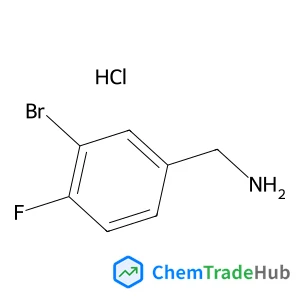
1-(3-Bromo-4-fluorophenyl)methanamine hydrochloride (1:1)
CAS Number:
202865-68-7
Molecular Formula:
C7H8BrClFN

Recommended Suppliers





Disclaimer
This page provides academic journal information for reference and research purposes only. We are not affiliated with any journal publishers and do not handle publication submissions. For publication-related inquiries, please contact the respective journal publishers directly.
If you notice any inaccuracies in the information displayed, please contact us at support@chemtradehub.com. We will promptly review and address your concerns.