












Photochemical cooperativity in photosystem II. Characterization of oxygen evolution discontinuities in the light-response curves
Literature Information
Publication Date
2008-09-25
DOI
10.1039/B809294J
Impact Factor
3.676
Authors
M. Fragata
View Original
Abstract
In two previous papers (Fragata et al., J. Phys. Chem. B, 2005, 109, 14707–14714; Fragata et al., J. Phys. Chem. B, 2007, 111, 3315–3320), it was shown that the variation of oxygen evolution with the light intensity (I) in photosystem II (PSII) in steady state conditions can be formulated according to the Langmuir adsorption isotherm for heterogeneous catalysis. This yielded the expression OEth = OEth(max) I/(L½ + I), where OEth is the theoretical oxygen evolution, OEth(max) the maximum oxygen evolution, and L½ the irradiance giving OEth(max)/2. In this approximation, the photons interaction with the chlorophylls in the PSII reaction center is assumed to be a heterogeneous reaction in which the light is represented as a stream of particles instead of an electromagnetic wave. That is, the chlorophyll molecules are the adsorption surfaces (or heterogeneous catalysts), and the incident (or exciting) photons are the substrate, or the reagent. Recently, the examination of new experimental data obtained with 2,6-dichloro-p-benzoquinone (DCBQ) and p-benzoquinone (pBQ) as exogenous electron acceptors, disclosed the presence of oxygen evolution discontinuities (or transitions) in the light-response curves. The new data were fitted with a mathematical summation of hyperbola of order n(i) > 1, OEth = ∑i [OEth(max)]iIn(i)/[(L½)in(i) + In(i)], where the n(i)’s are the number of sites used by the incident photons in their interaction with the photosynthetic pigments in each population i of PSII centers open for photochemistry. The mathematical simulations yielded only three distinct n(i)’s, that is, 1.8, 4.8, 8.5 and 1.8, 4.2, 8.4 for isolated PSII particles incubated with DCBQ and pBQ, respectively. Implicitly, this means the simultaneous excitation of each PSII reaction center with more than one photon, that is, the excitation of more than one pigment molecule. It is suggested that these transitions have their origin in the cooperative interaction of the photons and the chlorophylls, and most likely also the pheophytins. This indicates that the discontinuities (or transitions) observed in the light-response curves of oxygen evolution are consistent with the hypothesis of photochemical cooperativity in photosystem II.
Related Literature
Theoretical study of the bandgap regulation of a two-dimensional GeSn alloy under biaxial strain and uniaxial strain along the armchair direction
Wenqi Huang, Hong Yang, Buwen Cheng, Chunlai Xue
2018-08-20
Paper
DOI: 10.1039/C8CP03570A
Spectroscopic and magnetic investigations of a spin-frustrated Mn-doped CoAl2O4 spinel
Suman Kalyan Pradhan, Biswajit Dalal, Ankita Sarkar, Subodh Kumar De
2018-12-07
Paper
DOI: 10.1039/C8CP07140C
Ab initio interatomic potentials and transport properties of alkali metal (M = Rb and Cs)–rare gas (Rg = He, Ne, Ar, Kr, and Xe) media
Alexander A. Medvedev, Vladimir V. Meshkov, Andrey V. Stolyarov, Michael C. Heaven
2018-09-20
Paper
DOI: 10.1039/C8CP04397C
The oxygen reduction reaction on [NiFe] hydrogenases
Seth Olsen
2018-08-24
Paper
DOI: 10.1039/C8CP04160A
Pressure-induced conduction band convergence in the thermoelectric ternary chalcogenide CuBiS2
Najebah M. Alsaleh, Elvis Shoko, Udo Schwingenschlögl
2018-12-13
Paper
DOI: 10.1039/C8CP05818K
A computational study on the tunability of woven covalent organic frameworks for photocatalysis
Li Yang, Ziye Wu, Jun Jiang, Guozhen Zhang
2018-08-20
Paper
DOI: 10.1039/C8CP04373F
Thermodiffusion of citrate-coated γ-Fe2O3 nanoparticles in aqueous dispersions with tuned counter-ions – anisotropy of the Soret coefficient under a magnetic field
M. Kouyaté, G. Demouchy, G. Mériguet, S. Nakamae, V. Peyre, M. Roger, A. Cēbers, J. Depeyrot, E. Dubois, R. Perzynski
2018-12-28
Paper
DOI: 10.1039/C8CP06858E
Pressure-induced phase transition, metallization and superconductivity in ZrS2
Hang Zhai, Zhen Qin, Dan Sun, Jianyun Wang, Chang Liu, Nan Min, Quan Li
2018-08-23
Paper
DOI: 10.1039/C8CP04271C
First-principles calculations of the electronic properties of SiC-based bilayer and trilayer heterostructures
Song Li, Jyh-Pin Chou, Jie Wei, Huaizhong Xing, Alice Hu
2018-09-03
Paper
DOI: 10.1039/C8CP03508C
The influence of nanoparticles on the polarizabilities and hyperpolarizabilities of photochromic molecules
2018-08-20
Paper
DOI: 10.1039/C8CP03645D
You might also like
Compound Q&A
How is 3-(2-Bromoimidazo[2,1-b]thiazol-6-yl)propanoic acid hydrochloride (CAS: 1187830-80-3) typically synthesized?
3-(2-Bromoimidazo[2,1-b]thiazol-6-yl)propanoic acid hydrochloride is typically s...
1187830-80-33-(2-Bromoimidazo[2,...
Compound Q&A
How is 2-Isopropyl-1,3-dioxane-5-carboxylic acid (CAS: 116193-72-7) typically synthesized?
2-Isopropyl-1,3-dioxane-5-carboxylic acid is typically synthesized by the carbox...
116193-72-72-Isopropyl-1,3-diox...
Compound Q&A
What is Alisporivir (CAS: 254435-95-5)?
Alisporivir (CAS: 254435-95-5) is an antiviral medication used in the treatment ...
254435-95-5Alisporivir
Compound Q&A
What are the physical and chemical properties of [1,2,4]triazolo[3,4-a]phthalazine (CAS: 234-80-0)?
[1,2,4]triazolo[3,4-a]phthalazine (CAS: 234-80-0) is a crystalline compound with...
234-80-0[1,2,4]triazolo[3,4-...
Compound Q&A
What regulatory guidelines apply to (2S)-5-Hydroxy-2-(4-hydroxyphenyl)-4-oxo-3,4-dihydro-2H-chromen-7-yl methyl beta-D-glucopyranosiduronate (CAS: 1985597-72-5)?
Regulatory guidelines for (2S)-5-Hydroxy-2-(4-hydroxyphenyl)-4-oxo-3,4-dihydro-2...
1985597-72-5(2S)-5-Hydroxy-2-(4-...
Compound Q&A
Is 2,2-Difluorocyclohexanamine hydrochloride (CAS: 921602-83-7) safe?
2,2-Difluorocyclohexanamine hydrochloride is generally safe when handled under p...
921602-83-72,2-Difluorocyclohex...
Compound Q&A
What are the main uses of 3-Nitro-2-phenylthiophene (CAS: 18150-94-2)?
3-Nitro-2-phenylthiophene is primarily used in the synthesis of other organic co...
18150-94-23-Nitro-2-phenylthio...
Compound Q&A
What is 1-(Trifluoroacetyl)-4-piperidinecarbonitrile (CAS: 77940-79-5)?
1-(Trifluoroacetyl)-4-piperidinecarbonitrile (CAS: 77940-79-5) is a colorless to...
77940-79-51-(Trifluoroacetyl)-...
Compound Q&A
What is the market or research trend for 1,3,6,8-Tetranitro-9H-carbazole (CAS: 4543-33-3)?
Research and market trends for 1,3,6,8-Tetranitro-9H-carbazole (CAS: 4543-33-3) ...
4543-33-31,3,6,8-Tetranitro-9...
Compound Q&A
How should waste containing Dibenzo[b,d]thiophen-1-ylboronic acid (CAS: 1245943-60-5) be handled?
Waste containing Dibenzo[b,d]thiophen-1-ylboronic acid (CAS: 1245943-60-5) shoul...
1245943-60-5Dibenzo[b,d]thiophen...
Source Journal
Physical Chemistry Chemical Physics

CiteScore:
5.5
Self-citation Rate:
10.3%
Articles per Year:
3036
Physical Chemistry Chemical Physics (PCCP) is an international journal co-owned by 19 physical chemistry and physics societies from around the world. This journal publishes original, cutting-edge research in physical chemistry, chemical physics and biophysical chemistry. To be suitable for publication in PCCP, articles must include significant innovation and/or insight into physical chemistry; this is the most important criterion that reviewers and Editors will judge against when evaluating submissions. The journal has a broad scope and welcomes contributions spanning experiment, theory, computation and data science. Topical coverage includes spectroscopy, dynamics, kinetics, statistical mechanics, thermodynamics, electrochemistry, catalysis, surface science, quantum mechanics, quantum computing and machine learning. Interdisciplinary research areas such as polymers and soft matter, materials, nanoscience, energy, surfaces/interfaces, and biophysical chemistry are welcomed if they demonstrate significant innovation and/or insight into physical chemistry. Joined experimental/theoretical studies are particularly appreciated when complementary and based on up-to-date approaches.
Recommended Compounds
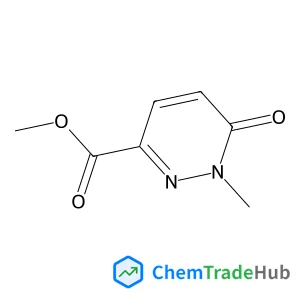
Methyl 1-methyl-6-oxo-1,6-dihydro-3-pyridazinecarboxylate
CAS Number:
74173-58-3
Molecular Formula:
C7H8N2O3
Recommended Suppliers







Disclaimer
This page provides academic journal information for reference and research purposes only. We are not affiliated with any journal publishers and do not handle publication submissions. For publication-related inquiries, please contact the respective journal publishers directly.
If you notice any inaccuracies in the information displayed, please contact us at support@chemtradehub.com. We will promptly review and address your concerns.