



Ab initio interatomic potentials and transport properties of alkali metal (M = Rb and Cs)–rare gas (Rg = He, Ne, Ar, Kr, and Xe) media
Literature Information
Publication Date
2018-09-20
DOI
10.1039/C8CP04397C
Impact Factor
3.676
Authors
Alexander A. Medvedev, Vladimir V. Meshkov, Andrey V. Stolyarov, Michael C. Heaven
View Original
Abstract
We performed a first principle systematic calculation on the adiabatic potential energy curves (PECs) of alkali metal (M = Rb and Cs) – rare gas (Rg = He, Ne, Ar, Kr, and Xe) van der Waals molecules over a wide range of interatomic distance R. All electron basis sets of triple and quadruple zeta valence quality were used for the He, Ne, Ar and Kr atoms. Scalar relativistic effects were taken into account for the heavy Rb, Cs and Xe atoms by means of Dirac–Fock effective core potentials. The correlated ground state energies have been obtained within the framework of the spin unrestricted open-shell coupled cluster method, with perturbative treatment of triple excitations. The electronic energies were corrected for the basis set superposition error (BSSE) using the counterpoise method. Energies were extrapolated to the complete basis set (CBS) limit using a two-point scheme. The energy convergence towards the CBS limit was monitored by the saturation of the dummy atom basis set that included bond functions centered at the midpoint of the interatomic distance. The ab initio point-wise PEC was followed to small R to the point where the energy was 0.5 Hartree above the dissociation limit. A Morse long-range (MLR, UM Rg(R)) potential possessing the correct asymptotic behavior at R → ∞ was fitted to the single point energies. The resulting set of fully analytical MLR potentials was then used to evaluate classical collision integrals over a wide range of collision energies. By this means, diffusion coefficients (DM Rg(T)) were predicted as functions of the translation temperature T ≤ 3000 K. The reliability of the present ab initio UM Rg(R) and DM Rg(T) functions was accessed through a comparison with previous theoretical and experimental results.
Recommended Journals

Russian Journal of Applied Chemistry

Russian Chemical Bulletin

Current Opinion in Colloid & Interface Science

Russian Journal of Organic Chemistry

Journal of Natural Medicines

Crystallography Reports

Russian Journal of General Chemistry

Nature Medicine

Chemistry Education Research and Practice

Chemical Communications
Related Literature
Formation of superoxide and ozone-like species on Cu doped CeO2(111) and their CO oxidation reactivity: a DFT study
Hao Wang, Yuan Li, Jiao Han, Caishun Zhang, Honghao Wang, Daosheng Liu, Xiaoning Hou, Lei Zhang, Zhixian Gao
2023-11-24
Paper
DOI: 10.1039/D3CP03885H
Reply to the ‘Comment on “Perturbation theory of scattering for grazing-incidence fast-atom diffraction”’ by G. A. Bocan, H. Breiss, S. Szilasi, A. Momeni, E. M. S. Casagrande, E. A. Sánchez, M. S. Gravielle and H. Khemliche, Phys. Chem. Chem. Phys., 2023, 25, DOI: 10.1039/D3CP02486E
W. Allison, S. Miret-Artés, E. Pollak
2023-12-04
Comment
DOI: 10.1039/D3CP04559E
Double strengthening induced by grain boundary segregation of solute elements in gradient nano Ni–Co alloys
Wei Zhang, Xin Guo, Junqiang Ren, Junchen Li, Hongtao Xue, Fuling Tang, Peiqing La, Xuefeng Lu
2023-11-21
Paper
DOI: 10.1039/D3CP03613H
Hole-transporting interlayers based on pyrazine-containing conjugated polymers for perovskite solar cells
D. S. Zamoretskov, I. E. Kuznetsov, M. M. Tepliakova, D. K. Sagdullina, V. G. Kurbatov, A. G. Nasibulin, A. V. Akkuratov
2023-11-09
Paper
DOI: 10.1039/D3CP04533A
Electronic, optoelectronic, and thermoelectric properties of single molecular devices of 2D fullerenes with zigzag graphene nanoribbons as electrodes
Ping Zhou, Guohao Li, Mengtao Sun
2023-10-31
Paper
DOI: 10.1039/D3CP04725C
Enhanced electrocatalytic hydrogen evolution from nitrogen plasma-tailored MoS2 nanostructures
You Li, Yi Wan, Jiamin Yao, Hongqian Zheng, Xi Wang, Xuan Liu, Bo Ouyang, Chengxi Huang, Kaiming Deng, Erjun Kan
2023-11-03
Paper
DOI: 10.1039/D3CP04951E
Comment on “Perturbation theory of scattering for grazing-incidence fast-atom diffraction”, by W. Allison, S. Miret-Artés and E. Pollak, Phys. Chem. Chem. Phys., 2022, 24, 15851
Gisela Anahí Bocan, Hanadi Breiss, Samir Szilasi, Elena Magdalena Staicu Casagrande, María Silvia Gravielle, Hocine Khemliche
2023-12-04
Comment
DOI: 10.1039/D3CP02486E
XANES analysis of phosphate glasses melted with Tb4O7 and SnO: evaluating the impact of valence states on structural, thermal, and luminescent properties
José A. Jiménez, Dugan Hayes, Cali Antolini, Benjamin J. Reinhart
2023-11-28
Paper
DOI: 10.1039/D3CP04784A
You might also like
Compound Q&A
Are there alternatives to 1-(4-Chlorophenyl)-N-hydroxymethanimine (CAS: 3848-36-0) in synthesis?
When considering alternatives to 1-(4-Chlorophenyl)-N-hydroxymethanimine (CAS: 3...
3848-36-01-(4-Chlorophenyl)-N...
Compound Q&A
How should (1R,9S,10S,12S,14E,16S,19R,20R,21S,22R)-3,9,21-Trihydroxy-5,10,12,14,16,20,22-heptamethyl-23,24-dioxatetracyclo[17.3.1.1~6,9~.0~2,7~]tetracosa-2,5,7,14-tetraen-4-one (CAS: 183202-73-5) be stored?
This compound should be stored in a cool, dry place away from direct sunlight. I...
183202-73-5(1R,9S,10S,12S,14E,1...
Compound Q&A
How is 3-(4-Bromophenyl)-5-(2-fluorophenyl)-1,2,4-oxadiazole (CAS: 419553-16-5) typically synthesized?
3-(4-Bromophenyl)-5-(2-fluorophenyl)-1,2,4-oxadiazole is synthesized through a m...
419553-16-53-(4-Bromophenyl)-5-...
Compound Q&A
How is 5-Chloro-2-(4-chlorophenyl)-4-methyl-6-[3-(1-piperidinyl)propoxy]pyrimidine (CAS: 1639220-19-1) typically synthesized?
5-Chloro-2-(4-chlorophenyl)-4-methyl-6-[3-(1-piperidinyl)propoxy]pyrimidine (CAS...
1639220-19-15-Chloro-2-(4-chloro...
Compound Q&A
What industries use 2-Chloro-4-(difluoromethoxy)pyridine (CAS: 1206978-15-5)?
2-Chloro-4-(difluoromethoxy)pyridine is used in the pharmaceutical industry for ...
1206978-15-52-Chloro-4-(difluoro...
Compound Q&A
What regulatory guidelines apply to 3-Chloro-6-methylpyridazine (CAS: 1121-79-5)?
3-Chloro-6-methylpyridazine (CAS: 1121-79-5) is classified under the Globally Ha...
1121-79-53-Chloro-6-methylpyr...
Compound Q&A
Are there alternatives to Methyl 4,5-dimethyl-2-nitrobenzoate in synthesis?
Several alternatives can be used in the synthesis of Methyl 4,5-dimethyl-2-nitro...
90922-74-0Methyl 4,5-dimethyl-...
Compound Q&A
Are there alternatives to (2E,2'E)-3,3'-(1,4-Phenylene)bisacrylaldehyde in synthesis?
Alternatives to (2E,2'E)-3,3'-(1,4-Phenylene)bisacrylaldehyde include other acry...
63405-68-5(2E,2'E)-3,3'-(1,4-P...
Compound Q&A
What is 3-Amino-5-chloropyridin-2-ol hydrochloride (CAS: 1261906-29-9)?
3-Amino-5-chloropyridin-2-ol hydrochloride is an organic compound with the CAS n...
1261906-29-93-Amino-5-chloropyri...
Compound Q&A
What precautions should be taken when handling 6,7-Difluoro-2,3-dihydro-4H-chromen-4-one (CAS: 1092349-93-3)?
When handling 6,7-Difluoro-2,3-dihydro-4H-chromen-4-one, it is essential to wear...
1092349-93-36,7-Difluoro-2,3-dih...
Source Journal
Physical Chemistry Chemical Physics

CiteScore:
5.5
Self-citation Rate:
10.3%
Articles per Year:
3036
Physical Chemistry Chemical Physics (PCCP) is an international journal co-owned by 19 physical chemistry and physics societies from around the world. This journal publishes original, cutting-edge research in physical chemistry, chemical physics and biophysical chemistry. To be suitable for publication in PCCP, articles must include significant innovation and/or insight into physical chemistry; this is the most important criterion that reviewers and Editors will judge against when evaluating submissions. The journal has a broad scope and welcomes contributions spanning experiment, theory, computation and data science. Topical coverage includes spectroscopy, dynamics, kinetics, statistical mechanics, thermodynamics, electrochemistry, catalysis, surface science, quantum mechanics, quantum computing and machine learning. Interdisciplinary research areas such as polymers and soft matter, materials, nanoscience, energy, surfaces/interfaces, and biophysical chemistry are welcomed if they demonstrate significant innovation and/or insight into physical chemistry. Joined experimental/theoretical studies are particularly appreciated when complementary and based on up-to-date approaches.
Recommended Compounds
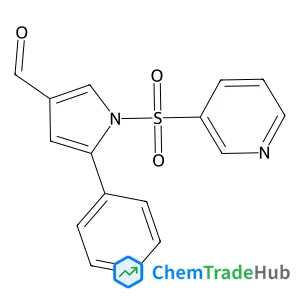
5-Phenyl-1-(pyridin-3-ylsulfonyl)-1H-pyrrole-3-carbaldehyde
CAS Number:
881676-90-0
Molecular Formula:
C16H12N2O3S
![6-Bromo-2,3-dihydro-1H-pyrido[2,3-b][1,4]oxazine structure](https://static.chemtradehub.com/structs/120/1203499-17-5-b4d1.webp "6-Bromo-2,3-dihydro-1H-pyrido[2,3-b][1,4]oxazine structure")
6-Bromo-2,3-dihydro-1H-pyrido[2,3-b][1,4]oxazine
CAS Number:
1203499-17-5
Molecular Formula:
C7H7BrN2O

(S)-3-((((9H-Fluoren-9-yl)methoxy)carbonyl)amino)-2-phenylpropanoic acid
CAS Number:
1217663-60-9
Molecular Formula:
C24H21NO4

Recommended Suppliers





Disclaimer
This page provides academic journal information for reference and research purposes only. We are not affiliated with any journal publishers and do not handle publication submissions. For publication-related inquiries, please contact the respective journal publishers directly.
If you notice any inaccuracies in the information displayed, please contact us at support@chemtradehub.com. We will promptly review and address your concerns.