












The influence of nanoparticles on the polarizabilities and hyperpolarizabilities of photochromic molecules
Literature Information
Publication Date
2018-08-20
DOI
10.1039/C8CP03645D
Impact Factor
3.676
Authors
View Original
Abstract
We consider how nanoparticles affect molecular photoswitches and our focus is on how the polarizabilities and hyperpolarizabilities of the dihydroazulene/vinylheptafulvene system changes, when the compounds interact with gold nanoparticles. We have utilized a combined quantum mechanical/molecular mechanical approach, where the photochromic molecule is described by time-dependent density functional theory using the long-range-corrected CAM-B3LYP functional and the correlation consistent aug-cc-pVDZ basis-set. The nanoparticles are described by gold atoms having an atomic polarizability. The calculations showed that the polarizabilities of the photochromic molecules are affected by the gold nanoparticles, but the hyperpolarizabilities change significantly as the interactions between the nanoparticles and the photochromic molecules are increased.
Related Literature
Correction: Theory of solid effect and cross effect dynamic nuclear polarization with half-integer high-spin metal polarizing agents in rotating solids
2016-10-13
Correction
DOI: 10.1039/C6CP90249A
Origin of the catalytic activity of face-centered-cubic ruthenium nanoparticles determined from an atomic-scale structure
L. S. R. Kumara, Anli Yang, Chulho Song, Kohei Kusada, Hirokazu Kobayashi
2016-10-11
Paper
DOI: 10.1039/C6CP04088H
Tuning the vibrational coupling of H3O+ by changing its solvation environment
Cheng-chau Chiu, Hsin-Yi Liao, Hai Thi Huynh
2016-10-14
Paper
DOI: 10.1039/C6CP06326H
Reaction mechanism of the dengue virus serine protease: a QM/MM study
M. C. P. Lima, G. M. Seabra
2016-06-10
Paper
DOI: 10.1039/C6CP03209E
Infrared spectra of ovalene (C32H14) and hydrogenated ovalene (C32H15˙) in solid para-hydrogen
Masashi Tsuge, Mohammed Bahou, Yu-Jong Wu, Louis Allamandola
2016-09-22
Paper
DOI: 10.1039/C6CP05701B
Neurotrophin-mimicking peptides at the biointerface with gold respond to copper ion stimuli
C. Satriano, G. Forte, A. Magrì, P. Di Pietro, A. Travaglia, G. Pandini, F. Gianì, D. La Mendola
2016-10-12
Paper
DOI: 10.1039/C6CP05476E
Modulation of the exfoliated graphene work function through cycloaddition of nitrile imines‡
Myriam Barrejón, María J. Gómez-Escalonilla, José Luis G. Fierro, Pilar Prieto, José R. Carrillo, Gonzalo Abellán, M, Mercedes Gabás, Juan T. López-Navarrete, Fernando Langa
2016-09-30
Paper
DOI: 10.1039/C6CP05285A
Efficient charge transfer and utilization of near-infrared solar spectrum by ytterbium and thulium codoped gadolinium molybdate (Gd2(MoO4)3:Yb/Tm) nanophosphor in hybrid solar cells
Weifu Sun, Zihan Chen, Qin Zhang, Junli Zhou, Feng Li, Xiao Jin, Dongyu Li, Qinghua Li
2016-09-13
Paper
DOI: 10.1039/C6CP04963J
You might also like
Compound Q&A
Are there alternatives to 1-(4-Chlorophenyl)-N-hydroxymethanimine (CAS: 3848-36-0) in synthesis?
When considering alternatives to 1-(4-Chlorophenyl)-N-hydroxymethanimine (CAS: 3...
3848-36-01-(4-Chlorophenyl)-N...
Compound Q&A
How should (1R,9S,10S,12S,14E,16S,19R,20R,21S,22R)-3,9,21-Trihydroxy-5,10,12,14,16,20,22-heptamethyl-23,24-dioxatetracyclo[17.3.1.1~6,9~.0~2,7~]tetracosa-2,5,7,14-tetraen-4-one (CAS: 183202-73-5) be stored?
This compound should be stored in a cool, dry place away from direct sunlight. I...
183202-73-5(1R,9S,10S,12S,14E,1...
Compound Q&A
How is 3-(4-Bromophenyl)-5-(2-fluorophenyl)-1,2,4-oxadiazole (CAS: 419553-16-5) typically synthesized?
3-(4-Bromophenyl)-5-(2-fluorophenyl)-1,2,4-oxadiazole is synthesized through a m...
419553-16-53-(4-Bromophenyl)-5-...
Compound Q&A
How is 5-Chloro-2-(4-chlorophenyl)-4-methyl-6-[3-(1-piperidinyl)propoxy]pyrimidine (CAS: 1639220-19-1) typically synthesized?
5-Chloro-2-(4-chlorophenyl)-4-methyl-6-[3-(1-piperidinyl)propoxy]pyrimidine (CAS...
1639220-19-15-Chloro-2-(4-chloro...
Compound Q&A
What industries use 2-Chloro-4-(difluoromethoxy)pyridine (CAS: 1206978-15-5)?
2-Chloro-4-(difluoromethoxy)pyridine is used in the pharmaceutical industry for ...
1206978-15-52-Chloro-4-(difluoro...
Compound Q&A
What regulatory guidelines apply to 3-Chloro-6-methylpyridazine (CAS: 1121-79-5)?
3-Chloro-6-methylpyridazine (CAS: 1121-79-5) is classified under the Globally Ha...
1121-79-53-Chloro-6-methylpyr...
Compound Q&A
Are there alternatives to Methyl 4,5-dimethyl-2-nitrobenzoate in synthesis?
Several alternatives can be used in the synthesis of Methyl 4,5-dimethyl-2-nitro...
90922-74-0Methyl 4,5-dimethyl-...
Compound Q&A
Are there alternatives to (2E,2'E)-3,3'-(1,4-Phenylene)bisacrylaldehyde in synthesis?
Alternatives to (2E,2'E)-3,3'-(1,4-Phenylene)bisacrylaldehyde include other acry...
63405-68-5(2E,2'E)-3,3'-(1,4-P...
Compound Q&A
What is 3-Amino-5-chloropyridin-2-ol hydrochloride (CAS: 1261906-29-9)?
3-Amino-5-chloropyridin-2-ol hydrochloride is an organic compound with the CAS n...
1261906-29-93-Amino-5-chloropyri...
Compound Q&A
What precautions should be taken when handling 6,7-Difluoro-2,3-dihydro-4H-chromen-4-one (CAS: 1092349-93-3)?
When handling 6,7-Difluoro-2,3-dihydro-4H-chromen-4-one, it is essential to wear...
1092349-93-36,7-Difluoro-2,3-dih...
Source Journal
Physical Chemistry Chemical Physics

CiteScore:
5.5
Self-citation Rate:
10.3%
Articles per Year:
3036
Physical Chemistry Chemical Physics (PCCP) is an international journal co-owned by 19 physical chemistry and physics societies from around the world. This journal publishes original, cutting-edge research in physical chemistry, chemical physics and biophysical chemistry. To be suitable for publication in PCCP, articles must include significant innovation and/or insight into physical chemistry; this is the most important criterion that reviewers and Editors will judge against when evaluating submissions. The journal has a broad scope and welcomes contributions spanning experiment, theory, computation and data science. Topical coverage includes spectroscopy, dynamics, kinetics, statistical mechanics, thermodynamics, electrochemistry, catalysis, surface science, quantum mechanics, quantum computing and machine learning. Interdisciplinary research areas such as polymers and soft matter, materials, nanoscience, energy, surfaces/interfaces, and biophysical chemistry are welcomed if they demonstrate significant innovation and/or insight into physical chemistry. Joined experimental/theoretical studies are particularly appreciated when complementary and based on up-to-date approaches.
Recommended Compounds
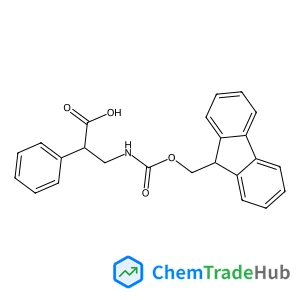
(S)-3-((((9H-Fluoren-9-yl)methoxy)carbonyl)amino)-2-phenylpropanoic acid
CAS Number:
1217663-60-9
Molecular Formula:
C24H21NO4
Recommended Suppliers




Disclaimer
This page provides academic journal information for reference and research purposes only. We are not affiliated with any journal publishers and do not handle publication submissions. For publication-related inquiries, please contact the respective journal publishers directly.
If you notice any inaccuracies in the information displayed, please contact us at support@chemtradehub.com. We will promptly review and address your concerns.