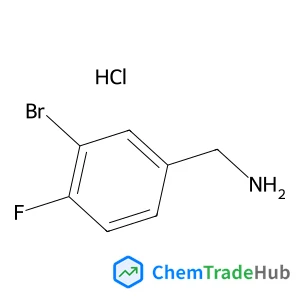
1-(3-Bromo-4-fluorophenyl)methanamine hydrochloride (1:1)
CAS Number:
202865-68-7
Molecular Formula:
C7H8BrClFN
Hang Zhai, Zhen Qin, Dan Sun, Jianyun Wang, Chang Liu, Nan Min, Quan Li
Zirconium disulfide (ZrS2) is an exemplary case among layered materials that exhibit unusual electronic and vibrational properties, with applications in potential photovoltaic and single-layer transistor materials. Here, we examine the effect of pressure on the structural stability, phonon dispersion, electronic properties and electron–phonon coupling of ZrS2 using first-principles calculations. Our results unravel that ZrS2 undergoes several pressure-induced phase transformations from the ambient-pressure Pm1 structure to a monoclinic P21/m structure at 2.0 GPa, to an orthorhombic Immm structure at 5.6 GPa, and to a tetragonal I4/mmm structure at 25.0 GPa. The electronic band calculations indicate that the layered Pm1 and P21/m structures are narrow-gap semiconductors. The gaps of the above two phases, which are normal semiconductors, decrease with pressure. Our results show that ZrS2 reaches the metallic state by a P21/m → Immm phase transition and keeps its metallic state in the I4/mmm phase. A pressure-driven evolution of the topological Fermi surface has been uncovered. The electron–phonon coupling results identify superconducting states in both metallic Immm and I4/mmm structures. Our research shows that pressure is efficient in the modulation of the bonding states, crystal structures and electronic properties of ZrS2, which will stimulate further high-pressure structural and conductive measurements.

Russian Journal of Coordination Chemistry

Russian Journal of Organic Chemistry

Russian Journal of Applied Chemistry

Journal of Natural Medicines

Organic Process Research & Development

Acta Materialia

Saudi Pharmaceutical Journal

Journal of Peptide Science

Current Opinion in Colloid & Interface Science

Russian Journal of Bioorganic Chemistry
Gisela Anahí Bocan, Hanadi Breiss, Samir Szilasi, Elena Magdalena Staicu Casagrande, María Silvia Gravielle, Hocine Khemliche
DOI: 10.1039/D3CP02486E
Wei Zhang, Xin Guo, Junqiang Ren, Junchen Li, Hongtao Xue, Fuling Tang, Peiqing La, Xuefeng Lu
DOI: 10.1039/D3CP03613H
Maxime Hodée, Julien Massue, Sylvain Achelle, Arnaud Fihey, Gilles Ulrich, Françoise Robin-le Guen, Claudine Katan
DOI: 10.1039/D3CP03705C
Wenbin Guo, Yi Cao, Songbin Li
DOI: 10.1039/D3CP04846B
Xinyang Li, Yu Zhang
DOI: 10.1039/D3CP01415K
Ghulam Hasnain Tariq, Ghulam Asghar, M. Shahzad Shifa, M. Anis-Ur-Rehman, Sana Ullah, Zulfiqar Ali Shah, Ahmed M. Tawfeek, Farooq Sher
DOI: 10.1039/D3CP04332K
Thomas Nevolianis, Raja A. Ahmed, Arnim Hellweg, Michael Diedenhofen, Kai Leonhard
DOI: 10.1039/D3CP04077A
David Hochberg, Thomas Buhse, Jean-Claude Micheau, Josep M. Ribó
DOI: 10.1039/D3CP03311B
When considering alternatives to 1-(4-Chlorophenyl)-N-hydroxymethanimine (CAS: 3...
This compound should be stored in a cool, dry place away from direct sunlight. I...
3-(4-Bromophenyl)-5-(2-fluorophenyl)-1,2,4-oxadiazole is synthesized through a m...
5-Chloro-2-(4-chlorophenyl)-4-methyl-6-[3-(1-piperidinyl)propoxy]pyrimidine (CAS...
2-Chloro-4-(difluoromethoxy)pyridine is used in the pharmaceutical industry for ...
3-Chloro-6-methylpyridazine (CAS: 1121-79-5) is classified under the Globally Ha...
Several alternatives can be used in the synthesis of Methyl 4,5-dimethyl-2-nitro...
Alternatives to (2E,2'E)-3,3'-(1,4-Phenylene)bisacrylaldehyde include other acry...
3-Amino-5-chloropyridin-2-ol hydrochloride is an organic compound with the CAS n...
When handling 6,7-Difluoro-2,3-dihydro-4H-chromen-4-one, it is essential to wear...

Physical Chemistry Chemical Physics (PCCP) is an international journal co-owned by 19 physical chemistry and physics societies from around the world. This journal publishes original, cutting-edge research in physical chemistry, chemical physics and biophysical chemistry. To be suitable for publication in PCCP, articles must include significant innovation and/or insight into physical chemistry; this is the most important criterion that reviewers and Editors will judge against when evaluating submissions. The journal has a broad scope and welcomes contributions spanning experiment, theory, computation and data science. Topical coverage includes spectroscopy, dynamics, kinetics, statistical mechanics, thermodynamics, electrochemistry, catalysis, surface science, quantum mechanics, quantum computing and machine learning. Interdisciplinary research areas such as polymers and soft matter, materials, nanoscience, energy, surfaces/interfaces, and biophysical chemistry are welcomed if they demonstrate significant innovation and/or insight into physical chemistry. Joined experimental/theoretical studies are particularly appreciated when complementary and based on up-to-date approaches.