













Inside front cover
Literature Information
Publication Date
2024-01-02
DOI
10.1039/D4GC90002B
Impact Factor
10.182
Authors
View Original
Abstract
A graphical abstract is available for this content
Related Literature
Efficient stabilization of copper(iii) in tetraaza pseudo-macrocyclic oxime-and-hydrazideligands with adjustable cavity size
Igor O. Fritsky, Henryk Kozłowski, Olga M. Kanderal, Matti Haukka, Jolanta Świątek-Kozłowska, Elżbieta Gumienna-Kontecka, Franc Meyer
2006-08-22
Communication
DOI: 10.1039/B608236J
Spoilt for choice: assessing phase behavior models for the evolution of homochirality
Donna G. Blackmond, Martin Klussmann
2007-09-17
Feature Article
DOI: 10.1039/B709314B
Insertion of benzyl isocyanide into a Zr–P bond and rearrangement. Atom-economical synthesis of a phosphaalkene
Samantha N. MacMillan, Joseph M. Tanski, Rory Waterman
2007-08-07
Communication
DOI: 10.1039/B709506F
Gyroscope-like molecules consisting of three-spoke stators that enclose “switchable” neutral dipolar rhodium rotators; reversible cycling between faster and slower rotating Rh(CO)I and Rh(CO)2I species
Leyong Wang, Takanori Shima, Frank Hampel, J. A. Gladysz
2006-09-08
Communication
DOI: 10.1039/B606728J
Enantioselective nitroaldol (Henry) reaction using copper(ii) complexes of (−)-sparteine
H. Maheswaran, K. Leon Prasanth, G. Gopi Krishna, K. Ravikumar, B. Sridhar, M. Lakshmi Kantam
2006-09-14
Communication
DOI: 10.1039/B610203D
Inorganic polymer photoresist for direct ceramic patterning by photolithography
Tuan Anh Pham, Pilnam Kim, Moonkyoo Kwak, Kahp Y. Suh, Dong-Pyo Kim
2007-08-30
Communication
DOI: 10.1039/B708480C
Direct asymmetric catalytic 1,2-addition of RZnX to aldehydes promoted by AlMe3 and reversal of expected stereochemistry
Jonathan Shannon, David Bernier, Daniel Rawson, Simon Woodward
2007-08-15
Communication
DOI: 10.1039/B710681E
Electrochemical SNPs detection using an abasic site-containing DNA on a gold electrode
Takehiro Seino, Yusuke Sato
2006-03-13
Communication
DOI: 10.1039/B517391D
Spirocyclic helical compounds as binding agents for bulged RNA, including HIV-2 TAR
Ziwei Xiao, Na Zhang, Yiqing Lin, Graham B. Jones, Irving H. Goldberg
2006-09-14
Communication
DOI: 10.1039/B610007D
A discrete conglomerate of a distorted Mo(v)-porphyrin with a directly coordinated keggin-type polyoxometalate
Atsutoshi Yokoyama, Takahiko Kojima, Kei Ohkubo, Shunichi Fukuzumi
2007-06-08
Communication
DOI: 10.1039/B704994C
You might also like
Compound Q&A
How should waste containing 2-Ethyl-4-Methyl-1H-Imidazole-5-Carbaldehyde (CAS: 88634-80-4) be handled?
Waste containing 2-Ethyl-4-Methyl-1H-Imidazole-5-Carbaldehyde (CAS: 88634-80-4) ...
88634-80-42-Ethyl-4-Methyl-1H-...
Compound Q&A
What industries use Triethoxy(octyl)silane (CAS: 1385031-14-0)?
Triethoxy(octyl)silane (CAS: 1385031-14-0) is widely used in the pharmaceuticals...
1385031-14-0Triethoxy(octyl)sila...
Compound Q&A
Are there alternatives to 3-iodo-7-nitro-1H-indazole (CAS: 864724-64-1) in synthesis?
Several alternatives to 3-iodo-7-nitro-1H-indazole (CAS: 864724-64-1) exist in t...
864724-64-13-iodo-7-nitro-1H-in...
Compound Q&A
Are there alternatives to Benzene, bis[(trimethoxysilyl)ethyl] (CAS: 266317-71-9) in synthesis?
Yes, there are alternatives to Benzene, bis[(trimethoxysilyl)ethyl] (CAS: 266317...
266317-71-9Benzene, bis[(trimet...
Compound Q&A
Is Isothiazole-3-carbonitrile (CAS: 1452-17-1) safe?
Isothiazole-3-carbonitrile (CAS: 1452-17-1) is generally considered safe when us...
1452-17-1Isothiazole-3-carbon...
Compound Q&A
Is (3-Chlorophenyl)methanol (CAS: 873-63-2) safe?
(3-Chlorophenyl)methanol (CAS: 873-63-2) is considered low to moderately toxic. ...
873-63-2(3-Chlorophenyl)meth...
Compound Q&A
How is (2S,3S)-2-Hydroxy-3-({[(2-methyl-2-propanyl)oxy]carbonyl}amino)-3-(2-naphthyl)propanoic acid (CAS: 959583-98-3) typically synthesized?
(2S,3S)-2-Hydroxy-3-({[(2-methyl-2-propanyl)oxy]carbonyl}amino)-3-(2-naphthyl)pr...
959583-98-3(2S,3S)-2-Hydroxy-3-...
Compound Q&A
What precautions should be taken when handling Methyl 2-(bromomethyl)-5-methoxybenzoate (CAS: 788081-99-2)?
Proper handling of methyl 2-(bromomethyl)-5-methoxybenzoate requires the use of ...
788081-99-2Methyl 2-(bromomethy...
Compound Q&A
What is 6,8-Dibromoimidazo[1,2-a]pyridine-2-carboxylic acid (CAS: 904805-36-3)?
6,8-Dibromoimidazo[1,2-a]pyridine-2-carboxylic acid (CAS: 904805-36-3) is an aro...
904805-36-36,8-Dibromoimidazo[1...
Compound Q&A
Is 3-Amino-5-bromo-2-pyridinecarbonitrile (CAS: 573675-27-1) safe?
3-Amino-5-bromo-2-pyridinecarbonitrile is considered safe when handled under pro...
573675-27-13-Amino-5-bromo-2-py...
Source Journal
Green Chemistry

CiteScore:
16.1
Self-citation Rate:
7.5%
Articles per Year:
944
Green Chemistry provides a unique forum for the publication of innovative research on the development of alternative green and sustainable technologies. The scope of Green Chemistry is based on, but not limited to, the definition proposed by Anastas and Warner (Green Chemistry: Theory and Practice, P T Anastas and J C Warner, Oxford University Press, Oxford, 1998). Green chemistry is the utilisation of a set of principles that reduces or eliminates the use or generation of hazardous substances in the design, manufacture and application of chemical products. Green Chemistry is at the frontiers of this continuously-evolving interdisciplinary science and publishes research that attempts to reduce the environmental impact of the chemical enterprise by developing a technology base that is inherently non-toxic to living things and the environment. Submissions on all aspects of research relating to the endeavour are welcome. The journal publishes original and significant cutting-edge research that is likely to be of wide general appeal. To be published, work must present a significant advance in green chemistry. Papers must contain a comparison with existing methods and demonstrate advantages over those methods before publication can be considered. For more information please see this Editorial. Coverage includes the following, but is not limited to: Design (e.g. biomimicry, design for degradation/recycling/reduced toxicity…) Reagents & Feedstocks (e.g. renewables, CO2, solvents, auxiliary agents, waste utilization…) Synthesis (e.g. organic, inorganic, synthetic biology…) Catalysis (e.g. homogeneous, heterogeneous, enzyme, whole cell…) Process (e.g. process design, intensification, separations, recycling, efficiency…) Energy (e.g. renewable energy, fuels, photovoltaics, fuel cells, energy storage, energy carriers…) Applications (e.g. electronics, dyes, consumer products, coatings, pharmaceuticals, preservatives, building materials, chemicals for industry/agriculture/mining…) Impact (e.g. safety, metrics, LCA, sustainability, (eco)toxicology…) Green chemistry is, by definition, a continuously-evolving frontier. Therefore, the inclusion of a particular material or technology does not, of itself, guarantee that a paper is suitable for the journal. To be suitable, the novel advance should have the potential for reduced environmental impact relative to the state of the art. Green Chemistry does not normally deal with research associated with 'end-of-pipe' or remediation issues.
Recommended Compounds
![4-Nitrophenyl N-{[(2-methyl-2-propanyl)oxy]carbonyl}-L-isoleucinate structure](https://static.chemtradehub.com/structs/169/16948-38-2-c88f.webp "4-Nitrophenyl N-{[(2-methyl-2-propanyl)oxy]carbonyl}-L-isoleucinate structure")
4-Nitrophenyl N-{[(2-methyl-2-propanyl)oxy]carbonyl}-L-isoleucinate
CAS Number:
16948-38-2
Molecular Formula:
C17H24N2O6
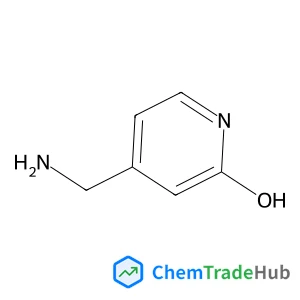

![2,2'-[(Abieta-8,11,13-trien-18-ylimino)bis(2,1-ethanediyloxy)]diethanol structure](https://static.chemtradehub.com/structs/513/51344-62-8-8518.webp "2,2'-[(Abieta-8,11,13-trien-18-ylimino)bis(2,1-ethanediyloxy)]diethanol structure")
2,2'-[(Abieta-8,11,13-trien-18-ylimino)bis(2,1-ethanediyloxy)]diethanol
CAS Number:
51344-62-8
Molecular Formula:
C28H47NO4
Recommended Suppliers





Disclaimer
This page provides academic journal information for reference and research purposes only. We are not affiliated with any journal publishers and do not handle publication submissions. For publication-related inquiries, please contact the respective journal publishers directly.
If you notice any inaccuracies in the information displayed, please contact us at support@chemtradehub.com. We will promptly review and address your concerns.