


Efficient stabilization of copper(iii) in tetraaza pseudo-macrocyclic oxime-and-hydrazideligands with adjustable cavity size
Literature Information
Publication Date
2006-08-22
DOI
10.1039/B608236J
Impact Factor
6.222
Authors
Igor O. Fritsky, Henryk Kozłowski, Olga M. Kanderal, Matti Haukka, Jolanta Świątek-Kozłowska, Elżbieta Gumienna-Kontecka, Franc Meyer
View Original
Abstract
Substitution of the amide donors in open-chain {2N(oxime), 2N(amide)} ligands by hydrazide donors gives new pseudo-macrocyclic copper complexes that show a significant decrease of the Cu3+/2+ redox potentials in both mono- and polynuclear systems, thus demonstrating a pronounced capacity of such ligand systems to efficiently stabilize the trivalent copper.
Recommended Journals

Planta Medica

Israel Journal of Chemistry

Organic Preparations and Procedures International

Journal of Medicinal Chemistry

Journal of Organometallic Chemistry

Pharmacological Reviews

Proceedings of the National Academy of Sciences of the United States of America

Fibre Chemistry

Journal of Catalysis

Journal of Heterocyclic Chemistry
Related Literature
Synthesis of poly(para-phenylenevinylene) rotaxanes by aqueous Suzuki coupling
Jun Terao, Andrew Tang, Jasper J. Michels, Alexander Krivokapic, Harry L. Anderson
2003-11-27
Communication
DOI: 10.1039/B311762F
Unexpected cleavage of tetrahydrofuran by catalytic reductive lithiation
Stéphane Streiff, Nigel Ribeiro, Laurent Désaubry
2004-01-13
Communication
DOI: 10.1039/B312972A
Dehydropolymerization of arylsilanes catalyzed by a novel silylmolybdenum complex
Makoto Minato, Takaomi Matsumoto, Miyuki Ichikawa, Takashi Ito
2003-11-03
Communication
DOI: 10.1039/B310663M
Multiple active oxidants in competitive epoxidations catalyzed by porphyrins and corroles
James P. Collman, Li Zeng, Richard A. Decréau
2003-11-03
Communication
DOI: 10.1039/B310763A
Encapsulation of paramagnetic 3d1-vanadium(iv) in an antiferromagnetically coupled dodecanuclear copper(ii) cage
Arindam Mukherjee, Munirathinam Nethaji, Akhil R. Chakravarty
2003-11-04
Communication
DOI: 10.1039/B310521K
Nucleic acid binding properties of thyminyl and adeninyl pyrrolidine-amideoligonucleotide mimics (POM)
T. H. Samuel Tan, David T. Hickman, Jordi Morral, Ian G. Beadham, Jason Micklefield
2004-01-28
Communication
DOI: 10.1039/B315768G
Fabrication of two-dimensionally ordered macroporous silica materials with controllable dimensions
Mandakini Kanungo, Maryanne M. Collinson
2004-02-04
Communication
DOI: 10.1039/B311936J
Structure and magnetism of a new pyrazolate bridged iron(II) spin crossover complex displaying a single HS–HS to LS–LS transition
Ben A. Leita, Boujemaa Moubaraki, Keith S. Murray, Jonathan P. Smith, John D. Cashion
2003-11-20
Communication
DOI: 10.1039/B311818E
Noncontact two-color luminescence thermometry based on intramolecular luminophore cyclization within an ionic liquid
Gary A. Baker, Sheila N. Baker, T. Mark McCleskey
2003-10-30
Communication
DOI: 10.1039/B310459C
Self-indicating amine scavenger resins
Jin Ku Cho, Peter D. White, Wolfgang Klute, Tony W. Dean, Mark Bradley
2004-01-27
Communication
DOI: 10.1039/B315426B
You might also like
Compound Q&A
How should waste containing 2-Ethyl-4-Methyl-1H-Imidazole-5-Carbaldehyde (CAS: 88634-80-4) be handled?
Waste containing 2-Ethyl-4-Methyl-1H-Imidazole-5-Carbaldehyde (CAS: 88634-80-4) ...
88634-80-42-Ethyl-4-Methyl-1H-...
Compound Q&A
What industries use Triethoxy(octyl)silane (CAS: 1385031-14-0)?
Triethoxy(octyl)silane (CAS: 1385031-14-0) is widely used in the pharmaceuticals...
1385031-14-0Triethoxy(octyl)sila...
Compound Q&A
Are there alternatives to 3-iodo-7-nitro-1H-indazole (CAS: 864724-64-1) in synthesis?
Several alternatives to 3-iodo-7-nitro-1H-indazole (CAS: 864724-64-1) exist in t...
864724-64-13-iodo-7-nitro-1H-in...
Compound Q&A
Are there alternatives to Benzene, bis[(trimethoxysilyl)ethyl] (CAS: 266317-71-9) in synthesis?
Yes, there are alternatives to Benzene, bis[(trimethoxysilyl)ethyl] (CAS: 266317...
266317-71-9Benzene, bis[(trimet...
Compound Q&A
Is Isothiazole-3-carbonitrile (CAS: 1452-17-1) safe?
Isothiazole-3-carbonitrile (CAS: 1452-17-1) is generally considered safe when us...
1452-17-1Isothiazole-3-carbon...
Compound Q&A
Is (3-Chlorophenyl)methanol (CAS: 873-63-2) safe?
(3-Chlorophenyl)methanol (CAS: 873-63-2) is considered low to moderately toxic. ...
873-63-2(3-Chlorophenyl)meth...
Compound Q&A
How is (2S,3S)-2-Hydroxy-3-({[(2-methyl-2-propanyl)oxy]carbonyl}amino)-3-(2-naphthyl)propanoic acid (CAS: 959583-98-3) typically synthesized?
(2S,3S)-2-Hydroxy-3-({[(2-methyl-2-propanyl)oxy]carbonyl}amino)-3-(2-naphthyl)pr...
959583-98-3(2S,3S)-2-Hydroxy-3-...
Compound Q&A
What precautions should be taken when handling Methyl 2-(bromomethyl)-5-methoxybenzoate (CAS: 788081-99-2)?
Proper handling of methyl 2-(bromomethyl)-5-methoxybenzoate requires the use of ...
788081-99-2Methyl 2-(bromomethy...
Compound Q&A
What is 6,8-Dibromoimidazo[1,2-a]pyridine-2-carboxylic acid (CAS: 904805-36-3)?
6,8-Dibromoimidazo[1,2-a]pyridine-2-carboxylic acid (CAS: 904805-36-3) is an aro...
904805-36-36,8-Dibromoimidazo[1...
Compound Q&A
Is 3-Amino-5-bromo-2-pyridinecarbonitrile (CAS: 573675-27-1) safe?
3-Amino-5-bromo-2-pyridinecarbonitrile is considered safe when handled under pro...
573675-27-13-Amino-5-bromo-2-py...
Source Journal
Chemical Communications

CiteScore:
8.6
Self-citation Rate:
4.7%
Articles per Year:
2458
ChemComm publishes urgent research which is of outstanding significance and interest to experts in the field, while also appealing to the journal’s broad chemistry readership. Our communication format is ideally suited to short, urgent studies that are of such importance that they require accelerated publication. Our scope covers all topics in chemistry, and research at the interface of chemistry and other disciplines (such as materials science, nanoscience, physics, engineering and biology) where there is a significant novelty in the chemistry aspects. Major topic areas covered include: Analytical Chemistry Catalysis Chemical Biology and medicinal chemistry Computational Chemistry and Machine Learning Energy and sustainable chemistry Environmental Chemistry Green Chemistry Inorganic Chemistry Materials Chemistry Nanoscience Organic Chemistry Physical Chemistry Polymer Chemistry Supramolecular Chemistry
Recommended Compounds
![4-Nitrophenyl N-{[(2-methyl-2-propanyl)oxy]carbonyl}-L-isoleucinate structure](https://static.chemtradehub.com/structs/169/16948-38-2-c88f.webp "4-Nitrophenyl N-{[(2-methyl-2-propanyl)oxy]carbonyl}-L-isoleucinate structure")
4-Nitrophenyl N-{[(2-methyl-2-propanyl)oxy]carbonyl}-L-isoleucinate
CAS Number:
16948-38-2
Molecular Formula:
C17H24N2O6
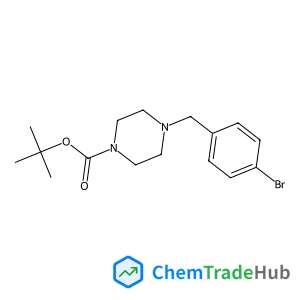
2-Methyl-2-propanyl 4-(4-bromobenzyl)-1-piperazinecarboxylate
CAS Number:
844891-10-7
Molecular Formula:
C16H23BrN2O2
Recommended Suppliers






Disclaimer
This page provides academic journal information for reference and research purposes only. We are not affiliated with any journal publishers and do not handle publication submissions. For publication-related inquiries, please contact the respective journal publishers directly.
If you notice any inaccuracies in the information displayed, please contact us at support@chemtradehub.com. We will promptly review and address your concerns.