












Spectroscopic investigations of electron and hole dynamics in MAPbBr3 perovskite film and carrier extraction to PEDOT hole transport layer
Literature Information
Publication Date
2021-05-28
DOI
10.1039/D1CP00658D
Impact Factor
3.676
Authors
Mojgan Kouhnavard, Yifan Diao, Pratim Biswas
View Original
Abstract
Organometallic halide perovskite (MAPPbBr3), Rust-based Vapor Phase Polymerization (RVPP)-PEDOT hole transporting layers and (RVPP-PEDOT)/MAPPbBr3 dual-layer, deposited on fluorine doped tin oxide glass were studied at room temperature using steady-state absorption, time-resolved photoluminescence imaging and femtosecond time-resolved absorption spectroscopy. Application of these techniques in conjunction with diverse excitation intensities allowed determination of various optoelectronic properties of the perovskite film and the time constant of the hole extraction process. Spectral reconstruction of the bandedge absorption spectrum using Elliot's formula enabled separation of the exciton band. The binding energy of the exciton was determined to be 19 meV and the bandgap energy of the perovskite film was 2.37 eV. Subsequent time-resolved photoluminescence studies of the perovskite film performed using a very weak excitation intensity followed by a global analysis of the data revealed monomolecular recombination dynamics of charge carriers occurring with an amplitude weighted lifetime of 3.2 ns. Femtosecond time-resolved transient absorption of the film performed after excitation intensity spanning a range of over two orders of magnitude enabled determining the rate constant of bimolecular recombination and was found to be 2.6 × 10⁻¹⁰ cm3 s−1. Application of numerous high intensity excitations enabled observation of band filling effect and application of the Burstein–Moss model allowed to determine the reduced effective mass of photoexcited electron–hole pair in MAPPbBr3 film to be 0.19 rest mass of the electron. Finally, application of transient absorption on RVPP-PEDOT/MAPPbBr3 enabled determination of a 0.4 ps time constant for the MAPPbBr3-to-PEDOT hole extraction process.
Related Literature
Vibrational structure theory: new vibrational wave function methods for calculation of anharmonic vibrational energies and vibrational contributions to molecular properties
2007-03-23
Invited Article
DOI: 10.1039/B618764A
Cross sections for low-energy electron scattering from adenine in the condensed phase
Radmila Panajotović, Marc Michaud, Léon Sanche
2006-11-17
Paper
DOI: 10.1039/B612700B
Weak distance dependence of through-bond interactions in tetrahydro-4H-thiopyran-4-ylidene end-capped oligo(cyclohexylidenes); a computational survey
Cornelis A. van Walree, Alwin W. Marsman, Joop H. van Lenthe, Leonardus W. Jenneskens
2007-01-26
Paper
DOI: 10.1039/B616893K
Thrombin allostery‡
Enrico Di Cera, Michael J. Page, Alaji Bah, Leslie A. Bush-Pelc, Laura C. Garvey
2007-01-12
Invited Article
DOI: 10.1039/B616819A
Hydrogen chemisorption on supported platinum, gold, and platinum–gold-alloy catalysts
2007-04-10
Paper
DOI: 10.1039/B701402C
Layer-by-layer assembly as a versatile bottom-up nanofabrication technique for exploratory research and realistic application
Katsuhiko Ariga, Jonathan P. Hill, Qingmin Ji
2007-03-01
Invited Article
DOI: 10.1039/B700410A
Particle size dependent adsorption and reaction kinetics on reduced and partially oxidized Pd nanoparticles
T. Schalow, B. Brandt, D. E. Starr, M. Laurin, S. K. Shaikhutdinov, S. Schauermann, J. Libuda, H.-J. Freund
2007-01-23
Paper
DOI: 10.1039/B614546A
Energy-directed tree search: an efficient systematic algorithm for finding the lowest energy conformation of molecules
Ekaterina I. Izgorodina, Ching Yeh Lin, Michelle L. Coote
2007-04-04
Paper
DOI: 10.1039/B700938K
You might also like
Compound Q&A
What is the market or research trend for N-(4-Methoxybenzyl)-2-pyridinamine (CAS: 52818-63-0)?
N-(4-Methoxybenzyl)-2-pyridinamine (CAS: 52818-63-0) is increasingly being used ...
52818-63-0N-(4-Methoxybenzyl)-...
Compound Q&A
What precautions should be taken when handling Ethyl 4-(2-chlorophenyl)-1,3-thiazole-2-carboxylate (CAS: 1050507-06-6)?
When handling Ethyl 4-(2-chlorophenyl)-1,3-thiazole-2-carboxylate, appropriate p...
1050507-06-6Ethyl 4-(2-chlorophe...
Compound Q&A
What regulatory guidelines apply to diethyldiselane (CAS: 628-39-7)?
Diethyldiselane (CAS: 628-39-7) is classified under the Globally Harmonized Syst...
628-39-7Diethyldiselane
Compound Q&A
What is the market or research trend for oxocopper (CAS: 12053-18-8)?
The market for oxocopper (CAS: 12053-18-8) is primarily driven by its use in cat...
12053-18-8oxocopper; oxo-(oxoc...
Compound Q&A
What is the market or research trend for 5-{[(2-Methyl-2-propanyl)oxy]carbonyl}-5-azaspiro[2.4]heptane-7-carboxylic acid?
The market for 5-{[(2-Methyl-2-propanyl)oxy]carbonyl}-5-azaspiro[2.4]heptane-7-c...
1268519-54-55-{[(2-Methyl-2-prop...
Compound Q&A
What is 2-(1-Pyrrolidinyl)-4-pyridinamine (CAS: 35981-63-6)?
2-(1-Pyrrolidinyl)-4-pyridinamine is a chemical compound with the CAS number 359...
35981-63-62-(1-Pyrrolidinyl)-4...
Compound Q&A
What are the physical and chemical properties of 2-(3-Pyridinyl)-1-azabicyclo[2.2.2]octane (CAS: 91556-75-1)?
2-(3-Pyridinyl)-1-azabicyclo[2.2.2]octane (CAS: 91556-75-1) is a crystalline sol...
91556-75-12-(3-Pyridinyl)-1-az...
Compound Q&A
How is (S)-Alpha-allyl-proline hydrochloride (CAS: 129704-91-2) typically synthesized?
(S)-Alpha-allyl-proline hydrochloride is usually synthesized via a Wittig reacti...
129704-91-2(S)-Alpha-allyl-prol...
Compound Q&A
What is 3-Methyl-1,2-oxazole-5-carboxylic acid (CAS: 4857-42-5)?
3-Methyl-1,2-oxazole-5-carboxylic acid (CAS: 4857-42-5) is an organic compound w...
4857-42-53-Methyl-1,2-oxazole...
Compound Q&A
How is Lys-SMCC-DM1 (CAS: 1281816-04-3) typically synthesized?
Lys-SMCC-DM1 is synthesized via a multi-step process involving the coupling of S...
1281816-04-3Lys-SMCC-DM1
Source Journal
Physical Chemistry Chemical Physics

CiteScore:
5.5
Self-citation Rate:
10.3%
Articles per Year:
3036
Physical Chemistry Chemical Physics (PCCP) is an international journal co-owned by 19 physical chemistry and physics societies from around the world. This journal publishes original, cutting-edge research in physical chemistry, chemical physics and biophysical chemistry. To be suitable for publication in PCCP, articles must include significant innovation and/or insight into physical chemistry; this is the most important criterion that reviewers and Editors will judge against when evaluating submissions. The journal has a broad scope and welcomes contributions spanning experiment, theory, computation and data science. Topical coverage includes spectroscopy, dynamics, kinetics, statistical mechanics, thermodynamics, electrochemistry, catalysis, surface science, quantum mechanics, quantum computing and machine learning. Interdisciplinary research areas such as polymers and soft matter, materials, nanoscience, energy, surfaces/interfaces, and biophysical chemistry are welcomed if they demonstrate significant innovation and/or insight into physical chemistry. Joined experimental/theoretical studies are particularly appreciated when complementary and based on up-to-date approaches.
Recommended Compounds
![(2R,6S)-6-[(Benzyloxy)methyl]-4-{[(2-methyl-2-propanyl)oxy]carbonyl}-2-morpholinecarboxylic acid structure](https://static.chemtradehub.com/structs/109/1093085-91-6-3382.webp "(2R,6S)-6-[(Benzyloxy)methyl]-4-{[(2-methyl-2-propanyl)oxy]carbonyl}-2-morpholinecarboxylic acid structure")
(2R,6S)-6-[(Benzyloxy)methyl]-4-{[(2-methyl-2-propanyl)oxy]carbonyl}-2-morpholinecarboxylic acid
CAS Number:
1093085-91-6
Molecular Formula:
C18H25NO6
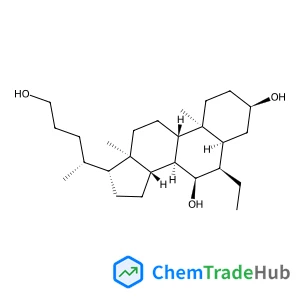
(3alpha,5beta,6alpha,7alpha)-6-Ethylcholane-3,7,24-triol
CAS Number:
1537866-49-1
Molecular Formula:
C26H46O3
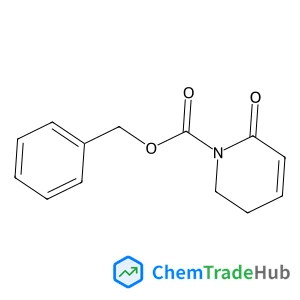
Benzyl 6-oxo-3,6-dihydro-1(2H)-pyridinecarboxylate
CAS Number:
725746-35-0
Molecular Formula:
C13H13NO3
Recommended Suppliers







Disclaimer
This page provides academic journal information for reference and research purposes only. We are not affiliated with any journal publishers and do not handle publication submissions. For publication-related inquiries, please contact the respective journal publishers directly.
If you notice any inaccuracies in the information displayed, please contact us at support@chemtradehub.com. We will promptly review and address your concerns.