



Particle size dependent adsorption and reaction kinetics on reduced and partially oxidized Pd nanoparticles
Literature Information
Publication Date
2007-01-23
DOI
10.1039/B614546A
Impact Factor
3.676
Authors
T. Schalow, B. Brandt, D. E. Starr, M. Laurin, S. K. Shaikhutdinov, S. Schauermann, J. Libuda, H.-J. Freund
View Original
Abstract
Combining scanning tunneling microscopy (STM), IR reflection absorption spectroscopy (IRAS) and molecular beam (MB) techniques, we have investigated particle size effects on a Pd/Fe3O4 model catalyst. We focus on the particle size dependence of (i) CO adsorption, (ii) oxygen adsorption and (iii) Pd nanoparticle oxidation/reduction. The model system, which is based on Pd nanoparticles supported on an ordered Fe3O4 film on Pt(111), is characterized in detail with respect to particle morphology, nucleation, growth and coalescence behavior of the Pd particles. Morphological changes upon stabilization by thermal treatment in oxygen atmosphere are also considered. The size of the Pd particles can be varied roughly between 1 and 100 nm. The growth and morphology of the Pd particles on the Fe3O4/Pt(111) film were characterized by STM and IRAS of adsorbed CO as a probe molecule. It was found that very small Pd particles on Fe3O4 show a strongly modified adsorption behavior, characterized by atypically weak CO adsorption and a characteristic CO stretching frequency around 2130 cm−1. This modification is attributed to a strong interaction with the support. Additionally, the kinetics of CO adsorption was studied by sticking coefficient experiments as a function of particle size. For small particles it is shown that the CO adsorption rate is significantly enhanced by the capture zone effect. The absolute size of the capture zone was quantified on the basis of the STM and sticking coefficient data. Finally, oxygen adsorption was studied by means of MB CO titration experiments. Pure chemisorption of oxygen is observed at 400 K, whereas at 500 K partial oxidation of the particles occurs. The oxidation behavior reveals strong kinetic hindrances to oxidation for larger particles, whereas facile oxidation and reduction are observed for smaller particles. For the latter, estimates point to the formation of oxide layers which, on average, are thicker than the surface oxides on corresponding single crystal surfaces.
Recommended Journals

Drug Discovery Today

Journal of Saudi Chemical Society

Russian Journal of Organic Chemistry

Journal of Natural Medicines

Russian Journal of Applied Chemistry

Russian Chemical Bulletin

Chemistry Education Research and Practice

Current Opinion in Solid State & Materials Science

Russian Journal of Coordination Chemistry

Journal of Peptide Science
Related Literature
Multifunctional system for combined chemodynamic–photodynamic therapy employing the endothelin axis based on conjugated polymer nanoparticles
Khalaf A. Jasim, Ibrahim F. Waheed
2021-08-24
Paper
DOI: 10.1039/D1PY00964H
Highly efficient UV-Vis light activated three-component photoinitiators composed of tris(trimethylsilyl)silane for polymerization of acrylates
Alicja Balcerak, Dominika Kwiatkowska, Katarzyna Iwińska, Janina Kabatc
2020-07-23
Paper
DOI: 10.1039/D0PY00763C
Dependence of the liquid crystalline properties on the exactly controlled single-site functionalized density of mesogens focused on the alternating copolymer model
Ruixue Zhang, Xuwen Li, Hongwei Ma, Li Han, Chao Li, Songbo Zhang, Hongyuan Bai, Yang Li
2021-11-01
Paper
DOI: 10.1039/D1PY01310F
Amino-acid-substituted polyacetylene-based chiral core–shell microspheres: helix structure induction and application for chiral resolution and adsorption
Lijie Yin, Huimin Duan, Tao Chen, Dongming Qi, Jianping Deng
2021-09-20
Paper
DOI: 10.1039/D1PY01067K
One-pot synthesis of amphiphilic multiblock poly(2-oxazoline)s via para-fluoro-thiol click reactions
Tieshuai Zhao, Ben Drain, Gokhan Yilmaz, C. Remzi Becer
2021-09-20
Paper
DOI: 10.1039/D1PY00944C
Self-healable functional polymers based on Diels–Alder ‘click chemistry’ involving substituted furan and triazolinedione derivatives: a simple and very fast approach
Prantik Mondal, Gourhari Jana, Tuhin Subhra Pal, Nikhil K. Singha
2021-09-27
Paper
DOI: 10.1039/D1PY00910A
Tailoring polymer dispersity by mixing ATRP initiators
Kostas Parkatzidis, Manon Rolland, Nghia P. Truong, Athina Anastasaki
2021-09-21
Communication
DOI: 10.1039/D1PY01044A
You might also like
Compound Q&A
What is the market or research trend for N-(4-Methoxybenzyl)-2-pyridinamine (CAS: 52818-63-0)?
N-(4-Methoxybenzyl)-2-pyridinamine (CAS: 52818-63-0) is increasingly being used ...
52818-63-0N-(4-Methoxybenzyl)-...
Compound Q&A
What precautions should be taken when handling Ethyl 4-(2-chlorophenyl)-1,3-thiazole-2-carboxylate (CAS: 1050507-06-6)?
When handling Ethyl 4-(2-chlorophenyl)-1,3-thiazole-2-carboxylate, appropriate p...
1050507-06-6Ethyl 4-(2-chlorophe...
Compound Q&A
What regulatory guidelines apply to diethyldiselane (CAS: 628-39-7)?
Diethyldiselane (CAS: 628-39-7) is classified under the Globally Harmonized Syst...
628-39-7Diethyldiselane
Compound Q&A
What is the market or research trend for oxocopper (CAS: 12053-18-8)?
The market for oxocopper (CAS: 12053-18-8) is primarily driven by its use in cat...
12053-18-8oxocopper; oxo-(oxoc...
Compound Q&A
What is the market or research trend for 5-{[(2-Methyl-2-propanyl)oxy]carbonyl}-5-azaspiro[2.4]heptane-7-carboxylic acid?
The market for 5-{[(2-Methyl-2-propanyl)oxy]carbonyl}-5-azaspiro[2.4]heptane-7-c...
1268519-54-55-{[(2-Methyl-2-prop...
Compound Q&A
What is 2-(1-Pyrrolidinyl)-4-pyridinamine (CAS: 35981-63-6)?
2-(1-Pyrrolidinyl)-4-pyridinamine is a chemical compound with the CAS number 359...
35981-63-62-(1-Pyrrolidinyl)-4...
Compound Q&A
What are the physical and chemical properties of 2-(3-Pyridinyl)-1-azabicyclo[2.2.2]octane (CAS: 91556-75-1)?
2-(3-Pyridinyl)-1-azabicyclo[2.2.2]octane (CAS: 91556-75-1) is a crystalline sol...
91556-75-12-(3-Pyridinyl)-1-az...
Compound Q&A
How is (S)-Alpha-allyl-proline hydrochloride (CAS: 129704-91-2) typically synthesized?
(S)-Alpha-allyl-proline hydrochloride is usually synthesized via a Wittig reacti...
129704-91-2(S)-Alpha-allyl-prol...
Compound Q&A
What is 3-Methyl-1,2-oxazole-5-carboxylic acid (CAS: 4857-42-5)?
3-Methyl-1,2-oxazole-5-carboxylic acid (CAS: 4857-42-5) is an organic compound w...
4857-42-53-Methyl-1,2-oxazole...
Compound Q&A
How is Lys-SMCC-DM1 (CAS: 1281816-04-3) typically synthesized?
Lys-SMCC-DM1 is synthesized via a multi-step process involving the coupling of S...
1281816-04-3Lys-SMCC-DM1
Source Journal
Physical Chemistry Chemical Physics

CiteScore:
5.5
Self-citation Rate:
10.3%
Articles per Year:
3036
Physical Chemistry Chemical Physics (PCCP) is an international journal co-owned by 19 physical chemistry and physics societies from around the world. This journal publishes original, cutting-edge research in physical chemistry, chemical physics and biophysical chemistry. To be suitable for publication in PCCP, articles must include significant innovation and/or insight into physical chemistry; this is the most important criterion that reviewers and Editors will judge against when evaluating submissions. The journal has a broad scope and welcomes contributions spanning experiment, theory, computation and data science. Topical coverage includes spectroscopy, dynamics, kinetics, statistical mechanics, thermodynamics, electrochemistry, catalysis, surface science, quantum mechanics, quantum computing and machine learning. Interdisciplinary research areas such as polymers and soft matter, materials, nanoscience, energy, surfaces/interfaces, and biophysical chemistry are welcomed if they demonstrate significant innovation and/or insight into physical chemistry. Joined experimental/theoretical studies are particularly appreciated when complementary and based on up-to-date approaches.
Recommended Compounds
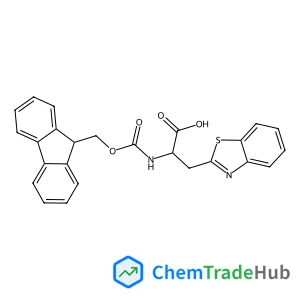
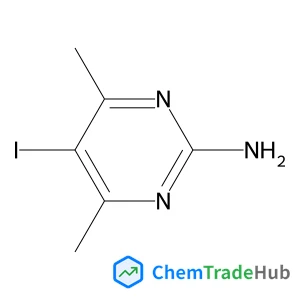
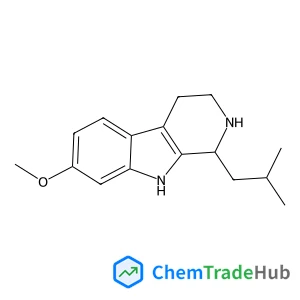
1-Isobutyl-7-methoxy-2,3,4,9-tetrahydro-1H-beta-carboline
CAS Number:
175975-76-5
Molecular Formula:
C16H22N2O
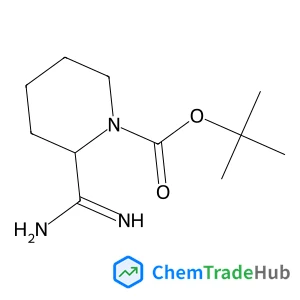
2-Methyl-2-propanyl 2-carbamimidoyl-1-piperidinecarboxylate
CAS Number:
1258640-98-0
Molecular Formula:
C11H21N3O2
Recommended Suppliers






Disclaimer
This page provides academic journal information for reference and research purposes only. We are not affiliated with any journal publishers and do not handle publication submissions. For publication-related inquiries, please contact the respective journal publishers directly.
If you notice any inaccuracies in the information displayed, please contact us at support@chemtradehub.com. We will promptly review and address your concerns.