













Cross sections for low-energy electron scattering from adenine in the condensed phase
Literature Information
Publication Date
2006-11-17
DOI
10.1039/B612700B
Impact Factor
3.676
Authors
Radmila Panajotović, Marc Michaud, Léon Sanche
View Original
Abstract
Measurements of the vibrational and electronic excitation of a sub-monolayer up to a monolayer film of adenine were performed with a high resolution electron energy-loss (HREEL) spectrometer. The integral cross sections (over the half-space angle) for excitation of the normal vibrational modes of the ground electronic state and electronically excited states are calculated from the measured reflectivity EEL spectra. Most cross sections for vibrational excitation are of the order of 10–17 cm2, the largest being the out-of-plane wagging of the amino-group and the six-member ring deformations. A wide resonance feature appears in the incident energy dependence of the vibrational cross sections at 3–5 eV, while a weak shoulder is present in this dependence for combined ring deformations and bending of hydrogen atoms. For the five excited electronic states, at 4.7, 5.0, 5.5, 6.1 and 6.6 eV, the cross sections are of the order of 10–18 cm2, except in the case of the state at the energy of 6.1 eV, for which it is two to three times higher.
Related Literature
Ratiometric red-emission fluorescence detection of Al3+ in pure aqueous solution and live cells by a fluorescent peptidyl probe using aggregation-induced emission
Lok Nath Neupane, Pramod Kumar Mehta, Semin Oh, See-Hyoung Park, Keun-Hyeung Lee
2018-09-04
Paper
DOI: 10.1039/C8AN01221K
Real time plasmonic qPCR: how fast is ultra-fast? 30 cycles in 54 seconds
Philip J. R. Roche, Mohamed Najih, Seung S. Lee, Lenore K. Beitel, Matthew L. Carnevale, Andrew G. Kirk
2017-04-12
Paper
DOI: 10.1039/C7AN00304H
Rapid determination of binding parameters of chitin binding domains using chitin-coated quartz crystal microbalance sensor chips
Stephan Vogt, Marco Kelkenberg, Tanja Nöll, Benedikt Steinhoff, Holger Schönherr, Hans Merzendorfer, Gilbert Nöll
2018-09-25
Paper
DOI: 10.1039/C8AN01453A
Microcontact printing with aminosilanes: creating biomolecule micro- and nanoarrays for multiplexed microfluidic bioassays
Shivani Sathish, Sébastien G. Ricoult, Kazumi Toda-Peters, Amy Q. Shen
2017-04-05
Paper
DOI: 10.1039/C7AN00273D
Human-level blood cell counting on lens-free shadow images exploiting deep neural networks
DaeHan Ahn, JiYeong Lee, SangJun Moon, Taejoon Park
2018-10-03
Paper
DOI: 10.1039/C8AN01056K
A reaction-based near-infrared fluorescent probe that can visualize endogenous selenocysteine in vivo in tumor-bearing mice
Xiaoning Kai, Yiran Zhang, Youguang Zheng, Yunsheng Xue, Xiaoxing Yin, Jing Zhao
2018-07-30
Paper
DOI: 10.1039/C8AN00765A
A facile AuNPs@aptamer-modified mercaptosiloxane-based hybrid affinity monolith with an unusually high coverage density of aptamer for on-column selective extraction of ochratoxin A
Maolin Chen, Lijun Deng, Xucong Lin, Zenghong Xie
2018-09-14
Paper
DOI: 10.1039/C8AN01531G
A novel electrochemical immunoassay for carcinoembryonic antigen based on glucose oxidase-encapsulated nanogold hollow spheres with a pH meter readout
Yu Jiang, Zhiying Su, Jian Zhang, Meijiao Cai, Lili Wu
2018-09-13
Paper
DOI: 10.1039/C8AN01436A
An up-converting phosphor technology-based lateral flow assay for point-of-collection detection of morphine and methamphetamine in saliva
Qiushi Hu, Qiaozhen Wei, Pingping Zhang, Shuang Li, Lei Xue, Ruifu Yang, Lei Zhou
2018-08-01
Paper
DOI: 10.1039/C8AN00651B
You might also like
Compound Q&A
What is the market or research trend for N-(4-Methoxybenzyl)-2-pyridinamine (CAS: 52818-63-0)?
N-(4-Methoxybenzyl)-2-pyridinamine (CAS: 52818-63-0) is increasingly being used ...
52818-63-0N-(4-Methoxybenzyl)-...
Compound Q&A
What precautions should be taken when handling Ethyl 4-(2-chlorophenyl)-1,3-thiazole-2-carboxylate (CAS: 1050507-06-6)?
When handling Ethyl 4-(2-chlorophenyl)-1,3-thiazole-2-carboxylate, appropriate p...
1050507-06-6Ethyl 4-(2-chlorophe...
Compound Q&A
What regulatory guidelines apply to diethyldiselane (CAS: 628-39-7)?
Diethyldiselane (CAS: 628-39-7) is classified under the Globally Harmonized Syst...
628-39-7Diethyldiselane
Compound Q&A
What is the market or research trend for oxocopper (CAS: 12053-18-8)?
The market for oxocopper (CAS: 12053-18-8) is primarily driven by its use in cat...
12053-18-8oxocopper; oxo-(oxoc...
Compound Q&A
What is the market or research trend for 5-{[(2-Methyl-2-propanyl)oxy]carbonyl}-5-azaspiro[2.4]heptane-7-carboxylic acid?
The market for 5-{[(2-Methyl-2-propanyl)oxy]carbonyl}-5-azaspiro[2.4]heptane-7-c...
1268519-54-55-{[(2-Methyl-2-prop...
Compound Q&A
What is 2-(1-Pyrrolidinyl)-4-pyridinamine (CAS: 35981-63-6)?
2-(1-Pyrrolidinyl)-4-pyridinamine is a chemical compound with the CAS number 359...
35981-63-62-(1-Pyrrolidinyl)-4...
Compound Q&A
What are the physical and chemical properties of 2-(3-Pyridinyl)-1-azabicyclo[2.2.2]octane (CAS: 91556-75-1)?
2-(3-Pyridinyl)-1-azabicyclo[2.2.2]octane (CAS: 91556-75-1) is a crystalline sol...
91556-75-12-(3-Pyridinyl)-1-az...
Compound Q&A
How is (S)-Alpha-allyl-proline hydrochloride (CAS: 129704-91-2) typically synthesized?
(S)-Alpha-allyl-proline hydrochloride is usually synthesized via a Wittig reacti...
129704-91-2(S)-Alpha-allyl-prol...
Compound Q&A
What is 3-Methyl-1,2-oxazole-5-carboxylic acid (CAS: 4857-42-5)?
3-Methyl-1,2-oxazole-5-carboxylic acid (CAS: 4857-42-5) is an organic compound w...
4857-42-53-Methyl-1,2-oxazole...
Compound Q&A
How is Lys-SMCC-DM1 (CAS: 1281816-04-3) typically synthesized?
Lys-SMCC-DM1 is synthesized via a multi-step process involving the coupling of S...
1281816-04-3Lys-SMCC-DM1
Source Journal
Physical Chemistry Chemical Physics

CiteScore:
5.5
Self-citation Rate:
10.3%
Articles per Year:
3036
Physical Chemistry Chemical Physics (PCCP) is an international journal co-owned by 19 physical chemistry and physics societies from around the world. This journal publishes original, cutting-edge research in physical chemistry, chemical physics and biophysical chemistry. To be suitable for publication in PCCP, articles must include significant innovation and/or insight into physical chemistry; this is the most important criterion that reviewers and Editors will judge against when evaluating submissions. The journal has a broad scope and welcomes contributions spanning experiment, theory, computation and data science. Topical coverage includes spectroscopy, dynamics, kinetics, statistical mechanics, thermodynamics, electrochemistry, catalysis, surface science, quantum mechanics, quantum computing and machine learning. Interdisciplinary research areas such as polymers and soft matter, materials, nanoscience, energy, surfaces/interfaces, and biophysical chemistry are welcomed if they demonstrate significant innovation and/or insight into physical chemistry. Joined experimental/theoretical studies are particularly appreciated when complementary and based on up-to-date approaches.
Recommended Compounds
![(2R,6S)-6-[(Benzyloxy)methyl]-4-{[(2-methyl-2-propanyl)oxy]carbonyl}-2-morpholinecarboxylic acid structure](https://static.chemtradehub.com/structs/109/1093085-91-6-3382.webp "(2R,6S)-6-[(Benzyloxy)methyl]-4-{[(2-methyl-2-propanyl)oxy]carbonyl}-2-morpholinecarboxylic acid structure")
(2R,6S)-6-[(Benzyloxy)methyl]-4-{[(2-methyl-2-propanyl)oxy]carbonyl}-2-morpholinecarboxylic acid
CAS Number:
1093085-91-6
Molecular Formula:
C18H25NO6
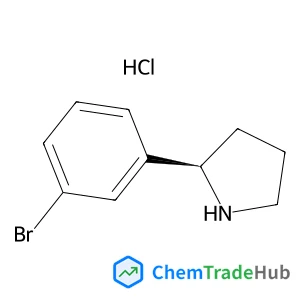
(2R)-2-(3-Bromophenyl)pyrrolidine hydrochloride (1:1)
CAS Number:
1391550-13-2
Molecular Formula:
C10H13BrClN

Recommended Suppliers





Disclaimer
This page provides academic journal information for reference and research purposes only. We are not affiliated with any journal publishers and do not handle publication submissions. For publication-related inquiries, please contact the respective journal publishers directly.
If you notice any inaccuracies in the information displayed, please contact us at support@chemtradehub.com. We will promptly review and address your concerns.