


Front cover
Literature Information
Publication Date
DOI
10.1039/B705860H
Impact Factor
3.676
Authors
View Original
Abstract
The first page of this article is displayed as the abstract.
Recommended Journals

Russian Chemical Bulletin

Crystallography Reports

Journal of Peptide Science

Journal of Saudi Chemical Society

Russian Journal of Applied Chemistry

Journal of Natural Medicines

New Journal of Chemistry

Chemical Communications

Current Opinion in Colloid & Interface Science

Organic Process Research & Development
Related Literature
Amino-acid-substituted polyacetylene-based chiral core–shell microspheres: helix structure induction and application for chiral resolution and adsorption
Lijie Yin, Huimin Duan, Tao Chen, Dongming Qi, Jianping Deng
2021-09-20
Paper
DOI: 10.1039/D1PY01067K
Introduction to chemistry for covalent adaptable networks
Filip Du Prez, Julia Kalow
2020-07-10
Editorial
DOI: 10.1039/D0PY90102D
Self-healing behaviour of furan–maleimide poly(ionic liquid) covalent adaptable networks
Katelyn M. Lindenmeyer, R. Daniel Johnson, Kevin M. Miller
2020-02-26
Communication
DOI: 10.1039/D0PY00016G
Semiaromatic polyamides with enhanced charge carrier mobility
Bilal Özen, Nicolas Candau, Cansel Temiz, Ferdinand C. Grozema, Grégory Stoclet, Christopher J. G. Plummer, Holger Frauenrath
2021-11-10
Paper
DOI: 10.1039/D1PY01203G
Development of the first panchromatic BODIPY-based one-component iodonium salts for initiating the photopolymerization processes
Monika Topa-Skwarczyńska, Mariusz Galek, Magdalena Jankowska, Fabrice Morlet-Savary, Bernadette Graff, Jacques Lalevée, Roman Popielarz
2021-11-03
Paper
DOI: 10.1039/D1PY01263K
Syndiospecific coordination (Co)polymerization of carbazole-substituted styrene derivatives using the scandium catalyst system
Xiaochun Mu, Yang Li
2021-10-21
Paper
DOI: 10.1039/D1PY00896J
Intrinsic flame retardant phosphonate-based vitrimers as a recyclable alternative for commodity polymers in composite materials
Jens C. Markwart, Alexander Battig, Tobias Urbaniak, Katharina Haag, Katharina Koschek, Bernhard Schartel, Frederik R. Wurm
2020-06-08
Paper
DOI: 10.1039/D0PY00275E
Mechanically robust and reprocessable imine exchange networks from modular polyester pre-polymers
Rachel L. Snyder, Claire A. L. Lidston, Guilhem X. De Hoe, Maria J. S. Parvulescu, Marc A. Hillmyer, Geoffrey W. Coates
2020-02-27
Paper
DOI: 10.1039/C9PY01957J
The influences of monomer structure and solvent on the radical copolymerization of tertiary amine and PEGylated methacrylates
Priscila Quiñonez-Angulo, Robin A. Hutchinson, Ángel Licea-Claveríe, Enrique Saldívar-Guerra, Iván Zapata-González
2021-08-24
Paper
DOI: 10.1039/D1PY00750E
You might also like
Compound Q&A
What is the market or research trend for N-(4-Methoxybenzyl)-2-pyridinamine (CAS: 52818-63-0)?
N-(4-Methoxybenzyl)-2-pyridinamine (CAS: 52818-63-0) is increasingly being used ...
52818-63-0N-(4-Methoxybenzyl)-...
Compound Q&A
What precautions should be taken when handling Ethyl 4-(2-chlorophenyl)-1,3-thiazole-2-carboxylate (CAS: 1050507-06-6)?
When handling Ethyl 4-(2-chlorophenyl)-1,3-thiazole-2-carboxylate, appropriate p...
1050507-06-6Ethyl 4-(2-chlorophe...
Compound Q&A
What regulatory guidelines apply to diethyldiselane (CAS: 628-39-7)?
Diethyldiselane (CAS: 628-39-7) is classified under the Globally Harmonized Syst...
628-39-7Diethyldiselane
Compound Q&A
What is the market or research trend for oxocopper (CAS: 12053-18-8)?
The market for oxocopper (CAS: 12053-18-8) is primarily driven by its use in cat...
12053-18-8oxocopper; oxo-(oxoc...
Compound Q&A
What is the market or research trend for 5-{[(2-Methyl-2-propanyl)oxy]carbonyl}-5-azaspiro[2.4]heptane-7-carboxylic acid?
The market for 5-{[(2-Methyl-2-propanyl)oxy]carbonyl}-5-azaspiro[2.4]heptane-7-c...
1268519-54-55-{[(2-Methyl-2-prop...
Compound Q&A
What is 2-(1-Pyrrolidinyl)-4-pyridinamine (CAS: 35981-63-6)?
2-(1-Pyrrolidinyl)-4-pyridinamine is a chemical compound with the CAS number 359...
35981-63-62-(1-Pyrrolidinyl)-4...
Compound Q&A
What are the physical and chemical properties of 2-(3-Pyridinyl)-1-azabicyclo[2.2.2]octane (CAS: 91556-75-1)?
2-(3-Pyridinyl)-1-azabicyclo[2.2.2]octane (CAS: 91556-75-1) is a crystalline sol...
91556-75-12-(3-Pyridinyl)-1-az...
Compound Q&A
How is (S)-Alpha-allyl-proline hydrochloride (CAS: 129704-91-2) typically synthesized?
(S)-Alpha-allyl-proline hydrochloride is usually synthesized via a Wittig reacti...
129704-91-2(S)-Alpha-allyl-prol...
Compound Q&A
What is 3-Methyl-1,2-oxazole-5-carboxylic acid (CAS: 4857-42-5)?
3-Methyl-1,2-oxazole-5-carboxylic acid (CAS: 4857-42-5) is an organic compound w...
4857-42-53-Methyl-1,2-oxazole...
Compound Q&A
How is Lys-SMCC-DM1 (CAS: 1281816-04-3) typically synthesized?
Lys-SMCC-DM1 is synthesized via a multi-step process involving the coupling of S...
1281816-04-3Lys-SMCC-DM1
Source Journal
Physical Chemistry Chemical Physics

CiteScore:
5.5
Self-citation Rate:
10.3%
Articles per Year:
3036
Physical Chemistry Chemical Physics (PCCP) is an international journal co-owned by 19 physical chemistry and physics societies from around the world. This journal publishes original, cutting-edge research in physical chemistry, chemical physics and biophysical chemistry. To be suitable for publication in PCCP, articles must include significant innovation and/or insight into physical chemistry; this is the most important criterion that reviewers and Editors will judge against when evaluating submissions. The journal has a broad scope and welcomes contributions spanning experiment, theory, computation and data science. Topical coverage includes spectroscopy, dynamics, kinetics, statistical mechanics, thermodynamics, electrochemistry, catalysis, surface science, quantum mechanics, quantum computing and machine learning. Interdisciplinary research areas such as polymers and soft matter, materials, nanoscience, energy, surfaces/interfaces, and biophysical chemistry are welcomed if they demonstrate significant innovation and/or insight into physical chemistry. Joined experimental/theoretical studies are particularly appreciated when complementary and based on up-to-date approaches.
Recommended Compounds
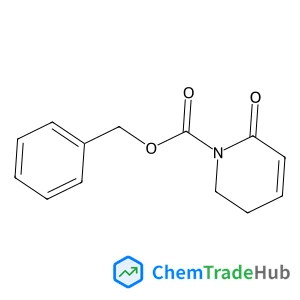
Benzyl 6-oxo-3,6-dihydro-1(2H)-pyridinecarboxylate
CAS Number:
725746-35-0
Molecular Formula:
C13H13NO3
Recommended Suppliers




Disclaimer
This page provides academic journal information for reference and research purposes only. We are not affiliated with any journal publishers and do not handle publication submissions. For publication-related inquiries, please contact the respective journal publishers directly.
If you notice any inaccuracies in the information displayed, please contact us at support@chemtradehub.com. We will promptly review and address your concerns.