


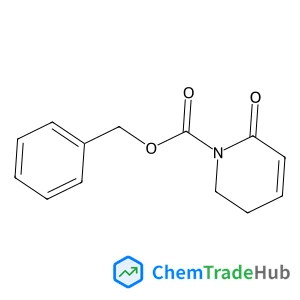
Benzyl 6-oxo-3,6-dihydro-1(2H)-pyridinecarboxylate
CAS Number:
725746-35-0
Molecular Formula:
C13H13NO3
Alloyed catalysts receive considerable attention, because of their unique catalytic properties; they often show higher selectivity, activity, and stability compared to the pure metal particles. To provide insights in the origins of these features, we report the structure and the interaction of hydrogen with each of the metals in an intimately mixed platinum–gold catalyst and compare these characteristics to those in the single metal particles. X-Ray absorption spectroscopy (XAS) and electron microscopy analysis showed that the structure of the mixed particle differed from the single metal particles. The interaction of platinum with hydrogen is stronger than the H–Au interaction and the adsorption sites were different. EXAFS analysis showed that the structure of the platinum clusters changes with increasing hydrogen coverage, observed as a relaxation of the contracted Pt–Pt distance and an increase in the Pt–Pt coordination number. No such changes were observed for gold clusters. Well-mixed PtAu-alloy clusters, with a bulk Au-to-Pt ratio of two, supported on SiO2, adsorb hydrogen on both platinum and gold atoms, which indicates that gold cannot be regarded as an inert metal. The heat of adsorption on the platinum ensembles does not decrease upon alloying; the weakening of the overall hydrogen adsorption strength when alloying platinum with gold is an ensemble-size effect.

New Journal of Chemistry

Journal of Peptide Science

Chemical Communications

Chemistry Education Research and Practice

Current Opinion in Colloid & Interface Science

Russian Journal of General Chemistry

Acta Materialia

Russian Journal of Organic Chemistry

Drug Discovery Today

Russian Journal of Bioorganic Chemistry
Xiao-han Pan, Jian-hua Zu
DOI: 10.1039/D1PY00866H
Alexander Holm, Alexander Southan, Curtis W. Frank
DOI: 10.1039/D0PY00697A
Heng Liu, Chunyu Zhang, Xuequan Zhang
DOI: 10.1039/D1PY00923K
Hideto Tsuji, Kazumasa Iguchi, Kohji Tashiro, Yuki Arakawa
DOI: 10.1039/D0PY01115K
Prantik Mondal, Gourhari Jana, Tuhin Subhra Pal, Nikhil K. Singha
DOI: 10.1039/D1PY00910A
Daisuke Aoki, Gota Aibara
DOI: 10.1039/D1PY01197A
Matthias Rohmer, Özgün Ucak, Rahul Fredrick, Wolfgang H. Binder
DOI: 10.1039/D1PY01021B
Sina Sabury, Tyler J. Adams, Margaret Kocherga, Michael G. Walter
DOI: 10.1039/D0PY00972E
Yi-Shen Huang, Han-Yu Hsueh, Junko Aimi, Li-Chieh Chou, Yu-Chi Lu, Chung-Chi Wang, Kuo-Yu Chen, Chih-Feng Huang
DOI: 10.1039/D0PY00658K
N-(4-Methoxybenzyl)-2-pyridinamine (CAS: 52818-63-0) is increasingly being used ...
When handling Ethyl 4-(2-chlorophenyl)-1,3-thiazole-2-carboxylate, appropriate p...
Diethyldiselane (CAS: 628-39-7) is classified under the Globally Harmonized Syst...
The market for oxocopper (CAS: 12053-18-8) is primarily driven by its use in cat...
The market for 5-{[(2-Methyl-2-propanyl)oxy]carbonyl}-5-azaspiro[2.4]heptane-7-c...
2-(1-Pyrrolidinyl)-4-pyridinamine is a chemical compound with the CAS number 359...
2-(3-Pyridinyl)-1-azabicyclo[2.2.2]octane (CAS: 91556-75-1) is a crystalline sol...
(S)-Alpha-allyl-proline hydrochloride is usually synthesized via a Wittig reacti...
3-Methyl-1,2-oxazole-5-carboxylic acid (CAS: 4857-42-5) is an organic compound w...
Lys-SMCC-DM1 is synthesized via a multi-step process involving the coupling of S...

Physical Chemistry Chemical Physics (PCCP) is an international journal co-owned by 19 physical chemistry and physics societies from around the world. This journal publishes original, cutting-edge research in physical chemistry, chemical physics and biophysical chemistry. To be suitable for publication in PCCP, articles must include significant innovation and/or insight into physical chemistry; this is the most important criterion that reviewers and Editors will judge against when evaluating submissions. The journal has a broad scope and welcomes contributions spanning experiment, theory, computation and data science. Topical coverage includes spectroscopy, dynamics, kinetics, statistical mechanics, thermodynamics, electrochemistry, catalysis, surface science, quantum mechanics, quantum computing and machine learning. Interdisciplinary research areas such as polymers and soft matter, materials, nanoscience, energy, surfaces/interfaces, and biophysical chemistry are welcomed if they demonstrate significant innovation and/or insight into physical chemistry. Joined experimental/theoretical studies are particularly appreciated when complementary and based on up-to-date approaches.
![1-oxaspiro[4.4]nonan-6-one structure](https://static.chemtradehub.com/structs/134/134179-01-4-e051.webp "1-oxaspiro[4.4]nonan-6-one structure")






