












Efficiency analysis of helium-cooled MAS DNP: case studies of surface-modified nanoparticles and homogeneous small-molecule solutions
Literature Information
Publication Date
2021-02-16
DOI
10.1039/D0CP05658H
Impact Factor
3.676
Authors
Takeshi Kobayashi, Jun Fukazawa, Frédéric A. Perras
View Original
Abstract
Despite the growing number of successful applications of dynamic nuclear polarization (DNP)-enhanced magic-angle spinning (MAS) NMR in structural biology and materials science, the nuclear polarizations achieved by current MAS DNP instrumentation are still considerably lower than the theoretical maximum. The method could be significantly strengthened if experiments were performed at temperatures much lower than those currently widely used (∼100 K). Recently, the prospects of helium (He)-cooled MAS DNP have been increased with the instrumental developments in MAS technology that uses cold helium gas for sample cooling. Despite the additional gains in sensitivity that have been observed with He-cooled MAS DNP, the performance of the technique has not been evaluated in the case of surfaces and interfaces that benefit the most from DNP. Herein, we studied the efficiency of DNP at temperatures between ∼30 K and ∼100 K for organically functionalized silica material and a homogeneous solution of small organic molecules at a magnetic field B0 = 16.4 T. We recorded the changes in signal enhancement, paramagnet-induced quenching and depolarization effects, DNP build-up rate, and Boltzmann polarization. For these samples, the increases in MAS-induced depolarization and DNP build-up times at around 30 K were not as severe as anticipated. In the case of the surface species, we determined that MAS DNP at 30 K provided ∼10 times higher sensitivity than MAS DNP at 90 K, which corresponds to the acceleration of experiments by multiplicative factors of up to 100.
Related Literature
Hybrid organic–inorganic nanomaterial sensors for selective detection of Au3+ using rhodamine-based modified polyacrylic acid (PAA)-coated FeNPs
Noi Niamsa, Chatthai Kaewtong, Weerapol Srinonmuang, Banchob Wanno, Buncha Pulpoka, Thawatchai Tuntulani
2013-03-04
Paper
DOI: 10.1039/C3PY00229B
Pluronic L61 as a long-circulating modifier for enhanced liposomal delivery of cancer drugs
Ergang Liu, Xiaoyi Sun, Pengyu Huang, Hao Long, Hua Wang, Xin Yu, Caihong Zheng
2013-03-27
Communication
DOI: 10.1039/C3PY00042G
Polymerization of protecting-group-free peptidesvia ROMP
Jacquelin K. Kammeyer, Angela P. Blum, Lisa Adamiak, Nathan C. Gianneschi
2013-05-28
Communication
DOI: 10.1039/C3PY00526G
An efficient approach to prepare ether and amide-based self-catalyzed phthalonitrile resins
Michael R. Kessler, Zhou Heng, Javid Hussain Zaidi, Shahid Hameed
2013-03-21
Paper
DOI: 10.1039/C3PY00237C
High molar mass segmented macromolecular architectures by nitroxide mediated polymerisation
Lionel Petton, Edwin P. C. Mes, Hanno Van Der Wal, Sven Claessens, Freddy Van Damme, Sam Verbrugghe, Filip E. Du Prez
2013-06-14
Paper
DOI: 10.1039/C3PY00600J
Acid and reduction dually cleavable amphiphilic comb-like copolymer micelles for controlled drug delivery
Wei Shao, Ke Miao, Huanhuan Liu, Chunnuan Ye, Jianzhong Du, Youliang Zhao
2013-04-17
Paper
DOI: 10.1039/C3PY00252G
Conjugated polymers with 2,7-linked 3,6-difluorocarbazole as donor unit for high efficiency polymer solar cells
Chun Du, Weiwei Li, Yan Duan, Cuihong Li, Huanli Dong, Jia Zhu, Wenping Hu, Zhishan Bo
2013-02-20
Paper
DOI: 10.1039/C3PY00177F
Grafting of polyethylene onto graphite oxide sheets: a comparison of two routes
Gregory Martin, Philippe Sonntag, Franck D'Agosto, Christophe Boisson
2013-02-26
Paper
DOI: 10.1039/C3PY00160A
Alkoxyamine with reduced homolysis temperature and its application in repeated autonomous self-healing of stiff polymers
Ze Ping Zhang, Min Zhi Rong, Ming Qiu Zhang, Chan'e Yuan
2013-06-10
Paper
DOI: 10.1039/C3PY00679D
You might also like
Compound Q&A
Is 6-(3-Fluorophenyl)picolinic acid (CAS: 887982-40-3) safe?
6-(3-Fluorophenyl)picolinic acid is generally considered safe for laboratory use...
887982-40-36-(3-Fluorophenyl)pi...
Compound Q&A
What industries use (3R)-3-Pyrrolidinol (CAS: 2799-21-5)?
(3R)-3-Pyrrolidinol is used in the pharmaceutical industry as a precursor for dr...
2799-21-5(3R)-3-Pyrrolidinol
Compound Q&A
What precautions should be taken when handling (4R,5R)-4,5-Diethoxycarbonyl-2,2-dimethyldioxolane (CAS: 59779-75-8)?
When handling (4R,5R)-4,5-Diethoxycarbonyl-2,2-dimethyldioxolane (CAS: 59779-75-...
59779-75-8(4R,5R)-4,5-Diethoxy...
Compound Q&A
How is 1-(6-Chloroimidazo[1,2-b]pyridazin-3-yl)ethanone (CAS: 90734-71-7) typically synthesized?
1-(6-Chloroimidazo[1,2-b]pyridazin-3-yl)ethanone is often synthesized via a mult...
90734-71-71-(6-Chloroimidazo[1...
Compound Q&A
What is the market or research trend for N-Ethyl-3,4-dimethylbenzylamine (CAS: 39180-83-1)?
The market for N-Ethyl-3,4-dimethylbenzylamine (CAS: 39180-83-1) remains steady,...
39180-83-1N-Ethyl-3,4-dimethyl...
Compound Q&A
What is Tert-butyl 3-(pyrrolidin-1-yl)azetidine-1-carboxylate (CAS: 1019008-21-9)?
Tert-butyl 3-(pyrrolidin-1-yl)azetidine-1-carboxylate is a chemical compound wit...
1019008-21-9Tert-butyl 3-(pyrrol...
Compound Q&A
What regulatory guidelines apply to 1-Bromo-3-chloro-2,4-dimethoxybenzene (CAS: 1228956-93-1)?
1-Bromo-3-chloro-2,4-dimethoxybenzene (CAS: 1228956-93-1) falls under the classi...
1228956-93-11-Bromo-3-chloro-2,4...
Compound Q&A
Is 8-Bromo-2-methyl-3,4-dihydroisoquinolin-1(2H)-one (CAS: 1368622-07-4) safe?
The safety of 8-Bromo-2-methyl-3,4-dihydroisoquinolin-1(2H)-one (CAS: 1368622-07...
1368622-07-48-Bromo-2-methyl-3,4...
Compound Q&A
Is Benzyl [(3S)-2,6-dioxo-3-piperidinyl]carbamate (CAS: 22785-43-9) safe?
Benzyl [(3S)-2,6-dioxo-3-piperidinyl]carbamate is generally safe when handled wi...
22785-43-9Benzyl [(3S)-2,6-dio...
Compound Q&A
How should 1-{[4-(4,4,5,5-Tetramethyl-1,3,2-dioxaborolan-2-yl)phenyl]sulfonyl}pyrrolidine (CAS: 928657-21-0) be stored?
1-{[4-(4,4,5,5-Tetramethyl-1,3,2-dioxaborolan-2-yl)phenyl]sulfonyl}pyrrolidine s...
928657-21-01-{[4-(4,4,5,5-Tetra...
Source Journal
Physical Chemistry Chemical Physics

CiteScore:
5.5
Self-citation Rate:
10.3%
Articles per Year:
3036
Physical Chemistry Chemical Physics (PCCP) is an international journal co-owned by 19 physical chemistry and physics societies from around the world. This journal publishes original, cutting-edge research in physical chemistry, chemical physics and biophysical chemistry. To be suitable for publication in PCCP, articles must include significant innovation and/or insight into physical chemistry; this is the most important criterion that reviewers and Editors will judge against when evaluating submissions. The journal has a broad scope and welcomes contributions spanning experiment, theory, computation and data science. Topical coverage includes spectroscopy, dynamics, kinetics, statistical mechanics, thermodynamics, electrochemistry, catalysis, surface science, quantum mechanics, quantum computing and machine learning. Interdisciplinary research areas such as polymers and soft matter, materials, nanoscience, energy, surfaces/interfaces, and biophysical chemistry are welcomed if they demonstrate significant innovation and/or insight into physical chemistry. Joined experimental/theoretical studies are particularly appreciated when complementary and based on up-to-date approaches.
Recommended Compounds
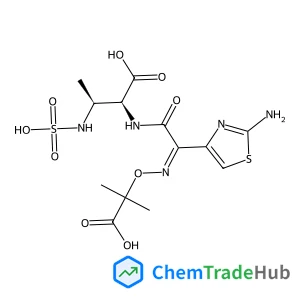
Aztreonam USP Related Compound A (Open-ring Aztreonam)
CAS Number:
87500-74-1
Molecular Formula:
C13H19N5O9S2
![2-Methyl-2-propanyl [(2S)-1-hydroxy-3-(4-hydroxyphenyl)-2-propanyl]carbamate structure](https://static.chemtradehub.com/structs/833/83345-46-4-eec2.webp "2-Methyl-2-propanyl [(2S)-1-hydroxy-3-(4-hydroxyphenyl)-2-propanyl]carbamate structure")
2-Methyl-2-propanyl [(2S)-1-hydroxy-3-(4-hydroxyphenyl)-2-propanyl]carbamate
CAS Number:
83345-46-4
Molecular Formula:
C14H21NO4
Recommended Suppliers




Disclaimer
This page provides academic journal information for reference and research purposes only. We are not affiliated with any journal publishers and do not handle publication submissions. For publication-related inquiries, please contact the respective journal publishers directly.
If you notice any inaccuracies in the information displayed, please contact us at support@chemtradehub.com. We will promptly review and address your concerns.