












Grafting of polyethylene onto graphite oxide sheets: a comparison of two routes
Literature Information
Publication Date
2013-02-26
DOI
10.1039/C3PY00160A
Impact Factor
5.582
Authors
Gregory Martin, Philippe Sonntag, Franck D'Agosto, Christophe Boisson
View Original
Abstract
Polyethylenes and azide-terminated polyethylenes can be converted to macroradicals and nitrenes, respectively followed by addition reactions onto the unsaturated system of graphite oxide sheets. For the first time, the addition of these macroradicals to graphite oxide sheets was compared by performing grafting reactions at 190 °C in 1,2,4-trichlorobenzene as a solvent and at 100 °C followed by a solvothermal reduction at 150 °C in a solvent mixture of 1,4-dioxane and 1,2-dichlorobenzene. Dispersion of PE coated graphite oxide in a DMF–heptane mixture was utilised to follow the introduction of polyethylene onto the GO sheet surface while the thermogravimetric analysis indicated the extent of this grafting. The grafting ratio was found to be in the 1.5 wt% range and despite this low grafting content, the amount of grafted PE was high enough to dramatically improve the affinity of GO with the heptane phase in the DMF–heptane (50/50 v/v) mixture. Polyethylene functionalised GO was imaged by scanning electron microscopy showing a significant difference in morphology between the two grafting paths. It was found that a higher level of grafting was obtained using a radical grafting reaction in the presence of benzoyl peroxide rather than the thermal cleavage of PE-N3 onto GO while a similar grafting content was obtained with the thermal cleavage of PE-N3 onto GO grafted trimethoxy(7-octen-1-yl)silane.
Related Literature
Effects of a phosphonate anchoring group on the excited state electron transfer rates from a terthiophene chromophore to a ZnO nanocrystal
Amanda N. Oehrlein, Antonio Sanchez-Diaz, Philip C. Goff, Gretchen M. Ziegler, Ted M. Pappenfus, Kent R. Mann, David A. Blank, Wayne L. Gladfelter
2017-08-29
Paper
DOI: 10.1039/C7CP03784H
Retraction: Two-dimensional nanosheets associated with one-dimensional single-crystalline nanorods self-assembled into three-dimensional flower-like Mn3O4 hierarchical architectures
2017-08-30
Retraction
DOI: 10.1039/C7CP90192E
Membrane interactions and antimicrobial effects of layered double hydroxide nanoparticles
L. Nyström, R. Nordström, Z. P. Xu, M. Davoudi
2017-07-06
Paper
DOI: 10.1039/C7CP02701J
Phase separation and physico-chemical processes at microscopic and macroscopic levels in MWCNT laden polymer blends using a unique droplet based architecture
Binita Pathak, Goutam Prasanna Kar, Suryasarathi Bose, Saptarshi Basu
2017-08-29
Paper
DOI: 10.1039/C7CP03621C
Nonadiabatic coupling reduces the activation energy in thermally activated delayed fluorescence
J. Gibson, T. J. Penfold
2017-03-07
Paper
DOI: 10.1039/C7CP00719A
Charge carrier mobility in one-dimensional aligned π-stacks of conjugated small molecules with a benzothiadiazole central unit
2017-02-27
Paper
DOI: 10.1039/C7CP00798A
Theoretical study of the substituent effect controlling the radiative and non-radiative decay processes of platinum(ii) complexes
Wenting Zhang, Chaoyuan Zhu
2017-08-10
Paper
DOI: 10.1039/C7CP04376G
The mechanism of excimer formation: an experimental and theoretical study on the pyrene dimer
Joscha Hoche, Hans-Christian Schmitt, Alexander Humeniuk, Ingo Fischer, Roland Mitrić, Merle I. S. Röhr
2017-08-30
Paper
DOI: 10.1039/C7CP03990E
Effect of composition and coating on the interparticle interactions and magnetic hardness of MFe2O4 (M = Fe, Co, Zn) nanoparticles
M. Virumbrales-del Olmo, A. Delgado-Cabello, A. Andrada-Chacón, J. Sánchez-Benítez, E. Urones-Garrote, V. Blanco-Gutiérrez, M. J. Torralvo, R. Sáez-Puche
2017-02-23
Paper
DOI: 10.1039/C6CP08743D
The role of amino acid side chains in stabilizing dipeptides: the laser ablation Fourier transform microwave spectrum of Ac-Val-NH2
I. León, E. R. Alonso, S. Mata, C. Cabezas, M. A. Rodríguez, J.-U. Grabow, J. L. Alonso
2017-08-18
Paper
DOI: 10.1039/C7CP03924G
You might also like
Compound Q&A
Is 6-(3-Fluorophenyl)picolinic acid (CAS: 887982-40-3) safe?
6-(3-Fluorophenyl)picolinic acid is generally considered safe for laboratory use...
887982-40-36-(3-Fluorophenyl)pi...
Compound Q&A
What industries use (3R)-3-Pyrrolidinol (CAS: 2799-21-5)?
(3R)-3-Pyrrolidinol is used in the pharmaceutical industry as a precursor for dr...
2799-21-5(3R)-3-Pyrrolidinol
Compound Q&A
What precautions should be taken when handling (4R,5R)-4,5-Diethoxycarbonyl-2,2-dimethyldioxolane (CAS: 59779-75-8)?
When handling (4R,5R)-4,5-Diethoxycarbonyl-2,2-dimethyldioxolane (CAS: 59779-75-...
59779-75-8(4R,5R)-4,5-Diethoxy...
Compound Q&A
How is 1-(6-Chloroimidazo[1,2-b]pyridazin-3-yl)ethanone (CAS: 90734-71-7) typically synthesized?
1-(6-Chloroimidazo[1,2-b]pyridazin-3-yl)ethanone is often synthesized via a mult...
90734-71-71-(6-Chloroimidazo[1...
Compound Q&A
What is the market or research trend for N-Ethyl-3,4-dimethylbenzylamine (CAS: 39180-83-1)?
The market for N-Ethyl-3,4-dimethylbenzylamine (CAS: 39180-83-1) remains steady,...
39180-83-1N-Ethyl-3,4-dimethyl...
Compound Q&A
What is Tert-butyl 3-(pyrrolidin-1-yl)azetidine-1-carboxylate (CAS: 1019008-21-9)?
Tert-butyl 3-(pyrrolidin-1-yl)azetidine-1-carboxylate is a chemical compound wit...
1019008-21-9Tert-butyl 3-(pyrrol...
Compound Q&A
What regulatory guidelines apply to 1-Bromo-3-chloro-2,4-dimethoxybenzene (CAS: 1228956-93-1)?
1-Bromo-3-chloro-2,4-dimethoxybenzene (CAS: 1228956-93-1) falls under the classi...
1228956-93-11-Bromo-3-chloro-2,4...
Compound Q&A
Is 8-Bromo-2-methyl-3,4-dihydroisoquinolin-1(2H)-one (CAS: 1368622-07-4) safe?
The safety of 8-Bromo-2-methyl-3,4-dihydroisoquinolin-1(2H)-one (CAS: 1368622-07...
1368622-07-48-Bromo-2-methyl-3,4...
Compound Q&A
Is Benzyl [(3S)-2,6-dioxo-3-piperidinyl]carbamate (CAS: 22785-43-9) safe?
Benzyl [(3S)-2,6-dioxo-3-piperidinyl]carbamate is generally safe when handled wi...
22785-43-9Benzyl [(3S)-2,6-dio...
Compound Q&A
How should 1-{[4-(4,4,5,5-Tetramethyl-1,3,2-dioxaborolan-2-yl)phenyl]sulfonyl}pyrrolidine (CAS: 928657-21-0) be stored?
1-{[4-(4,4,5,5-Tetramethyl-1,3,2-dioxaborolan-2-yl)phenyl]sulfonyl}pyrrolidine s...
928657-21-01-{[4-(4,4,5,5-Tetra...
Source Journal
Polymer Chemistry

CiteScore:
8.6
Self-citation Rate:
7.3%
Articles per Year:
457
Polymer Chemistry welcomes submissions in all areas of polymer science that have a strong focus on macromolecular chemistry. Manuscripts may cover a broad range of fields, yet no direct application focus is required.
Recommended Compounds

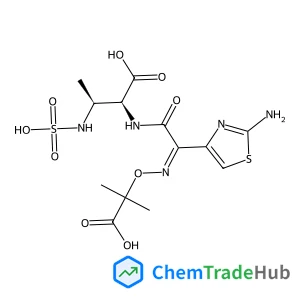
Aztreonam USP Related Compound A (Open-ring Aztreonam)
CAS Number:
87500-74-1
Molecular Formula:
C13H19N5O9S2
![4-[(2,4-Dihydroxyphenyl)diazenyl]-5-hydroxy-2,7-naphthalenedisulfonic acid structure](https://static.chemtradehub.com/structs/362/3627-01-8-79ac.webp "4-[(2,4-Dihydroxyphenyl)diazenyl]-5-hydroxy-2,7-naphthalenedisulfonic acid structure")
4-[(2,4-Dihydroxyphenyl)diazenyl]-5-hydroxy-2,7-naphthalenedisulfonic acid
CAS Number:
3627-01-8
Molecular Formula:
C16H12N2O9S2
Recommended Suppliers






Disclaimer
This page provides academic journal information for reference and research purposes only. We are not affiliated with any journal publishers and do not handle publication submissions. For publication-related inquiries, please contact the respective journal publishers directly.
If you notice any inaccuracies in the information displayed, please contact us at support@chemtradehub.com. We will promptly review and address your concerns.