












Hybrid organic–inorganic nanomaterial sensors for selective detection of Au3+ using rhodamine-based modified polyacrylic acid (PAA)-coated FeNPs
Literature Information
Publication Date
2013-03-04
DOI
10.1039/C3PY00229B
Impact Factor
5.582
Authors
Noi Niamsa, Chatthai Kaewtong, Weerapol Srinonmuang, Banchob Wanno, Buncha Pulpoka, Thawatchai Tuntulani
View Original
Abstract
Rhodamine derivatives were grafted on poly(acrylic acid) or PAA to obtain hydrophobically modified PAA (PAA-Rho1–4) bearing rhodamine moieties. Polymeric sensors were simply prepared by amidation reactions between PAA and rhodamine of various mole ratios to obtain PAA-Rho1, PAA-Rho2, PAA-Rho3 and PAA-Rho4 in 83%, 82%, 75% and 81% yields, respectively. Chemical compositions of PAA-Rho1–4 were studied by IR and 1H NMR spectroscopy. Chemical structures and purity of polymeric sensors were characterized by TGA, NMR, TEM and IR. It was found that polymeric sensors exhibited high selectivity and sensitivity in colorimetric and fluorescence responses toward Au3+ over other metal ions. The polymeric sensors were non-fluorescent in the spirolactam form and could be selectively converted into the fluorescent ring-opened amide form in the presence of Au3+ ions that lead to fluorescence enhancements and colorimetric changes. DFT calculation results suggested that the polymeric sensor PAA-Rho2 formed stable complexes with Au3+ through a large number of cation–dipole and ion–ion interactions. Moreover, the higher density carboxylic groups at the backbone of PAA-Rho interacted strongly with monodisperse superparamagnetic Fe3O4 NPs (FeNPs) which provided organic–inorganic hybrid fluorescence sensors (PAA-Rho2-FeNPs). The lower detection limit of the hybrid sensor toward Au3+ (0.85 μM) was less than that obtained from PAA-Rho2 (11.40 μM), and the response time was less than 40 seconds. Reusability was evaluated by repeating dipping and rinsing cycles in aqueous Au3+ and EDTA solutions. This approach may provide an easily measurable and inherently sensitive method for Au3+ ion detection in environmental and biological applications.
Related Literature
Trapping and sensing of hazardous insecticides by chemically modified single walled carbon nanotubes
Arkamita Bandyopadhyay, Dibyajyoti Ghosh
2017-08-16
Paper
DOI: 10.1039/C7CP04980C
Thermal compaction of the intrinsically disordered protein tau: entropic, structural, and hydrophobic factors
Anna Battisti, Gabriele Ciasca, Alessandro Grottesi, Alexander Tenenbaum
2017-02-23
Paper
DOI: 10.1039/C6CP07683A
Metallic borophene polytypes as lightweight anode materials for non-lithium-ion batteries
Pan Xiang, Wentao Zhang, Junfeng Li, Beibei Xiao, Longshan Li, Kuisen Deng
2017-08-22
Paper
DOI: 10.1039/C7CP04989G
Origin of non-conservative circular dichroism of the CP29 antenna complex of photosystem II
Dominik Lindorfer, Frank Müh, Thomas Renger
2017-02-17
Paper
DOI: 10.1039/C6CP08778G
Kinetic fragility and structure of lithium borophosphate glasses analysed by 1D/2D NMR
Laura Muñoz-Senovilla, Gregory Tricot, Francisco Muñoz
2017-08-08
Paper
DOI: 10.1039/C7CP04171C
Statistical thermodynamics unveils the dissolution mechanism of cellobiose
Noriyuki Isobe, James H. Clark, Seishi Shimizu
2017-08-18
Paper
DOI: 10.1039/C7CP04647B
High temperature activation of hematite nanorods for sunlight driven water oxidation reaction
Nathalie Minko Ito, Waldemir Moura Carvalho, Jr, Dereck Nills Ferreira Muche, Ricardo Hauch Ribeiro Castro, Gustavo Martini Dalpian
2017-08-24
Paper
DOI: 10.1039/C7CP04827K
Unifying hydrotropy under Gibbs phase rule
Seishi Shimizu
2017-05-11
Perspective
DOI: 10.1039/C7CP02132A
Quantum dots in photocatalytic applications: efficiently enhancing visible light photocatalytic activity by integrating CdO quantum dots as sensitizers
2017-08-25
Paper
DOI: 10.1039/C7CP05312F
Constructing accurate interaction potentials to describe the microsolvation of protonated methane by helium atoms
Felix Uhl, Harald Forbert, Dominik Marx
2017-03-03
Paper
DOI: 10.1039/C7CP00652G
You might also like
Compound Q&A
Is 6-(3-Fluorophenyl)picolinic acid (CAS: 887982-40-3) safe?
6-(3-Fluorophenyl)picolinic acid is generally considered safe for laboratory use...
887982-40-36-(3-Fluorophenyl)pi...
Compound Q&A
What industries use (3R)-3-Pyrrolidinol (CAS: 2799-21-5)?
(3R)-3-Pyrrolidinol is used in the pharmaceutical industry as a precursor for dr...
2799-21-5(3R)-3-Pyrrolidinol
Compound Q&A
What precautions should be taken when handling (4R,5R)-4,5-Diethoxycarbonyl-2,2-dimethyldioxolane (CAS: 59779-75-8)?
When handling (4R,5R)-4,5-Diethoxycarbonyl-2,2-dimethyldioxolane (CAS: 59779-75-...
59779-75-8(4R,5R)-4,5-Diethoxy...
Compound Q&A
How is 1-(6-Chloroimidazo[1,2-b]pyridazin-3-yl)ethanone (CAS: 90734-71-7) typically synthesized?
1-(6-Chloroimidazo[1,2-b]pyridazin-3-yl)ethanone is often synthesized via a mult...
90734-71-71-(6-Chloroimidazo[1...
Compound Q&A
What is the market or research trend for N-Ethyl-3,4-dimethylbenzylamine (CAS: 39180-83-1)?
The market for N-Ethyl-3,4-dimethylbenzylamine (CAS: 39180-83-1) remains steady,...
39180-83-1N-Ethyl-3,4-dimethyl...
Compound Q&A
What is Tert-butyl 3-(pyrrolidin-1-yl)azetidine-1-carboxylate (CAS: 1019008-21-9)?
Tert-butyl 3-(pyrrolidin-1-yl)azetidine-1-carboxylate is a chemical compound wit...
1019008-21-9Tert-butyl 3-(pyrrol...
Compound Q&A
What regulatory guidelines apply to 1-Bromo-3-chloro-2,4-dimethoxybenzene (CAS: 1228956-93-1)?
1-Bromo-3-chloro-2,4-dimethoxybenzene (CAS: 1228956-93-1) falls under the classi...
1228956-93-11-Bromo-3-chloro-2,4...
Compound Q&A
Is 8-Bromo-2-methyl-3,4-dihydroisoquinolin-1(2H)-one (CAS: 1368622-07-4) safe?
The safety of 8-Bromo-2-methyl-3,4-dihydroisoquinolin-1(2H)-one (CAS: 1368622-07...
1368622-07-48-Bromo-2-methyl-3,4...
Compound Q&A
Is Benzyl [(3S)-2,6-dioxo-3-piperidinyl]carbamate (CAS: 22785-43-9) safe?
Benzyl [(3S)-2,6-dioxo-3-piperidinyl]carbamate is generally safe when handled wi...
22785-43-9Benzyl [(3S)-2,6-dio...
Compound Q&A
How should 1-{[4-(4,4,5,5-Tetramethyl-1,3,2-dioxaborolan-2-yl)phenyl]sulfonyl}pyrrolidine (CAS: 928657-21-0) be stored?
1-{[4-(4,4,5,5-Tetramethyl-1,3,2-dioxaborolan-2-yl)phenyl]sulfonyl}pyrrolidine s...
928657-21-01-{[4-(4,4,5,5-Tetra...
Source Journal
Polymer Chemistry

CiteScore:
8.6
Self-citation Rate:
7.3%
Articles per Year:
457
Polymer Chemistry welcomes submissions in all areas of polymer science that have a strong focus on macromolecular chemistry. Manuscripts may cover a broad range of fields, yet no direct application focus is required.
Recommended Compounds
![2-Methyl-2-propanyl [(2S)-1-hydroxy-3-(4-hydroxyphenyl)-2-propanyl]carbamate structure](https://static.chemtradehub.com/structs/833/83345-46-4-eec2.webp "2-Methyl-2-propanyl [(2S)-1-hydroxy-3-(4-hydroxyphenyl)-2-propanyl]carbamate structure")
2-Methyl-2-propanyl [(2S)-1-hydroxy-3-(4-hydroxyphenyl)-2-propanyl]carbamate
CAS Number:
83345-46-4
Molecular Formula:
C14H21NO4
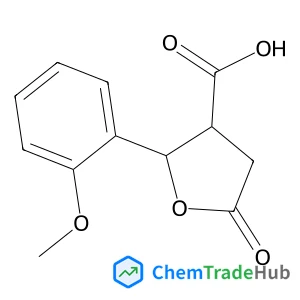
trans-2-(2-Methoxyphenyl)-5-oxotetrahydrofuran-3-carboxylic acid
CAS Number:
99226-02-5
Molecular Formula:
C12H12O5
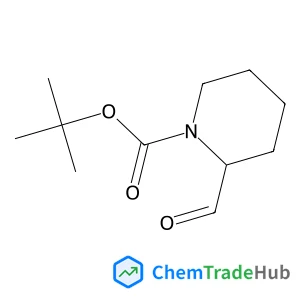
2-Methyl-2-propanyl (2R)-2-formyl-1-piperidinecarboxylate
CAS Number:
134526-69-5
Molecular Formula:
C11H19NO3
Recommended Suppliers




Disclaimer
This page provides academic journal information for reference and research purposes only. We are not affiliated with any journal publishers and do not handle publication submissions. For publication-related inquiries, please contact the respective journal publishers directly.
If you notice any inaccuracies in the information displayed, please contact us at support@chemtradehub.com. We will promptly review and address your concerns.