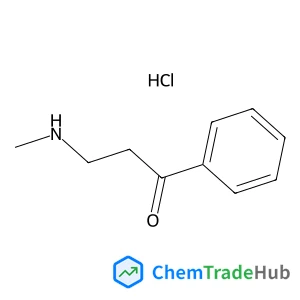
3-(Methylamino)-1-phenyl-1-propanone hydrochloride (1:1)
CAS Number:
2538-50-3
Molecular Formula:
C10H14ClNO
Jingyu Jin, Xiaoyan Li, Jiafeng Geng, Dengwei Jing
Combinations of nanoparticles and surfactants have been widely employed in many industrial processes, i.e., boiling and condensation in heat transfer and hydraulic fracturing in shale oil and gas production, etc. However, the underlying mechanism for various phenomena resulting from the addition of nanoparticles into the surfactant solutions is still unclear. For instance, there are contradictory conclusions from the literature regarding the variations of surface tension upon the addition of nanoparticles into surfactant solutions. In this work, the dominating factors determining if the surface activity of the surfactant solution will increase or conversely decrease when adding certain kinds of nanoparticles have been investigated. Two typical hydrophilic nanoparticles, SiO2 and TiO2 with anionic or cationic surfactants, respectively, have been considered. The surface tension has been measured in a wide range of nanoparticle and surfactant concentrations. It was found that the surface tension of the ionic surfactant solution can be further reduced only if nanoparticles of the same charge were added. For instance, a system containing 0.25 CMC SDS and 1 wt% SiO2 behaves similar to a 0.34 CMC SDS-only solution. Interestingly, the observed synergistic effect is found to be more significant if the surfactant concentration is much lower than its CMC for a given nanoparticle content. Moreover, the effect is perfectly reversible. When the nanoparticles were separated from the system, the surface tension values recovered fully to that of the pure surfactants. If nanoparticles of opposite charge were added, however, the surface tension of the surfactant solution increased. Zeta potential measurement and centrifugal treatment have been employed to reveal the interplay between nanoparticles and surfactants and the adsorption behavior of their assemblies at the liquid/air interface. Based on the experimental outcomes, a possible physical mechanism was proposed. It was concluded that the electrostatic repulsion between surfactant molecules and nanoparticles should be the dominant factor responsible for the observed reversible synergistic effect. Our study is expected to contribute to a better understanding of the interfacial phenomenon in nanoparticle–surfactant complex systems.
Thomas Gutsmann, Andra B. Schromm, Michel H. J. Koch, S. Kusumoto, K. Fukase, M. Oikawa, Ulrich Seydel, Klaus Brandenburg
DOI: 10.1039/B004188M
DOI: 10.1039/A809994D
Régis D. Gougeon, Philippe R. Bodart, Robin K. Harris, Dina M. Kolonia, Dimitris E. Petrakis, Philippos J. Pomonis
DOI: 10.1039/B005598K
Luca Frediani, Christian S. Pomelli, Jacopo Tomasi
DOI: 10.1039/B004330N
Sylvio May, Avinoam Ben-Shaul
DOI: 10.1039/B003570J
Stephan L. Grage, Dorit R. Gauger, Carsten Selle, Walter Pohle, Walter Richter, Anne S. Ulrich
DOI: 10.1039/B003902K
DOI: 10.1039/A900683D
Giuliano Alagona, Caterina Ghio, Susanna Monti
DOI: 10.1039/B004476H
When handling 4-(2-Furylmethyl)thiomorpholine 1,1-dioxide (CAS: 79206-94-3), it ...
When handling 4-Chloro-N-[2-(4-morpholinyl)ethyl]benzamide (CAS: 71320-77-9), it...
Waste containing this compound (CAS: 62921-74-8) should be handled according to ...
Waste containing (S)-Methyl 2-amino-3-cyclohexylpropanoate should be collected i...
This compound can be synthesized using a multi-step process involving the conjug...
There are several alternatives to (2E)-3-(3,4-Dichlorophenyl)acrylic acid in syn...
Ethyl 6-(2-nitrophenyl)imidazo[2,1-b][1,3]thiazole-3-carboxylate (CAS: 925437-84...
Waste containing 2-(1,3-Thiazol-2-yl)ethanamine (CAS: 18453-07-1) should be coll...
Methyl 5-iodo-2-methylbenzoate can be synthesized through the iodination of meth...
5-Chloro[1,2,4]triazolo[1,5-a]pyridine is commonly synthesized via the condensat...

Physical Chemistry Chemical Physics (PCCP) is an international journal co-owned by 19 physical chemistry and physics societies from around the world. This journal publishes original, cutting-edge research in physical chemistry, chemical physics and biophysical chemistry. To be suitable for publication in PCCP, articles must include significant innovation and/or insight into physical chemistry; this is the most important criterion that reviewers and Editors will judge against when evaluating submissions. The journal has a broad scope and welcomes contributions spanning experiment, theory, computation and data science. Topical coverage includes spectroscopy, dynamics, kinetics, statistical mechanics, thermodynamics, electrochemistry, catalysis, surface science, quantum mechanics, quantum computing and machine learning. Interdisciplinary research areas such as polymers and soft matter, materials, nanoscience, energy, surfaces/interfaces, and biophysical chemistry are welcomed if they demonstrate significant innovation and/or insight into physical chemistry. Joined experimental/theoretical studies are particularly appreciated when complementary and based on up-to-date approaches.