












Excess electrons in lithium–ethylamine solutions—density, electrical conductivity and EPR studies
Literature Information
Publication Date
DOI
10.1039/A900683D
Impact Factor
3.676
Authors
View Original
Abstract
The density, electrical conductivity and electron paramagnetic resonance (EPR) of the lithium–ethylamine system have been measured as a function of metal concentration and temperature. The obtained data have been discussed with emphasis on the comparison with those of alkali metal–ammonia or –methylamine solutions which have been well studied in view of the metal–nonmetal transition. Although lithium metal was dissolved into ethylamine up to 18–20 mol% metal, the observed conductivity was nonmetallic, dissimilar to the corresponding ammonia and methylamine systems. From the observed spectral linewidth of EPR it has been suggested that the hyperfine interaction with nitrogen nuclei is dominant in the electron spin–spin relaxation in the concentration range studied. The integrated intensity data of EPR have been analyzed in terms of the spin-pairing equilibrium of excess electrons in the solutions. It is concluded that excess electrons in Li–ethylamine solutions are more strongly localized than those in ammonia or methylamine solutions which exhibit electron delocalization with increasing metal concentration.
Related Literature
Regiocontrolled Ru-catalyzed addition of carboxylic acids to alkynes: practical protocols for the synthesis of vinyl esters
2003-02-17
Communication
DOI: 10.1039/B211277A
Reductive cleavage of the C–O bond of acetals and orthoesters: reduction by silane in the presence of a Rh–PPh3 complex
Tetsuo Ohta, Tsugumi Michibata, Kazuyuki Yamada, Ryohei Omori, Isao Furukawa
2003-04-17
Communication
DOI: 10.1039/B302124F
A novel bioassay for screening and quantification of taxanes
Sergi Morais, P. C. Pandey, Wilfred Chen, Ashok Mulchandani
2003-04-17
Communication
DOI: 10.1039/B302112B
Formal radical cyclization onto benzene rings—a general method proceeding via cross-conjugated dienones
Derrick L. J. Clive, Stephen P. Fletcher, (in part) Mingzhao Zhu
2003-01-20
Communication
DOI: 10.1039/B212223E
Asymmetric protonation of lithium enolates of α-amino acid derivatives with α-amino acid-based chiral Brønsted acids
Kentaro Futatsugi, Akira Yanagisawa, Hisashi Yamamoto
2003-01-30
Communication
DOI: 10.1039/B211523A
Highly regio- and stereoselective four-component iodoamination of Se-substituted allenes. an efficient synthesis of N-(3-organoseleno-2-iodo-2(Z)-propenyl) acetamides
Xueshi Hao, Xian Huang
2003-04-02
Communication
DOI: 10.1039/B300879G
Thiation of 2′-deoxy-5,6-dihydropyrimidine nucleosides with Lawesson’s reagent: Characterisation of oxathiaphosphepane intermediates
Frédéric Peyrane, Jean-Louis Fourrey, Pascale Clivio
2003-02-21
Communication
DOI: 10.1039/B211405D
Preparation of novel polythioether dendrons on a solid support
Adi Dahan, Avi Weissberg, Moshe Portnoy
2003-04-22
Communication
DOI: 10.1039/B302324A
Photoluminescent supramolecular networks from metal-mediated assembly of polythia conjugated dieneyne
Yuan-Te Fu, Vincent M. Lynch, Richard J. Lagow
2003-03-31
Communication
DOI: 10.1039/B212789J
Controlled synthesis of homopolymers and block copolymers based on 2-(acetoacetoxy)ethyl methacrylatevia RAFT radical polymerisation
Theodora Krasia, Rémi Soula, Hans G. Börner, Helmut Schlaad
2003-01-27
Communication
DOI: 10.1039/B212634F
You might also like
Compound Q&A
What precautions should be taken when handling 4-(2-Furylmethyl)thiomorpholine 1,1-dioxide (CAS: 79206-94-3)?
When handling 4-(2-Furylmethyl)thiomorpholine 1,1-dioxide (CAS: 79206-94-3), it ...
79206-94-34-(2-Furylmethyl)thi...
Compound Q&A
What precautions should be taken when handling 4-Chloro-N-[2-(4-morpholinyl)ethyl]benzamide (CAS: 71320-77-9)?
When handling 4-Chloro-N-[2-(4-morpholinyl)ethyl]benzamide (CAS: 71320-77-9), it...
71320-77-94-Chloro-N-[2-(4-mor...
Compound Q&A
How should waste containing 2-[2-(2-Methoxyethoxy)ethoxy]ethyl 4-methylbenzenesulfonate (CAS: 62921-74-8) be handled?
Waste containing this compound (CAS: 62921-74-8) should be handled according to ...
62921-74-82-[2-(2-Methoxyethox...
Compound Q&A
How should waste containing (S)-Methyl 2-amino-3-cyclohexylpropanoate be handled?
Waste containing (S)-Methyl 2-amino-3-cyclohexylpropanoate should be collected i...
40056-18-6(S)-Methyl 2-amino-3...
Compound Q&A
How is 5-({4-[(2S,4R)-4-Hydroxy-2-methyltetrahydro-2H-pyran-4-yl]-2-thienyl}sulfanyl)-1-methyl-1,3-dihydro-2H-indol-2-one (CAS: 166882-70-8) typically synthesized?
This compound can be synthesized using a multi-step process involving the conjug...
166882-70-85-({4-[(2S,4R)-4-Hyd...
Compound Q&A
Are there alternatives to (2E)-3-(3,4-Dichlorophenyl)acrylic acid (CAS: 7312-27-8) in synthesis?
There are several alternatives to (2E)-3-(3,4-Dichlorophenyl)acrylic acid in syn...
7312-27-8(2E)-3-(3,4-Dichloro...
Compound Q&A
How should Ethyl 6-(2-nitrophenyl)imidazo[2,1-b][1,3]thiazole-3-carboxylate (CAS: 925437-84-9) be stored?
Ethyl 6-(2-nitrophenyl)imidazo[2,1-b][1,3]thiazole-3-carboxylate (CAS: 925437-84...
925437-84-9Ethyl 6-(2-nitrophen...
Compound Q&A
How should waste containing 2-(1,3-Thiazol-2-yl)ethanamine (CAS: 18453-07-1) be handled?
Waste containing 2-(1,3-Thiazol-2-yl)ethanamine (CAS: 18453-07-1) should be coll...
18453-07-12-(1,3-Thiazol-2-yl)...
Compound Q&A
How is Methyl 5-iodo-2-methylbenzoate (CAS: 103440-54-6) typically synthesized?
Methyl 5-iodo-2-methylbenzoate can be synthesized through the iodination of meth...
103440-54-6Methyl 5-iodo-2-meth...
Compound Q&A
How is 5-Chloro[1,2,4]triazolo[1,5-a]pyridine (CAS: 1427399-34-5) typically synthesized?
5-Chloro[1,2,4]triazolo[1,5-a]pyridine is commonly synthesized via the condensat...
1427399-34-55-Chloro[1,2,4]triaz...
Source Journal
Physical Chemistry Chemical Physics

CiteScore:
5.5
Self-citation Rate:
10.3%
Articles per Year:
3036
Physical Chemistry Chemical Physics (PCCP) is an international journal co-owned by 19 physical chemistry and physics societies from around the world. This journal publishes original, cutting-edge research in physical chemistry, chemical physics and biophysical chemistry. To be suitable for publication in PCCP, articles must include significant innovation and/or insight into physical chemistry; this is the most important criterion that reviewers and Editors will judge against when evaluating submissions. The journal has a broad scope and welcomes contributions spanning experiment, theory, computation and data science. Topical coverage includes spectroscopy, dynamics, kinetics, statistical mechanics, thermodynamics, electrochemistry, catalysis, surface science, quantum mechanics, quantum computing and machine learning. Interdisciplinary research areas such as polymers and soft matter, materials, nanoscience, energy, surfaces/interfaces, and biophysical chemistry are welcomed if they demonstrate significant innovation and/or insight into physical chemistry. Joined experimental/theoretical studies are particularly appreciated when complementary and based on up-to-date approaches.
Recommended Compounds

Methyl 2-cyano-3,12-dioxooleana-1,9(11)-dien-28-oate
CAS Number:
218600-53-4
Molecular Formula:
C32H43NO4
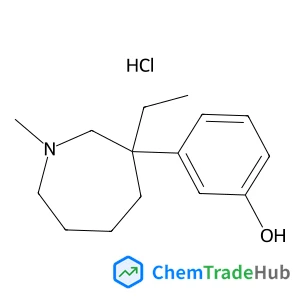
3-(3-Ethyl-1-methyl-3-azepanyl)phenol hydrochloride (1:1)
CAS Number:
59263-76-2
Molecular Formula:
C15H24ClNO
Recommended Suppliers





Disclaimer
This page provides academic journal information for reference and research purposes only. We are not affiliated with any journal publishers and do not handle publication submissions. For publication-related inquiries, please contact the respective journal publishers directly.
If you notice any inaccuracies in the information displayed, please contact us at support@chemtradehub.com. We will promptly review and address your concerns.