












A molecular model for lipid-mediated interaction between proteins in membranes
Literature Information
Publication Date
2000-08-22
DOI
10.1039/B003570J
Impact Factor
3.676
Authors
Sylvio May, Avinoam Ben-Shaul
View Original
Abstract
The loss of conformational freedom experienced by lipid chains in the vicinity of one, or two, impenetrable walls, representing the surfaces of hydrophobic transmembrane proteins, is calculated using a mean-field molecular-level chain packing theory. The hydrophobic thickness of the protein is set equal to that of the unperturbed lipid membrane (i.e., no “ hydrophobic mismatch”). The probability distributions of chain conformations, at all distances from the walls, are calculated by generating all conformations according to the rotational-isomeric-state model, and subjecting the system free energy to the requirement that the hydrophobic core of the membrane is liquid-like, and hence uniformly packed by chain segments. As long as the two protein surfaces are far apart, their interaction zones do not overlap, each extending over several molecular diameters. When the interaction zones begin to overlap, inter-protein repulsion sets in. At some intermediate distance the interaction turns strongly attractive, resulting from the depletion of (highly constrained) lipid tails from the volume separating the two surfaces. The chains confined between the hydrophobic surfaces are tilted away from the walls. Their tilt angle decreases monotonically with the distance from the walls, and with the distance between the walls. A nonmonotonic variation of the lipid-mediated interaction free energy between hydrophobic surfaces in membranes is also obtained using a simple, analytical, model in which chain conformations are grouped according to their director (end-to-end vector) orientations.
Related Literature
Ion-exchange synthesis and magneto-optical spectra of colored magnetic thin films composed of metal(ii) hexacyanochromate(iii)
Masanori Tozawa, Norimichi Kojima, Kazuhito Hashimoto
2003-04-22
Communication
DOI: 10.1039/B212861F
Yttrium alkyl complexes with a sterically demanding benzamidinate ligand: synthesis, structure and catalytic ethene polymerisation
Sergio Bambirra, Daan van Leusen, Auke Meetsma, Bart Hessen, Jan H. Teuben
2003-01-17
Communication
DOI: 10.1039/B208502J
Decorating catalytic palladium nanoparticles on carbon nanotubes in supercritical carbon dioxide
Yuehe Lin, Chien M. Wai
2003-02-10
Communication
DOI: 10.1039/B211350C
Remarkable effects of counter ions on scandium ion-promoted electron transfer reactions
Junpei Yuasa, Tomoyoshi Suenobu, Kei Ohkubo, Shunichi Fukuzumi
2003-04-02
Communication
DOI: 10.1039/B300543G
Highly regio- and stereoselective four-component iodoamination of Se-substituted allenes. an efficient synthesis of N-(3-organoseleno-2-iodo-2(Z)-propenyl) acetamides
Xueshi Hao, Xian Huang
2003-04-02
Communication
DOI: 10.1039/B300879G
Regiocontrolled Ru-catalyzed addition of carboxylic acids to alkynes: practical protocols for the synthesis of vinyl esters
2003-02-17
Communication
DOI: 10.1039/B211277A
Synthesis and characterization of hyperbranched mesoporous silica SBA-15
Ji Zhu, Agnes Szegedi, Imre Kiricsi, Paul Alivisatos, Gabor A. Somorjai
2003-01-06
Communication
DOI: 10.1039/B210053C
Self-assembly of a ferrocene-substituted porphyrin capable of electrochemically sensing neutral molecules via a “tail on–tail off” process
Christophe Bucher, Charles H. Devillers, Jean-Claude Moutet, Guy Royal, Eric Saint-Aman
2003-03-05
Communication
DOI: 10.1039/B301177A
Probing DNA selectivity of ruthenium metallointercalators using ESI mass spectrometry
Jennifer L. Beck, Rajesh Gupta, Thitima Urathamakul, Nyree L. Williamson, Margaret M. Sheil, Janice R. Aldrich-Wright, Stephen F. Ralph
2003-02-10
Communication
DOI: 10.1039/B212132H
Biocatalytic reduction of ketones by a semi-continuous flow process using supercritical carbon dioxide
Tomoko Matsuda, Kazunori Watanabe, Takashi Kamitanaka, Tadao Harada, Kaoru Nakamura
2003-04-22
Communication
DOI: 10.1039/B301452E
You might also like
Compound Q&A
What precautions should be taken when handling 4-(2-Furylmethyl)thiomorpholine 1,1-dioxide (CAS: 79206-94-3)?
When handling 4-(2-Furylmethyl)thiomorpholine 1,1-dioxide (CAS: 79206-94-3), it ...
79206-94-34-(2-Furylmethyl)thi...
Compound Q&A
What precautions should be taken when handling 4-Chloro-N-[2-(4-morpholinyl)ethyl]benzamide (CAS: 71320-77-9)?
When handling 4-Chloro-N-[2-(4-morpholinyl)ethyl]benzamide (CAS: 71320-77-9), it...
71320-77-94-Chloro-N-[2-(4-mor...
Compound Q&A
How should waste containing 2-[2-(2-Methoxyethoxy)ethoxy]ethyl 4-methylbenzenesulfonate (CAS: 62921-74-8) be handled?
Waste containing this compound (CAS: 62921-74-8) should be handled according to ...
62921-74-82-[2-(2-Methoxyethox...
Compound Q&A
How should waste containing (S)-Methyl 2-amino-3-cyclohexylpropanoate be handled?
Waste containing (S)-Methyl 2-amino-3-cyclohexylpropanoate should be collected i...
40056-18-6(S)-Methyl 2-amino-3...
Compound Q&A
How is 5-({4-[(2S,4R)-4-Hydroxy-2-methyltetrahydro-2H-pyran-4-yl]-2-thienyl}sulfanyl)-1-methyl-1,3-dihydro-2H-indol-2-one (CAS: 166882-70-8) typically synthesized?
This compound can be synthesized using a multi-step process involving the conjug...
166882-70-85-({4-[(2S,4R)-4-Hyd...
Compound Q&A
Are there alternatives to (2E)-3-(3,4-Dichlorophenyl)acrylic acid (CAS: 7312-27-8) in synthesis?
There are several alternatives to (2E)-3-(3,4-Dichlorophenyl)acrylic acid in syn...
7312-27-8(2E)-3-(3,4-Dichloro...
Compound Q&A
How should Ethyl 6-(2-nitrophenyl)imidazo[2,1-b][1,3]thiazole-3-carboxylate (CAS: 925437-84-9) be stored?
Ethyl 6-(2-nitrophenyl)imidazo[2,1-b][1,3]thiazole-3-carboxylate (CAS: 925437-84...
925437-84-9Ethyl 6-(2-nitrophen...
Compound Q&A
How should waste containing 2-(1,3-Thiazol-2-yl)ethanamine (CAS: 18453-07-1) be handled?
Waste containing 2-(1,3-Thiazol-2-yl)ethanamine (CAS: 18453-07-1) should be coll...
18453-07-12-(1,3-Thiazol-2-yl)...
Compound Q&A
How is Methyl 5-iodo-2-methylbenzoate (CAS: 103440-54-6) typically synthesized?
Methyl 5-iodo-2-methylbenzoate can be synthesized through the iodination of meth...
103440-54-6Methyl 5-iodo-2-meth...
Compound Q&A
How is 5-Chloro[1,2,4]triazolo[1,5-a]pyridine (CAS: 1427399-34-5) typically synthesized?
5-Chloro[1,2,4]triazolo[1,5-a]pyridine is commonly synthesized via the condensat...
1427399-34-55-Chloro[1,2,4]triaz...
Source Journal
Physical Chemistry Chemical Physics

CiteScore:
5.5
Self-citation Rate:
10.3%
Articles per Year:
3036
Physical Chemistry Chemical Physics (PCCP) is an international journal co-owned by 19 physical chemistry and physics societies from around the world. This journal publishes original, cutting-edge research in physical chemistry, chemical physics and biophysical chemistry. To be suitable for publication in PCCP, articles must include significant innovation and/or insight into physical chemistry; this is the most important criterion that reviewers and Editors will judge against when evaluating submissions. The journal has a broad scope and welcomes contributions spanning experiment, theory, computation and data science. Topical coverage includes spectroscopy, dynamics, kinetics, statistical mechanics, thermodynamics, electrochemistry, catalysis, surface science, quantum mechanics, quantum computing and machine learning. Interdisciplinary research areas such as polymers and soft matter, materials, nanoscience, energy, surfaces/interfaces, and biophysical chemistry are welcomed if they demonstrate significant innovation and/or insight into physical chemistry. Joined experimental/theoretical studies are particularly appreciated when complementary and based on up-to-date approaches.
Recommended Compounds
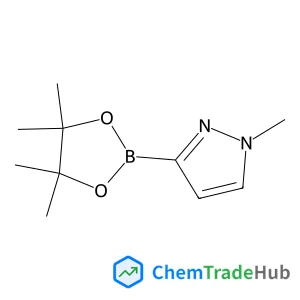
1-Methyl-3-(4,4,5,5-tetramethyl-1,3,2-dioxaborolan-2-yl)-1H-pyrazole
CAS Number:
1020174-04-2
Molecular Formula:
C10H17BN2O2

Recommended Suppliers






Disclaimer
This page provides academic journal information for reference and research purposes only. We are not affiliated with any journal publishers and do not handle publication submissions. For publication-related inquiries, please contact the respective journal publishers directly.
If you notice any inaccuracies in the information displayed, please contact us at support@chemtradehub.com. We will promptly review and address your concerns.