












![N-[(Benzyloxy)carbonyl]serine structure](https://static.chemtradehub.com/structs/276/2768-56-1-77f7.webp "N-[(Benzyloxy)carbonyl]serine structure")
n-Alkyl alcohols at the water/vapour and water/benzene interfaces: a study on phase transfer energies
Literature Information
Publication Date
2000-08-15
DOI
10.1039/B004330N
Impact Factor
3.676
Authors
Luca Frediani, Christian S. Pomelli, Jacopo Tomasi
View Original
Abstract
A preliminary study on the behaviour of molecular solutes at the interface of liquid water with other media is reported. The study is based on an extension of the polarizable continuum model (PCM) which gives solvation free energy as the difference between the quantum mechanically computed free energy of the molecule inserted in the medium and that of the isolated molecule. The PCM computational scheme is modified to take into account the position and orientation of the molecule with respect to the phase separation boundary. The energetic quantity object of this study is thus a position and orientation dependent free energy function. The other features of standard PCM, in particular the use of continuum solvent response functions, are maintained. The comparison with molecular dynamics simulations shows that this model gives reasonable results, also in the presence of a phase separation. The decomposition of the free energy values along the best energetic passage from one phase to another shows that the minimum and the maximum present in the free energy profile mainly depend on non-electrostatic dispersion and steric terms.
Related Literature
Regiocontrolled Ru-catalyzed addition of carboxylic acids to alkynes: practical protocols for the synthesis of vinyl esters
2003-02-17
Communication
DOI: 10.1039/B211277A
Structure and magnetism of the first strictly dinuclear compound containing paramagnetic 3d and 5f metal ions. Major influence of the CuII ion coordination on the exchange CuII–UIV interaction
Lionel Salmon, Pierre Thuéry, Eric Rivière, Jean-Jacques Girerd, Michel Ephritikhine
2003-02-25
Communication
DOI: 10.1039/B212635D
An oxime–carbapalladacycle complex covalently anchored to silica as an active and reusable heterogeneous catalyst for Suzuki cross-coupling in water
Avelino Corma, Hermenegildo García, Antonio Leyva
2003-02-03
Communication
DOI: 10.1039/B211742H
Remarkable effects of counter ions on scandium ion-promoted electron transfer reactions
Junpei Yuasa, Tomoyoshi Suenobu, Kei Ohkubo, Shunichi Fukuzumi
2003-04-02
Communication
DOI: 10.1039/B300543G
Synthesis, structure and reductive dechlorination of the C-centred phosphorus(iii) β-diketiminate PCl(Ph)L [L = C{C(Me)NC6H3Pri2-2,6}{C(Me)NHC6H3Pri2-2,6}]
Peter B. Hitchcock, Michael F. Lappert, Jacek E. Nycz
2003-04-16
Communication
DOI: 10.1039/B301294H
Self-assembly of a ferrocene-substituted porphyrin capable of electrochemically sensing neutral molecules via a “tail on–tail off” process
Christophe Bucher, Charles H. Devillers, Jean-Claude Moutet, Guy Royal, Eric Saint-Aman
2003-03-05
Communication
DOI: 10.1039/B301177A
Thiation of 2′-deoxy-5,6-dihydropyrimidine nucleosides with Lawesson’s reagent: Characterisation of oxathiaphosphepane intermediates
Frédéric Peyrane, Jean-Louis Fourrey, Pascale Clivio
2003-02-21
Communication
DOI: 10.1039/B211405D
Photoluminescent supramolecular networks from metal-mediated assembly of polythia conjugated dieneyne
Yuan-Te Fu, Vincent M. Lynch, Richard J. Lagow
2003-03-31
Communication
DOI: 10.1039/B212789J
Fe(AsO4): A new iron(iii) arsenate synthesized from thermal treatment of (NH4)[Fe(AsO4)F]
Begoña Bazán, José L. Mesa, José L. Pizarro, Andrés T. Aguayo, María I. Arriortua, Teófilo Rojo
2003-02-06
Communication
DOI: 10.1039/B210998K
You might also like
Compound Q&A
What precautions should be taken when handling 4-(2-Furylmethyl)thiomorpholine 1,1-dioxide (CAS: 79206-94-3)?
When handling 4-(2-Furylmethyl)thiomorpholine 1,1-dioxide (CAS: 79206-94-3), it ...
79206-94-34-(2-Furylmethyl)thi...
Compound Q&A
What precautions should be taken when handling 4-Chloro-N-[2-(4-morpholinyl)ethyl]benzamide (CAS: 71320-77-9)?
When handling 4-Chloro-N-[2-(4-morpholinyl)ethyl]benzamide (CAS: 71320-77-9), it...
71320-77-94-Chloro-N-[2-(4-mor...
Compound Q&A
How should waste containing 2-[2-(2-Methoxyethoxy)ethoxy]ethyl 4-methylbenzenesulfonate (CAS: 62921-74-8) be handled?
Waste containing this compound (CAS: 62921-74-8) should be handled according to ...
62921-74-82-[2-(2-Methoxyethox...
Compound Q&A
How should waste containing (S)-Methyl 2-amino-3-cyclohexylpropanoate be handled?
Waste containing (S)-Methyl 2-amino-3-cyclohexylpropanoate should be collected i...
40056-18-6(S)-Methyl 2-amino-3...
Compound Q&A
How is 5-({4-[(2S,4R)-4-Hydroxy-2-methyltetrahydro-2H-pyran-4-yl]-2-thienyl}sulfanyl)-1-methyl-1,3-dihydro-2H-indol-2-one (CAS: 166882-70-8) typically synthesized?
This compound can be synthesized using a multi-step process involving the conjug...
166882-70-85-({4-[(2S,4R)-4-Hyd...
Compound Q&A
Are there alternatives to (2E)-3-(3,4-Dichlorophenyl)acrylic acid (CAS: 7312-27-8) in synthesis?
There are several alternatives to (2E)-3-(3,4-Dichlorophenyl)acrylic acid in syn...
7312-27-8(2E)-3-(3,4-Dichloro...
Compound Q&A
How should Ethyl 6-(2-nitrophenyl)imidazo[2,1-b][1,3]thiazole-3-carboxylate (CAS: 925437-84-9) be stored?
Ethyl 6-(2-nitrophenyl)imidazo[2,1-b][1,3]thiazole-3-carboxylate (CAS: 925437-84...
925437-84-9Ethyl 6-(2-nitrophen...
Compound Q&A
How should waste containing 2-(1,3-Thiazol-2-yl)ethanamine (CAS: 18453-07-1) be handled?
Waste containing 2-(1,3-Thiazol-2-yl)ethanamine (CAS: 18453-07-1) should be coll...
18453-07-12-(1,3-Thiazol-2-yl)...
Compound Q&A
How is Methyl 5-iodo-2-methylbenzoate (CAS: 103440-54-6) typically synthesized?
Methyl 5-iodo-2-methylbenzoate can be synthesized through the iodination of meth...
103440-54-6Methyl 5-iodo-2-meth...
Compound Q&A
How is 5-Chloro[1,2,4]triazolo[1,5-a]pyridine (CAS: 1427399-34-5) typically synthesized?
5-Chloro[1,2,4]triazolo[1,5-a]pyridine is commonly synthesized via the condensat...
1427399-34-55-Chloro[1,2,4]triaz...
Source Journal
Physical Chemistry Chemical Physics

CiteScore:
5.5
Self-citation Rate:
10.3%
Articles per Year:
3036
Physical Chemistry Chemical Physics (PCCP) is an international journal co-owned by 19 physical chemistry and physics societies from around the world. This journal publishes original, cutting-edge research in physical chemistry, chemical physics and biophysical chemistry. To be suitable for publication in PCCP, articles must include significant innovation and/or insight into physical chemistry; this is the most important criterion that reviewers and Editors will judge against when evaluating submissions. The journal has a broad scope and welcomes contributions spanning experiment, theory, computation and data science. Topical coverage includes spectroscopy, dynamics, kinetics, statistical mechanics, thermodynamics, electrochemistry, catalysis, surface science, quantum mechanics, quantum computing and machine learning. Interdisciplinary research areas such as polymers and soft matter, materials, nanoscience, energy, surfaces/interfaces, and biophysical chemistry are welcomed if they demonstrate significant innovation and/or insight into physical chemistry. Joined experimental/theoretical studies are particularly appreciated when complementary and based on up-to-date approaches.
Recommended Compounds
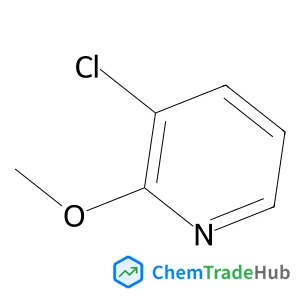

(3beta,7beta,12beta)-3,7,12-Trihydroxy-11,15,23-trioxolanost-8-en-26-oic acid
CAS Number:
98665-22-6
Molecular Formula:
C30H44O8
![1-Naphthalenesulfonic acid, 2-[(2-hydroxy-1-naphthalenyl)azo]-, bariumsalt (2:1) structure](https://static.chemtradehub.com/structs/110/1103-38-4-0b33.webp "1-Naphthalenesulfonic acid, 2-[(2-hydroxy-1-naphthalenyl)azo]-, bariumsalt (2:1) structure")
1-Naphthalenesulfonic acid, 2-[(2-hydroxy-1-naphthalenyl)azo]-, bariumsalt (2:1)
CAS Number:
1103-38-4
Molecular Formula:
C20H14BaN2O4S
Recommended Suppliers





Disclaimer
This page provides academic journal information for reference and research purposes only. We are not affiliated with any journal publishers and do not handle publication submissions. For publication-related inquiries, please contact the respective journal publishers directly.
If you notice any inaccuracies in the information displayed, please contact us at support@chemtradehub.com. We will promptly review and address your concerns.