













“Green”-enzymatic synthesis of pegylated phenolic macromer and polymer
Literature Information
Publication Date
2004-03-02
DOI
10.1039/B400404C
Impact Factor
6.222
Authors
Ferdinando Bruno, Virinder S. Parmar, Jayant Kumar, Arthur C. Watterson, Kethinni G. Chittibabu, Lynne A. Samuelson
View Original
Abstract
Environmentally benign synthesis of novel pegylated polyphenolics, by combining the extraordinary selectivities of a lipase and an oxidase to develop polymeric electrolytes for applications in dye sensitised solar cells.
Related Literature
Lithium cation conducting TDI anion-based ionic liquids
Leszek Niedzicki, Ewelina Karpierz, Maciej Zawadzki, Maciej Dranka, Marta Kasprzyk, Aldona Zalewska, Marek Marcinek, Janusz Zachara, Urszula Domańska, Władysław Wieczorek
2014-03-17
Paper
DOI: 10.1039/C3CP55354J
Remarkable changes in the photoluminescent properties of Y2Ce2O7:Eu3+ red phosphors through modification of the cerium oxidation states and oxygen vacancy ordering
Athira K. V. Raj, P. Prabhakar Rao, T. S. Sreena, S. Sameera, Vineetha James, U. A. Renju
2014-09-17
Paper
DOI: 10.1039/C4CP03311F
Ab initio Kinetic Monte Carlo simulations of dissolution at the NaCl–water interface
Peter Spijker, Nico Holmberg, Adam S. Foster
2014-09-11
Paper
DOI: 10.1039/C4CP02375G
Diffusive and non-diffusive photo-induced proton coupled electron transfer from hydrogen bonded phenols to meso-tetrakis-5,10,15,20-pentafluorophenyl porphyrin
P. Hemant Kumar, Y. Venkatesh, S. Prashanthi, D. Siva, B. Ramakrishna, Prakriti Ranjan Bangal
2014-09-09
Paper
DOI: 10.1039/C4CP02505A
Photoelectrochemical reduction of aqueous protons with a CuO|CuBi2O4 heterojunction under visible light irradiation
Hyun S. Park, Chong-Yong Lee, Erwin Reisner
2014-09-05
Communication
DOI: 10.1039/C4CP03883E
Thermochemical CO2 splitting via redox cycling of ceria reticulated foam structures with dual-scale porosities
Philipp Furler, Jonathan Scheffe, Daniel Marxer, Michal Gorbar
2014-04-08
Paper
DOI: 10.1039/C4CP01172D
M(BH3NH2BH2NH2BH3) – the missing link in the mechanism of the thermal decomposition of light alkali metal amidoboranes
K. J. Fijalkowski, T. Jaroń, P. J. Leszczyński, E. Magos-Palasyuk, T. Palasyuk, M. K. Cyrański, W. Grochala
2014-09-26
Paper
DOI: 10.1039/C4CP03296A
Physicochemical properties of pentaglyme–sodium bis(trifluoromethanesulfonyl)amide solvate ionic liquid
Shoshi Terada, Toshihiko Mandai, Risa Nozawa, Kazuki Yoshida, Kazuhide Ueno, Seiji Tsuzuki, Masayoshi Watanabe
2014-04-25
Paper
DOI: 10.1039/C4CP00746H
You might also like
Compound Q&A
What is the market or research trend for N-(4-Methoxybenzyl)-2-pyridinamine (CAS: 52818-63-0)?
N-(4-Methoxybenzyl)-2-pyridinamine (CAS: 52818-63-0) is increasingly being used ...
52818-63-0N-(4-Methoxybenzyl)-...
Compound Q&A
What precautions should be taken when handling Ethyl 4-(2-chlorophenyl)-1,3-thiazole-2-carboxylate (CAS: 1050507-06-6)?
When handling Ethyl 4-(2-chlorophenyl)-1,3-thiazole-2-carboxylate, appropriate p...
1050507-06-6Ethyl 4-(2-chlorophe...
Compound Q&A
What regulatory guidelines apply to diethyldiselane (CAS: 628-39-7)?
Diethyldiselane (CAS: 628-39-7) is classified under the Globally Harmonized Syst...
628-39-7Diethyldiselane
Compound Q&A
What is the market or research trend for oxocopper (CAS: 12053-18-8)?
The market for oxocopper (CAS: 12053-18-8) is primarily driven by its use in cat...
12053-18-8oxocopper; oxo-(oxoc...
Compound Q&A
What is the market or research trend for 5-{[(2-Methyl-2-propanyl)oxy]carbonyl}-5-azaspiro[2.4]heptane-7-carboxylic acid?
The market for 5-{[(2-Methyl-2-propanyl)oxy]carbonyl}-5-azaspiro[2.4]heptane-7-c...
1268519-54-55-{[(2-Methyl-2-prop...
Compound Q&A
What is 2-(1-Pyrrolidinyl)-4-pyridinamine (CAS: 35981-63-6)?
2-(1-Pyrrolidinyl)-4-pyridinamine is a chemical compound with the CAS number 359...
35981-63-62-(1-Pyrrolidinyl)-4...
Compound Q&A
What are the physical and chemical properties of 2-(3-Pyridinyl)-1-azabicyclo[2.2.2]octane (CAS: 91556-75-1)?
2-(3-Pyridinyl)-1-azabicyclo[2.2.2]octane (CAS: 91556-75-1) is a crystalline sol...
91556-75-12-(3-Pyridinyl)-1-az...
Compound Q&A
How is (S)-Alpha-allyl-proline hydrochloride (CAS: 129704-91-2) typically synthesized?
(S)-Alpha-allyl-proline hydrochloride is usually synthesized via a Wittig reacti...
129704-91-2(S)-Alpha-allyl-prol...
Compound Q&A
What is 3-Methyl-1,2-oxazole-5-carboxylic acid (CAS: 4857-42-5)?
3-Methyl-1,2-oxazole-5-carboxylic acid (CAS: 4857-42-5) is an organic compound w...
4857-42-53-Methyl-1,2-oxazole...
Compound Q&A
How is Lys-SMCC-DM1 (CAS: 1281816-04-3) typically synthesized?
Lys-SMCC-DM1 is synthesized via a multi-step process involving the coupling of S...
1281816-04-3Lys-SMCC-DM1
Source Journal
Chemical Communications

CiteScore:
8.6
Self-citation Rate:
4.7%
Articles per Year:
2458
ChemComm publishes urgent research which is of outstanding significance and interest to experts in the field, while also appealing to the journal’s broad chemistry readership. Our communication format is ideally suited to short, urgent studies that are of such importance that they require accelerated publication. Our scope covers all topics in chemistry, and research at the interface of chemistry and other disciplines (such as materials science, nanoscience, physics, engineering and biology) where there is a significant novelty in the chemistry aspects. Major topic areas covered include: Analytical Chemistry Catalysis Chemical Biology and medicinal chemistry Computational Chemistry and Machine Learning Energy and sustainable chemistry Environmental Chemistry Green Chemistry Inorganic Chemistry Materials Chemistry Nanoscience Organic Chemistry Physical Chemistry Polymer Chemistry Supramolecular Chemistry
Recommended Compounds
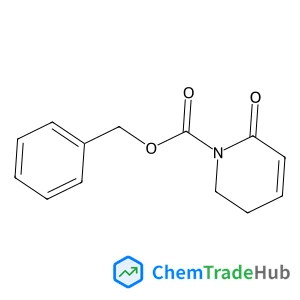
Benzyl 6-oxo-3,6-dihydro-1(2H)-pyridinecarboxylate
CAS Number:
725746-35-0
Molecular Formula:
C13H13NO3
Recommended Suppliers




Disclaimer
This page provides academic journal information for reference and research purposes only. We are not affiliated with any journal publishers and do not handle publication submissions. For publication-related inquiries, please contact the respective journal publishers directly.
If you notice any inaccuracies in the information displayed, please contact us at support@chemtradehub.com. We will promptly review and address your concerns.