












Theoretical predictions for hexagonal BN based nanomaterials as electrocatalysts for the oxygen reduction reaction
Literature Information
Publication Date
2012-12-17
DOI
10.1039/C2CP42907A
Impact Factor
3.676
Authors
View Original
Abstract
The catalytic activity for the oxygen reduction reaction (ORR) of both the pristine and defect-possessing hexagonal boron nitride (h-BN) monolayer and H-terminated nanoribbon have been studied theoretically using density functional theory. It is demonstrated that an inert h-BN monolayer can be functionalized and become catalytically active by nitrogen doping. It is shown that the energetics of adsorption of O2, O, OH, OOH, and H2O on N atom impurities in the h-BN monolayer (NB@h-BN) is quite similar to that known for a Pt(111) surface. The specific mechanism of destructive and cooperative adsorption of ORR intermediates on the surface point defects is discussed. It is demonstrated that accounting for entropy and zero-point energy (ZPE) corrections results in destabilization of the ORR intermediates adsorbed on NB@h-BN, while solvent effects lead to their stabilization. Therefore, entropy, ZPE and solvent effects partly cancel each other and have to be taken into account simultaneously. Analysis of the free energy changes along the ORR pathway allows us to suggest that a N-doped h-BN monolayer can demonstrate catalytic properties for the ORR under the condition that electron transport to the catalytically active center is provided.
Related Literature
A rapid and sensitive detection of ferritin at a nanomolar level and disruption of amyloid β fibrils using fluorescent conjugated polymer
B. Muthuraj, Sameer Hussain, Parameswar Krishnan Iyer
2013-06-27
Paper
DOI: 10.1039/C3PY00680H
Characterization and assembly investigation of a dodecapeptide hydrolyzed from the crystalline domain of Bombyx mori silk fibroin
Ruiwen Hao, Jinming Zhang, Tao Xu, Lei Huang, Jinrong Yao, Xin Chen, Zhengzhong Shao
2013-02-07
Paper
DOI: 10.1039/C3PY21096K
Photoinduced polyaddition of multifunctional azides and alkynes
Peter Burtscher, Norbert Moszner
2013-04-24
Paper
DOI: 10.1039/C3PY00356F
Tunable thermo-, pH- and light-responsive copolymer micelles
Wen Guo, Hui Zou
2013-05-14
Communication
DOI: 10.1039/C3PY00478C
Poly(acrylic acid)-graft-poly(N-vinylcaprolactam): a novel pH and thermo dual-stimuli responsive system
Xiuyu Jiang, Guolin Lu, Chun Feng, Yongjun Li, Xiaoyu Huang
2013-04-23
Paper
DOI: 10.1039/C3PY00415E
Layer-by-Layer approaches for formation of smart self-healing materials
Daria V. Andreeva
2013-02-21
Review Article
DOI: 10.1039/C3PY00088E
Grafting of polyethylene onto graphite oxide sheets: a comparison of two routes
Gregory Martin, Philippe Sonntag, Franck D'Agosto, Christophe Boisson
2013-02-26
Paper
DOI: 10.1039/C3PY00160A
RAFT polymerization of dimethyl(methacryloyloxy)methyl phosphonate and its phosphonic acid derivative: a new opportunity for phosphorus-based materials
Benjamin Canniccioni, Sophie Monge, Ghislain David, Jean-Jacques Robin
2013-04-19
Paper
DOI: 10.1039/C3PY00426K
A novel cyclodextrin-containing pH-responsive star polymer for nanostructure fabrication and drug delivery
Mingming Zhang, Qingqing Xiong, Jinqian Chen, Yinsong Wang
2013-07-05
Paper
DOI: 10.1039/C3PY00656E
You might also like
Compound Q&A
Is 6-(3-Fluorophenyl)picolinic acid (CAS: 887982-40-3) safe?
6-(3-Fluorophenyl)picolinic acid is generally considered safe for laboratory use...
887982-40-36-(3-Fluorophenyl)pi...
Compound Q&A
What industries use (3R)-3-Pyrrolidinol (CAS: 2799-21-5)?
(3R)-3-Pyrrolidinol is used in the pharmaceutical industry as a precursor for dr...
2799-21-5(3R)-3-Pyrrolidinol
Compound Q&A
What precautions should be taken when handling (4R,5R)-4,5-Diethoxycarbonyl-2,2-dimethyldioxolane (CAS: 59779-75-8)?
When handling (4R,5R)-4,5-Diethoxycarbonyl-2,2-dimethyldioxolane (CAS: 59779-75-...
59779-75-8(4R,5R)-4,5-Diethoxy...
Compound Q&A
How is 1-(6-Chloroimidazo[1,2-b]pyridazin-3-yl)ethanone (CAS: 90734-71-7) typically synthesized?
1-(6-Chloroimidazo[1,2-b]pyridazin-3-yl)ethanone is often synthesized via a mult...
90734-71-71-(6-Chloroimidazo[1...
Compound Q&A
What is the market or research trend for N-Ethyl-3,4-dimethylbenzylamine (CAS: 39180-83-1)?
The market for N-Ethyl-3,4-dimethylbenzylamine (CAS: 39180-83-1) remains steady,...
39180-83-1N-Ethyl-3,4-dimethyl...
Compound Q&A
What is Tert-butyl 3-(pyrrolidin-1-yl)azetidine-1-carboxylate (CAS: 1019008-21-9)?
Tert-butyl 3-(pyrrolidin-1-yl)azetidine-1-carboxylate is a chemical compound wit...
1019008-21-9Tert-butyl 3-(pyrrol...
Compound Q&A
What regulatory guidelines apply to 1-Bromo-3-chloro-2,4-dimethoxybenzene (CAS: 1228956-93-1)?
1-Bromo-3-chloro-2,4-dimethoxybenzene (CAS: 1228956-93-1) falls under the classi...
1228956-93-11-Bromo-3-chloro-2,4...
Compound Q&A
Is 8-Bromo-2-methyl-3,4-dihydroisoquinolin-1(2H)-one (CAS: 1368622-07-4) safe?
The safety of 8-Bromo-2-methyl-3,4-dihydroisoquinolin-1(2H)-one (CAS: 1368622-07...
1368622-07-48-Bromo-2-methyl-3,4...
Compound Q&A
Is Benzyl [(3S)-2,6-dioxo-3-piperidinyl]carbamate (CAS: 22785-43-9) safe?
Benzyl [(3S)-2,6-dioxo-3-piperidinyl]carbamate is generally safe when handled wi...
22785-43-9Benzyl [(3S)-2,6-dio...
Compound Q&A
How should 1-{[4-(4,4,5,5-Tetramethyl-1,3,2-dioxaborolan-2-yl)phenyl]sulfonyl}pyrrolidine (CAS: 928657-21-0) be stored?
1-{[4-(4,4,5,5-Tetramethyl-1,3,2-dioxaborolan-2-yl)phenyl]sulfonyl}pyrrolidine s...
928657-21-01-{[4-(4,4,5,5-Tetra...
Source Journal
Physical Chemistry Chemical Physics

CiteScore:
5.5
Self-citation Rate:
10.3%
Articles per Year:
3036
Physical Chemistry Chemical Physics (PCCP) is an international journal co-owned by 19 physical chemistry and physics societies from around the world. This journal publishes original, cutting-edge research in physical chemistry, chemical physics and biophysical chemistry. To be suitable for publication in PCCP, articles must include significant innovation and/or insight into physical chemistry; this is the most important criterion that reviewers and Editors will judge against when evaluating submissions. The journal has a broad scope and welcomes contributions spanning experiment, theory, computation and data science. Topical coverage includes spectroscopy, dynamics, kinetics, statistical mechanics, thermodynamics, electrochemistry, catalysis, surface science, quantum mechanics, quantum computing and machine learning. Interdisciplinary research areas such as polymers and soft matter, materials, nanoscience, energy, surfaces/interfaces, and biophysical chemistry are welcomed if they demonstrate significant innovation and/or insight into physical chemistry. Joined experimental/theoretical studies are particularly appreciated when complementary and based on up-to-date approaches.
Recommended Compounds
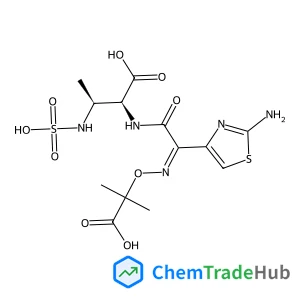
Aztreonam USP Related Compound A (Open-ring Aztreonam)
CAS Number:
87500-74-1
Molecular Formula:
C13H19N5O9S2
Recommended Suppliers






Disclaimer
This page provides academic journal information for reference and research purposes only. We are not affiliated with any journal publishers and do not handle publication submissions. For publication-related inquiries, please contact the respective journal publishers directly.
If you notice any inaccuracies in the information displayed, please contact us at support@chemtradehub.com. We will promptly review and address your concerns.