












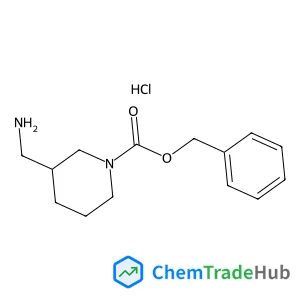
Benzyl 3-(aminomethyl)piperidine-1-carboxylate hydrochloride
CAS Number:
1186663-23-9
Molecular Formula:
C14H21ClN2O2
Mingming Zhang, Qingqing Xiong, Jinqian Chen, Yinsong Wang
A novel cyclodextrin-containing star polymer was synthesized by atom transfer radical polymerization using the arm-first approach. Copolymerization of a mixture of mono- and multi-methacrylate substituted cyclodextrin and 2-(dimethylamino) ethyl methacrylate initiated by poly(ethylene glycol) macroinitiator produced a core cross-linked star polymer. The star polymer could self-assemble into nanostructures via host–guest interactions between the cyclodextrin polymer and hydrophobic guest molecules. The morphologies of these nanostructures showed regular transitions by altering the type of guest molecule, the ratio of star polymer to guest, and the pH of the solution. Furthermore, doxorubicin (DOX) was entrapped into the star polymer for the purpose of drug delivery. In vitro experiments demonstrated that the DOX-loaded nanoparticles could release their payload in response to the endosomal-pH after being internalized by HeLa cell via endocytosis. At high DOX concentration, DOX-loaded nanoparticles showed significantly higher cell cytotoxicity compared to the free drug. The results indicate that the star polymer has great promise for potential anticancer treatment.
Hajnalka Nádasi, Ralf Stannarius, Alexey Eremin, Ken Ishikawa, Osamu Haba, Koichiro Yonetake, Hideo Takezoe, Fumito Araoka
DOI: 10.1039/C6CP08461C
Sara Macchi, Riccardo Nifosì, Sebastiano Di Pietro, Claudia Boccardi, Francesca D'Autilia, Fabio Beltram, Francesco Cardarelli
DOI: 10.1039/C7CP04320A
J. S. Eardley, N. Warner, L. Z. Deng, E. Wrede
DOI: 10.1039/C7CP00458C
Takahiro Ohkubo, Takashi Yumura, Hisayoshi Kobayashi, Yasushige Kuroda
DOI: 10.1039/C7CP02669B
Pan Xiang, Wentao Zhang, Junfeng Li, Beibei Xiao, Longshan Li, Kuisen Deng
DOI: 10.1039/C7CP04989G
Yvonne Gründer, Christopher A. Lucas
DOI: 10.1039/C7CP00244K
Noriyuki Isobe, James H. Clark, Seishi Shimizu
DOI: 10.1039/C7CP04647B
Gousia Begum
DOI: 10.1039/C6CP07854K
DOI: 10.1039/C6CP08265C
Bin Zhao, Bo Zhou, Ning Qi, Zhiquan Chen, Wei Zhou
DOI: 10.1039/C6CP07483A
6-(3-Fluorophenyl)picolinic acid is generally considered safe for laboratory use...
(3R)-3-Pyrrolidinol is used in the pharmaceutical industry as a precursor for dr...
When handling (4R,5R)-4,5-Diethoxycarbonyl-2,2-dimethyldioxolane (CAS: 59779-75-...
1-(6-Chloroimidazo[1,2-b]pyridazin-3-yl)ethanone is often synthesized via a mult...
The market for N-Ethyl-3,4-dimethylbenzylamine (CAS: 39180-83-1) remains steady,...
Tert-butyl 3-(pyrrolidin-1-yl)azetidine-1-carboxylate is a chemical compound wit...
1-Bromo-3-chloro-2,4-dimethoxybenzene (CAS: 1228956-93-1) falls under the classi...
The safety of 8-Bromo-2-methyl-3,4-dihydroisoquinolin-1(2H)-one (CAS: 1368622-07...
Benzyl [(3S)-2,6-dioxo-3-piperidinyl]carbamate is generally safe when handled wi...
1-{[4-(4,4,5,5-Tetramethyl-1,3,2-dioxaborolan-2-yl)phenyl]sulfonyl}pyrrolidine s...

Polymer Chemistry welcomes submissions in all areas of polymer science that have a strong focus on macromolecular chemistry. Manuscripts may cover a broad range of fields, yet no direct application focus is required.
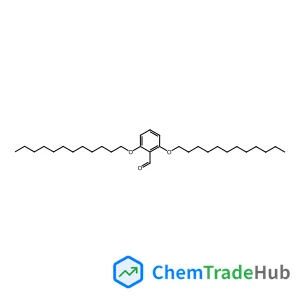
![4-[(2,4-Dihydroxyphenyl)diazenyl]-5-hydroxy-2,7-naphthalenedisulfonic acid structure](https://static.chemtradehub.com/structs/362/3627-01-8-79ac.webp "4-[(2,4-Dihydroxyphenyl)diazenyl]-5-hydroxy-2,7-naphthalenedisulfonic acid structure")
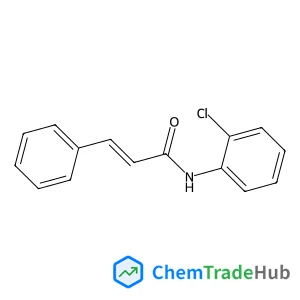
![2-[({[(2-Methyl-2-propanyl)oxy]carbonyl}amino)methyl]isonicotinic acid structure](https://static.chemtradehub.com/structs/473/473924-63-9-973b.webp "2-[({[(2-Methyl-2-propanyl)oxy]carbonyl}amino)methyl]isonicotinic acid structure")





