












Photoinduced polyaddition of multifunctional azides and alkynes
Literature Information
Publication Date
2013-04-24
DOI
10.1039/C3PY00356F
Impact Factor
5.582
Authors
Peter Burtscher, Norbert Moszner
View Original
Abstract
The photoinduced copper(I)-catalyzed polymerization of multifunctional azides and alkynes is facilitated by the photoreduction of copper(II) acetate generating copper(I) ions without using any additional photoinitiator. The polymerization can only be carried out in solution using at least 15 wt% of methanol. Depending on the catalyst concentration quantitative monomer conversions can be achieved allowing the determination of the mechanical properties. The bifunctional system consisting of a di-azide and di-alkyne exhibited the highest Young's modulus value of 1600 MPa.
Recommended Journals
Related Literature
Self-aggregation propensity of the Tat peptide revealed by UV-Vis, NMR and MD analyses
Sara Macchi, Riccardo Nifosì, Sebastiano Di Pietro, Claudia Boccardi, Francesca D'Autilia, Fabio Beltram, Francesco Cardarelli
2017-08-14
Communication
DOI: 10.1039/C7CP04320A
Evolution of nanostructured single-phase CoSb3 thin films by low-energy ion beam induced mixing and their thermoelectric performance
Srashti Gupta, Sanjeev K. Srivastava, Sankarakumar Amrithapandian, Tripurari S. Tripathi, Surya K. Tripathi, Chung-Li Dong, Chi-Liang Chen, Devesh K. Avasthi, Kandasami Asokan
2017-08-21
Paper
DOI: 10.1039/C7CP03527F
Quantum dots in photocatalytic applications: efficiently enhancing visible light photocatalytic activity by integrating CdO quantum dots as sensitizers
2017-08-25
Paper
DOI: 10.1039/C7CP05312F
Electrosorption at functional interfaces: from molecular-level interactions to electrochemical cell design
Xiao Su, T. Alan Hatton
2017-06-29
Perspective
DOI: 10.1039/C7CP02822A
Metallic borophene polytypes as lightweight anode materials for non-lithium-ion batteries
Pan Xiang, Wentao Zhang, Junfeng Li, Beibei Xiao, Longshan Li, Kuisen Deng
2017-08-22
Paper
DOI: 10.1039/C7CP04989G
The frequency-dependent AC photoresistance behavior of ZnO thin films grown on different sapphire substrates
Jorge L. Cholula-Díaz, José Barzola-Quiquia, Marcelo Videa, Chunhai Yin, Pablo Esquinazi
2017-08-17
Communication
DOI: 10.1039/C7CP04052K
Stabilization of ultra-small [Ag2]2+ and [Agm]n+ nano-clusters through negatively charged tetrahedrons in oxyfluoride glass networks: To largely enhance the luminescence quantum yields
Ronghua Ma, Xiaotong Chen, Xvsheng Qiao, Xianping Fan, Jincheng Du, Xianghua Zhang
2017-05-30
Paper
DOI: 10.1039/C7CP02531A
Emergence of novel hydrogen chlorides under high pressure
Gilles Frapper
2017-03-01
Paper
DOI: 10.1039/C6CP08708F
A comparison of the solvation structure and dynamics of the lithium ion in linear organic carbonates with different alkyl chain lengths
K. D. Fulfer, D. G. Kuroda
2017-08-29
Paper
DOI: 10.1039/C7CP05096H
Anisotropic carrier mobility in buckled two-dimensional GaN
Lijia Tong, Junjie He, Min Yang, Zheng Chen, Jing Zhang, Yanli Lu, Ziyuan Zhao
2017-08-10
Paper
DOI: 10.1039/C7CP04117A
You might also like
Compound Q&A
Is 6-(3-Fluorophenyl)picolinic acid (CAS: 887982-40-3) safe?
6-(3-Fluorophenyl)picolinic acid is generally considered safe for laboratory use...
887982-40-36-(3-Fluorophenyl)pi...
Compound Q&A
What industries use (3R)-3-Pyrrolidinol (CAS: 2799-21-5)?
(3R)-3-Pyrrolidinol is used in the pharmaceutical industry as a precursor for dr...
2799-21-5(3R)-3-Pyrrolidinol
Compound Q&A
What precautions should be taken when handling (4R,5R)-4,5-Diethoxycarbonyl-2,2-dimethyldioxolane (CAS: 59779-75-8)?
When handling (4R,5R)-4,5-Diethoxycarbonyl-2,2-dimethyldioxolane (CAS: 59779-75-...
59779-75-8(4R,5R)-4,5-Diethoxy...
Compound Q&A
How is 1-(6-Chloroimidazo[1,2-b]pyridazin-3-yl)ethanone (CAS: 90734-71-7) typically synthesized?
1-(6-Chloroimidazo[1,2-b]pyridazin-3-yl)ethanone is often synthesized via a mult...
90734-71-71-(6-Chloroimidazo[1...
Compound Q&A
What is the market or research trend for N-Ethyl-3,4-dimethylbenzylamine (CAS: 39180-83-1)?
The market for N-Ethyl-3,4-dimethylbenzylamine (CAS: 39180-83-1) remains steady,...
39180-83-1N-Ethyl-3,4-dimethyl...
Compound Q&A
What is Tert-butyl 3-(pyrrolidin-1-yl)azetidine-1-carboxylate (CAS: 1019008-21-9)?
Tert-butyl 3-(pyrrolidin-1-yl)azetidine-1-carboxylate is a chemical compound wit...
1019008-21-9Tert-butyl 3-(pyrrol...
Compound Q&A
What regulatory guidelines apply to 1-Bromo-3-chloro-2,4-dimethoxybenzene (CAS: 1228956-93-1)?
1-Bromo-3-chloro-2,4-dimethoxybenzene (CAS: 1228956-93-1) falls under the classi...
1228956-93-11-Bromo-3-chloro-2,4...
Compound Q&A
Is 8-Bromo-2-methyl-3,4-dihydroisoquinolin-1(2H)-one (CAS: 1368622-07-4) safe?
The safety of 8-Bromo-2-methyl-3,4-dihydroisoquinolin-1(2H)-one (CAS: 1368622-07...
1368622-07-48-Bromo-2-methyl-3,4...
Compound Q&A
Is Benzyl [(3S)-2,6-dioxo-3-piperidinyl]carbamate (CAS: 22785-43-9) safe?
Benzyl [(3S)-2,6-dioxo-3-piperidinyl]carbamate is generally safe when handled wi...
22785-43-9Benzyl [(3S)-2,6-dio...
Compound Q&A
How should 1-{[4-(4,4,5,5-Tetramethyl-1,3,2-dioxaborolan-2-yl)phenyl]sulfonyl}pyrrolidine (CAS: 928657-21-0) be stored?
1-{[4-(4,4,5,5-Tetramethyl-1,3,2-dioxaborolan-2-yl)phenyl]sulfonyl}pyrrolidine s...
928657-21-01-{[4-(4,4,5,5-Tetra...
Source Journal
Polymer Chemistry

CiteScore:
8.6
Self-citation Rate:
7.3%
Articles per Year:
457
Polymer Chemistry welcomes submissions in all areas of polymer science that have a strong focus on macromolecular chemistry. Manuscripts may cover a broad range of fields, yet no direct application focus is required.
Recommended Compounds
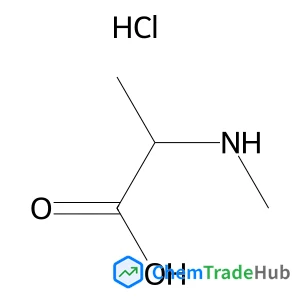
(R)-2-(Methylamino)propanoic acid hydrochloride
CAS Number:
1155878-14-0
Molecular Formula:
C4H10ClNO2
Recommended Suppliers



Disclaimer
This page provides academic journal information for reference and research purposes only. We are not affiliated with any journal publishers and do not handle publication submissions. For publication-related inquiries, please contact the respective journal publishers directly.
If you notice any inaccuracies in the information displayed, please contact us at support@chemtradehub.com. We will promptly review and address your concerns.