












Layer-by-Layer approaches for formation of smart self-healing materials
Literature Information
Publication Date
2013-02-21
DOI
10.1039/C3PY00088E
Impact Factor
5.582
Authors
Daria V. Andreeva
View Original
Abstract
This review is focused on the current achievements in application of Layer-by-Layer techniques for formation of materials with self-healing properties. We addressed the questions related to choice of materials for the Layer-by-Layer deposition, general aspects of multilayer formation, deposition techniques, and the mechanisms of self-healing of the multilayers. Layer-by-Layer deposited polyelectrolytes, hydrogels, conducting polymers, inorganic particles, hybrid organic–inorganic particles, and healing agents show great potential in formation of self-healing materials. In general, a non-covalently bonded Layer-by-Layer system exhibits high mobility of its components in response to external stimuli (humidity, T, pH, ionic strength, light, etc.) and, thus, can restore its integrity and heal defects. The review highlights the recent examples of Layer-by-Layer based design of self-healing materials for corrosion protection and biomedical application.
Related Literature
Bias induced spin transitions of spin crossover molecules: the role of charging effect
2017-02-16
Paper
DOI: 10.1039/C6CP08265C
Comparison of classical reaction paths and tunneling paths studied with the semiclassical instanton theory
Jan Meisner, Max N. Markmeyer, Matthias U. Bohner, Johannes Kästner
2017-08-08
Paper
DOI: 10.1039/C7CP03722H
Surface fouling as a mechanism for chemotaxis in isotropic catalytic swimmers
2017-09-05
Paper
DOI: 10.1039/C7CP05102F
Dynamics of ethyl cellulose nanoparticle self-assembly at the interface of a nematic liquid crystal droplet
Yining Han, Navid Bizmark, Marios A. Ioannidis
2017-08-30
Paper
DOI: 10.1039/C7CP04421F
Spin–orbit interaction and Renner–Teller effect in HCCCCH+ studied by high-resolution photoelectron spectroscopy
2017-08-22
Paper
DOI: 10.1039/C7CP04759B
Tailoring the physical properties of the mixtures of ionic liquids: a microscopic point of view
O. Palumbo, M. A. Navarra, J.-B. Brubach, P. Roy, A. Paolone
2017-02-27
Paper
DOI: 10.1039/C7CP00850C
Trapping and sensing of hazardous insecticides by chemically modified single walled carbon nanotubes
Arkamita Bandyopadhyay, Dibyajyoti Ghosh
2017-08-16
Paper
DOI: 10.1039/C7CP04980C
Photoinduced dimerization of a photosensory DNA-binding protein EL222 and its LOV domain
Akira Takakado, Yusuke Nakasone, Masahide Terazima
2017-08-18
Paper
DOI: 10.1039/C7CP03686H
Unifying hydrotropy under Gibbs phase rule
Seishi Shimizu
2017-05-11
Perspective
DOI: 10.1039/C7CP02132A
You might also like
Compound Q&A
Is 6-(3-Fluorophenyl)picolinic acid (CAS: 887982-40-3) safe?
6-(3-Fluorophenyl)picolinic acid is generally considered safe for laboratory use...
887982-40-36-(3-Fluorophenyl)pi...
Compound Q&A
What industries use (3R)-3-Pyrrolidinol (CAS: 2799-21-5)?
(3R)-3-Pyrrolidinol is used in the pharmaceutical industry as a precursor for dr...
2799-21-5(3R)-3-Pyrrolidinol
Compound Q&A
What precautions should be taken when handling (4R,5R)-4,5-Diethoxycarbonyl-2,2-dimethyldioxolane (CAS: 59779-75-8)?
When handling (4R,5R)-4,5-Diethoxycarbonyl-2,2-dimethyldioxolane (CAS: 59779-75-...
59779-75-8(4R,5R)-4,5-Diethoxy...
Compound Q&A
How is 1-(6-Chloroimidazo[1,2-b]pyridazin-3-yl)ethanone (CAS: 90734-71-7) typically synthesized?
1-(6-Chloroimidazo[1,2-b]pyridazin-3-yl)ethanone is often synthesized via a mult...
90734-71-71-(6-Chloroimidazo[1...
Compound Q&A
What is the market or research trend for N-Ethyl-3,4-dimethylbenzylamine (CAS: 39180-83-1)?
The market for N-Ethyl-3,4-dimethylbenzylamine (CAS: 39180-83-1) remains steady,...
39180-83-1N-Ethyl-3,4-dimethyl...
Compound Q&A
What is Tert-butyl 3-(pyrrolidin-1-yl)azetidine-1-carboxylate (CAS: 1019008-21-9)?
Tert-butyl 3-(pyrrolidin-1-yl)azetidine-1-carboxylate is a chemical compound wit...
1019008-21-9Tert-butyl 3-(pyrrol...
Compound Q&A
What regulatory guidelines apply to 1-Bromo-3-chloro-2,4-dimethoxybenzene (CAS: 1228956-93-1)?
1-Bromo-3-chloro-2,4-dimethoxybenzene (CAS: 1228956-93-1) falls under the classi...
1228956-93-11-Bromo-3-chloro-2,4...
Compound Q&A
Is 8-Bromo-2-methyl-3,4-dihydroisoquinolin-1(2H)-one (CAS: 1368622-07-4) safe?
The safety of 8-Bromo-2-methyl-3,4-dihydroisoquinolin-1(2H)-one (CAS: 1368622-07...
1368622-07-48-Bromo-2-methyl-3,4...
Compound Q&A
Is Benzyl [(3S)-2,6-dioxo-3-piperidinyl]carbamate (CAS: 22785-43-9) safe?
Benzyl [(3S)-2,6-dioxo-3-piperidinyl]carbamate is generally safe when handled wi...
22785-43-9Benzyl [(3S)-2,6-dio...
Compound Q&A
How should 1-{[4-(4,4,5,5-Tetramethyl-1,3,2-dioxaborolan-2-yl)phenyl]sulfonyl}pyrrolidine (CAS: 928657-21-0) be stored?
1-{[4-(4,4,5,5-Tetramethyl-1,3,2-dioxaborolan-2-yl)phenyl]sulfonyl}pyrrolidine s...
928657-21-01-{[4-(4,4,5,5-Tetra...
Source Journal
Polymer Chemistry

CiteScore:
8.6
Self-citation Rate:
7.3%
Articles per Year:
457
Polymer Chemistry welcomes submissions in all areas of polymer science that have a strong focus on macromolecular chemistry. Manuscripts may cover a broad range of fields, yet no direct application focus is required.
Recommended Compounds
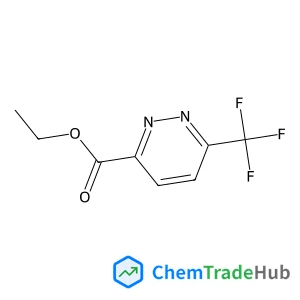
Ethyl 6-(trifluoromethyl)pyridazine-3-carboxylate
CAS Number:
1192155-06-8
Molecular Formula:
C8H7F3N2O2

Recommended Suppliers




Disclaimer
This page provides academic journal information for reference and research purposes only. We are not affiliated with any journal publishers and do not handle publication submissions. For publication-related inquiries, please contact the respective journal publishers directly.
If you notice any inaccuracies in the information displayed, please contact us at support@chemtradehub.com. We will promptly review and address your concerns.