


Enhanced acidity of cyclopenta-2,4-dienylborane and its Al and Ga analogues. The role of aromatization
Literature Information
Publication Date
2009-07-27
DOI
10.1039/B906045F
Impact Factor
3.676
Authors
Jean-Claude Guillemin
View Original
Abstract
The intrinsic acidity of cyclopenta-2,4-dienylborane and its Al and Ga analogues has been compared to that of cyclopentadiene by means of B3LYP/6-311+G(3df,2p)//CCSD/6-311+G(d,p) calculations. Substitution of one of the H atoms of the C(sp3)H2group of cyclopentadiene by an XH2 (X = B, Al, Ga) leads to an acidity enhancement which is significantly large for the boron derivative (95 kJ mol−1); but much smaller for the Al and Ga containing analogues. This acidity enhancement reflects the stabilization of the anion, in the substituted derivatives, due to a significant reinforcement of the C–X bond. This enhancement is however smaller than expected because, although XH2 (X = B, Al, Ga) substitution leads to a significant aromatization of the neutral compounds, the aromaticity significantly decreases upon deprotonation, whereas for the unsubstituted parent compound is the other way around. Cyclopenta-2,4-dienylborane and its Al and Ga analogues behave as highly fluxional systems.
Recommended Journals

Journal of Enzyme inhibition and Medicinal Chemistry

Photochemical & Photobiological Sciences

Lab on a Chip

Environmental Toxicology and Pharmacology

Nature Reviews Drug Discovery

Journal of Medical Biochemistry

CrystEngComm

Contact Lens & Anterior Eye

Current Pharmaceutical Biotechnology

Foundations of Chemistry
Related Literature
Double layer, diluent and anode effects upon the electrodeposition of aluminium from chloroaluminate based ionic liquids
Andrew P. Abbott, Fulian Qiu, Karl S. Ryder
2009-11-18
Paper
DOI: 10.1039/B917351J
Self-selective recovery of photoluminescence in amphiphilic polymer encapsulated PbS quantum dots
Haiguang Zhao, Mohamed Chaker, Dongling Ma
2010-10-14
Paper
DOI: 10.1039/C0CP01305F
The influence of π–π-stacking on the light-harvesting properties of perylene bisimide antennas that are covalently linked to a [60]fullerene
Christiane C. Hofmann, Stefan M. Lindner, Michaela Ruppert, Andreas Hirsch, Saif A. Haque, Mukundan Thelakkat, Jürgen Köhler
2010-10-07
Paper
DOI: 10.1039/C0CP01200A
Reply to the ‘Comment on “An explanation for the charge on water's surface”’ by R. Vácha, D. Horinek, R. Buchner, B. Winter and P. Jungwirth, Phys. Chem. Chem. Phys., 2010, 12, DOI: 10.1039/c001492c
Angus Gray-Weale, James K. Beattie
2010-09-23
Comment
DOI: 10.1039/C0CP00688B
Exploring wavepacket dynamics behind strong-field momentum-dependent photodissociation in CH2BrI+
Jesús González-Vázquez, Leticia González, Sarah R. Nichols, Thomas C. Weinacht, Tamás Rozgonyi
2010-09-29
Paper
DOI: 10.1039/C0CP00303D
Metal–organic frameworks as high-potential adsorbents for liquid-phase separations of olefins, alkylnaphthalenes and dichlorobenzenes
Luc Alaerts, Michael Maes, Monique A. van der Veen, Pierre A. Jacobs, Dirk E. De Vos
2009-03-05
Paper
DOI: 10.1039/B823233D
Internal mobilities and diffusion in an ionic liquid mixture
Céline Merlet, Paul A. Madden, Mathieu Salanne
2010-10-06
Paper
DOI: 10.1039/C0CP01412E
Solid and liquid charge-transfer complex formation between 1-methylnaphthalene and 1-alkyl-cyanopyridinium bis{(trifluoromethyl)sulfonyl}imide ionic liquids
Daniel T. Bowron, Simon J. Teat
2010-01-18
Paper
DOI: 10.1039/B921160H
Bulk defect chemistry and surface electronic behavior of Zn,Sn codoped In2O3 transparent conducting oxides
Steven P. Harvey, Thomas O. Mason, Christoph Körber, Andreas Klein
2009-03-10
Paper
DOI: 10.1039/B822149A
Growth dynamics and kinetics of monolayer and multilayer graphene on a 6H-SiC(0001) substrate
Siew Wai Poon, Wei Chen, Andrew T. S. Wee, Eng Soon Tok
2010-09-20
Paper
DOI: 10.1039/B927452A
You might also like
Compound Q&A
Is 6-(3-Fluorophenyl)picolinic acid (CAS: 887982-40-3) safe?
6-(3-Fluorophenyl)picolinic acid is generally considered safe for laboratory use...
887982-40-36-(3-Fluorophenyl)pi...
Compound Q&A
What industries use (3R)-3-Pyrrolidinol (CAS: 2799-21-5)?
(3R)-3-Pyrrolidinol is used in the pharmaceutical industry as a precursor for dr...
2799-21-5(3R)-3-Pyrrolidinol
Compound Q&A
What precautions should be taken when handling (4R,5R)-4,5-Diethoxycarbonyl-2,2-dimethyldioxolane (CAS: 59779-75-8)?
When handling (4R,5R)-4,5-Diethoxycarbonyl-2,2-dimethyldioxolane (CAS: 59779-75-...
59779-75-8(4R,5R)-4,5-Diethoxy...
Compound Q&A
How is 1-(6-Chloroimidazo[1,2-b]pyridazin-3-yl)ethanone (CAS: 90734-71-7) typically synthesized?
1-(6-Chloroimidazo[1,2-b]pyridazin-3-yl)ethanone is often synthesized via a mult...
90734-71-71-(6-Chloroimidazo[1...
Compound Q&A
What is the market or research trend for N-Ethyl-3,4-dimethylbenzylamine (CAS: 39180-83-1)?
The market for N-Ethyl-3,4-dimethylbenzylamine (CAS: 39180-83-1) remains steady,...
39180-83-1N-Ethyl-3,4-dimethyl...
Compound Q&A
What is Tert-butyl 3-(pyrrolidin-1-yl)azetidine-1-carboxylate (CAS: 1019008-21-9)?
Tert-butyl 3-(pyrrolidin-1-yl)azetidine-1-carboxylate is a chemical compound wit...
1019008-21-9Tert-butyl 3-(pyrrol...
Compound Q&A
What regulatory guidelines apply to 1-Bromo-3-chloro-2,4-dimethoxybenzene (CAS: 1228956-93-1)?
1-Bromo-3-chloro-2,4-dimethoxybenzene (CAS: 1228956-93-1) falls under the classi...
1228956-93-11-Bromo-3-chloro-2,4...
Compound Q&A
Is 8-Bromo-2-methyl-3,4-dihydroisoquinolin-1(2H)-one (CAS: 1368622-07-4) safe?
The safety of 8-Bromo-2-methyl-3,4-dihydroisoquinolin-1(2H)-one (CAS: 1368622-07...
1368622-07-48-Bromo-2-methyl-3,4...
Compound Q&A
Is Benzyl [(3S)-2,6-dioxo-3-piperidinyl]carbamate (CAS: 22785-43-9) safe?
Benzyl [(3S)-2,6-dioxo-3-piperidinyl]carbamate is generally safe when handled wi...
22785-43-9Benzyl [(3S)-2,6-dio...
Compound Q&A
How should 1-{[4-(4,4,5,5-Tetramethyl-1,3,2-dioxaborolan-2-yl)phenyl]sulfonyl}pyrrolidine (CAS: 928657-21-0) be stored?
1-{[4-(4,4,5,5-Tetramethyl-1,3,2-dioxaborolan-2-yl)phenyl]sulfonyl}pyrrolidine s...
928657-21-01-{[4-(4,4,5,5-Tetra...
Source Journal
Physical Chemistry Chemical Physics

CiteScore:
5.5
Self-citation Rate:
10.3%
Articles per Year:
3036
Physical Chemistry Chemical Physics (PCCP) is an international journal co-owned by 19 physical chemistry and physics societies from around the world. This journal publishes original, cutting-edge research in physical chemistry, chemical physics and biophysical chemistry. To be suitable for publication in PCCP, articles must include significant innovation and/or insight into physical chemistry; this is the most important criterion that reviewers and Editors will judge against when evaluating submissions. The journal has a broad scope and welcomes contributions spanning experiment, theory, computation and data science. Topical coverage includes spectroscopy, dynamics, kinetics, statistical mechanics, thermodynamics, electrochemistry, catalysis, surface science, quantum mechanics, quantum computing and machine learning. Interdisciplinary research areas such as polymers and soft matter, materials, nanoscience, energy, surfaces/interfaces, and biophysical chemistry are welcomed if they demonstrate significant innovation and/or insight into physical chemistry. Joined experimental/theoretical studies are particularly appreciated when complementary and based on up-to-date approaches.
Recommended Compounds
![2-[({[(2-Methyl-2-propanyl)oxy]carbonyl}amino)methyl]isonicotinic acid structure](https://static.chemtradehub.com/structs/473/473924-63-9-973b.webp "2-[({[(2-Methyl-2-propanyl)oxy]carbonyl}amino)methyl]isonicotinic acid structure")
2-[({[(2-Methyl-2-propanyl)oxy]carbonyl}amino)methyl]isonicotinic acid
CAS Number:
473924-63-9
Molecular Formula:
C12H16N2O4
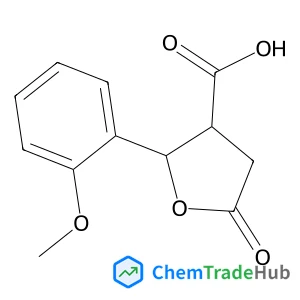
trans-2-(2-Methoxyphenyl)-5-oxotetrahydrofuran-3-carboxylic acid
CAS Number:
99226-02-5
Molecular Formula:
C12H12O5
Recommended Suppliers




Disclaimer
This page provides academic journal information for reference and research purposes only. We are not affiliated with any journal publishers and do not handle publication submissions. For publication-related inquiries, please contact the respective journal publishers directly.
If you notice any inaccuracies in the information displayed, please contact us at support@chemtradehub.com. We will promptly review and address your concerns.