












Self-selective recovery of photoluminescence in amphiphilic polymer encapsulated PbS quantum dots
Literature Information
Publication Date
2010-10-14
DOI
10.1039/C0CP01305F
Impact Factor
3.676
Authors
Haiguang Zhao, Mohamed Chaker, Dongling Ma
View Original
Abstract
Self-selected recovery of the photoluminescence (PL) of amphiphilic polymer encapsulated PbS quantum dots (QDs) was observed in water for the first time and possible mechanisms were proposed based on investigations by means of transmission electron microscopy, X-ray photoelectron spectroscopy (XPS), X-ray diffraction and fluorescence spectroscopy. Water-soluble PbS QDs were synthesized by transferring monodispersed QDs capped with hydrophobic ligands of oleylamine from an organic solvent into water via amphiphilic polymers poly(maleic anhydride-alt-1-octadecene-co-poly(ethylene glycol)). The water transfer process leads to a double size distribution (5.6 ± 0.9 nm and 2.7 ± 0.4 nm), attributed to ligand etching together with Ostwald ripening, as well as the fast decay of PL. The automatic recovery of the PL in PbS QDs stored in water in the dark for 3 months was only observed for the subset of smaller QDs and is largely due to the removal of surface defects with aging, as evidenced by the decreased percentage of unpassivated surface atoms from XPS studies. In contrast, the PL of the subset of larger QDs in the same sample does not self-recover in water and can only be slightly recovered by transferring them into environments with less external quenches. The results strongly suggest that it is the surface defect in the larger QDs themselves, introduced during Ostwald ripening, that is primarily responsible for their non-emitting status or rather low PL intensity under different conditions. The increase of unpassivated Pb atoms in larger PbS QDs after the 3 month aging has been confirmed by XPS, which explains their non-recovery behavior in water. The PL-recovered QD sample in water is very stable and shows comparable photostability to the initial QDs dispersed in an organic phase.
Related Literature
Insights into the dissociative ionization of glycine by PEPICO experiments
Paola Bolognesi, Alicja Domaracka, Patrick Rousseau, Mattea Carmen Castrovilli, Robert Richter, Subhojyoti Chatterjee, Feng Wang, Lorenzo Avaldi
2018-08-15
Paper
DOI: 10.1039/C8CP03473G
Anomalous fluorescence enhancement and fluorescence quenching of graphene quantum dots by single walled carbon nanotubes
Ruma Das, Gone Rajender
2018-01-10
Paper
DOI: 10.1039/C7CP06994D
Thermally induced hopping model for long-range triplet excitation energy transfer in DNA
2018-01-26
Paper
DOI: 10.1039/C7CP07811K
Effects of point defects on the magnetoelectronic structures of MXenes from first principles
Arkamita Bandyopadhyay, Dibyajyoti Ghosh
2018-01-04
Paper
DOI: 10.1039/C7CP07165E
The last link of the x-aminobutyric acid series: the five conformers of β-aminobutyric acid
I. León, I. Peña, C. Cabezas, E. R. Alonso, J. L. Alonso
2018-05-11
Paper
DOI: 10.1039/C8CP01734D
Friction induced structural transformations of water monolayers at graphene/Cu interfaces
Haifang Cai, Yufeng Guo, Wanlin Guo
2018-01-09
Paper
DOI: 10.1039/C7CP08035B
A photoelectron imaging and quantum chemistry study of the deprotonated indole anion
Michael A. Parkes, Jonathan Crellin, Alice Henley, Helen H. Fielding
2018-05-21
Paper
DOI: 10.1039/C8CP01902A
Polydopamine and eumelanin models in various oxidation states
Chun-Teh Chen, Markus J. Buehler
2018-10-09
Paper
DOI: 10.1039/C8CP05037F
Guanidinium/ammonium competition and proton transfer in the interaction of the amino acid arginine with the tetracarboxylic 18-crown-6 ionophore
Juan Ramón Avilés-Moreno, Giel Berden, Jos Oomens, Bruno Martínez-Haya
2018-01-05
Paper
DOI: 10.1039/C7CP07975C
You might also like
Compound Q&A
Is 6-(3-Fluorophenyl)picolinic acid (CAS: 887982-40-3) safe?
6-(3-Fluorophenyl)picolinic acid is generally considered safe for laboratory use...
887982-40-36-(3-Fluorophenyl)pi...
Compound Q&A
What industries use (3R)-3-Pyrrolidinol (CAS: 2799-21-5)?
(3R)-3-Pyrrolidinol is used in the pharmaceutical industry as a precursor for dr...
2799-21-5(3R)-3-Pyrrolidinol
Compound Q&A
What precautions should be taken when handling (4R,5R)-4,5-Diethoxycarbonyl-2,2-dimethyldioxolane (CAS: 59779-75-8)?
When handling (4R,5R)-4,5-Diethoxycarbonyl-2,2-dimethyldioxolane (CAS: 59779-75-...
59779-75-8(4R,5R)-4,5-Diethoxy...
Compound Q&A
How is 1-(6-Chloroimidazo[1,2-b]pyridazin-3-yl)ethanone (CAS: 90734-71-7) typically synthesized?
1-(6-Chloroimidazo[1,2-b]pyridazin-3-yl)ethanone is often synthesized via a mult...
90734-71-71-(6-Chloroimidazo[1...
Compound Q&A
What is the market or research trend for N-Ethyl-3,4-dimethylbenzylamine (CAS: 39180-83-1)?
The market for N-Ethyl-3,4-dimethylbenzylamine (CAS: 39180-83-1) remains steady,...
39180-83-1N-Ethyl-3,4-dimethyl...
Compound Q&A
What is Tert-butyl 3-(pyrrolidin-1-yl)azetidine-1-carboxylate (CAS: 1019008-21-9)?
Tert-butyl 3-(pyrrolidin-1-yl)azetidine-1-carboxylate is a chemical compound wit...
1019008-21-9Tert-butyl 3-(pyrrol...
Compound Q&A
What regulatory guidelines apply to 1-Bromo-3-chloro-2,4-dimethoxybenzene (CAS: 1228956-93-1)?
1-Bromo-3-chloro-2,4-dimethoxybenzene (CAS: 1228956-93-1) falls under the classi...
1228956-93-11-Bromo-3-chloro-2,4...
Compound Q&A
Is 8-Bromo-2-methyl-3,4-dihydroisoquinolin-1(2H)-one (CAS: 1368622-07-4) safe?
The safety of 8-Bromo-2-methyl-3,4-dihydroisoquinolin-1(2H)-one (CAS: 1368622-07...
1368622-07-48-Bromo-2-methyl-3,4...
Compound Q&A
Is Benzyl [(3S)-2,6-dioxo-3-piperidinyl]carbamate (CAS: 22785-43-9) safe?
Benzyl [(3S)-2,6-dioxo-3-piperidinyl]carbamate is generally safe when handled wi...
22785-43-9Benzyl [(3S)-2,6-dio...
Compound Q&A
How should 1-{[4-(4,4,5,5-Tetramethyl-1,3,2-dioxaborolan-2-yl)phenyl]sulfonyl}pyrrolidine (CAS: 928657-21-0) be stored?
1-{[4-(4,4,5,5-Tetramethyl-1,3,2-dioxaborolan-2-yl)phenyl]sulfonyl}pyrrolidine s...
928657-21-01-{[4-(4,4,5,5-Tetra...
Source Journal
Physical Chemistry Chemical Physics

CiteScore:
5.5
Self-citation Rate:
10.3%
Articles per Year:
3036
Physical Chemistry Chemical Physics (PCCP) is an international journal co-owned by 19 physical chemistry and physics societies from around the world. This journal publishes original, cutting-edge research in physical chemistry, chemical physics and biophysical chemistry. To be suitable for publication in PCCP, articles must include significant innovation and/or insight into physical chemistry; this is the most important criterion that reviewers and Editors will judge against when evaluating submissions. The journal has a broad scope and welcomes contributions spanning experiment, theory, computation and data science. Topical coverage includes spectroscopy, dynamics, kinetics, statistical mechanics, thermodynamics, electrochemistry, catalysis, surface science, quantum mechanics, quantum computing and machine learning. Interdisciplinary research areas such as polymers and soft matter, materials, nanoscience, energy, surfaces/interfaces, and biophysical chemistry are welcomed if they demonstrate significant innovation and/or insight into physical chemistry. Joined experimental/theoretical studies are particularly appreciated when complementary and based on up-to-date approaches.
Recommended Compounds
![Benzyl spiro[indole-3,4'-piperidine]-1(2H)-carboxylate hydrochloride (1:1) structure](https://static.chemtradehub.com/structs/159/159635-46-8-8de0.webp "Benzyl spiro[indole-3,4'-piperidine]-1(2H)-carboxylate hydrochloride (1:1) structure")
Benzyl spiro[indole-3,4'-piperidine]-1(2H)-carboxylate hydrochloride (1:1)
CAS Number:
159635-46-8
Molecular Formula:
C20H23ClN2O2
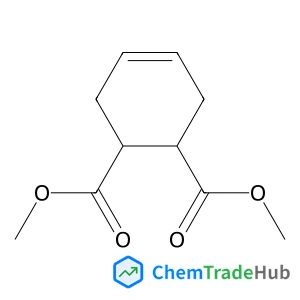
4-Cyclohexene-1,2-dicarboxylic acid, 1,2-dimethyl ester, (1R,2R)-rel-
CAS Number:
17673-68-6
Molecular Formula:
C10H14O4
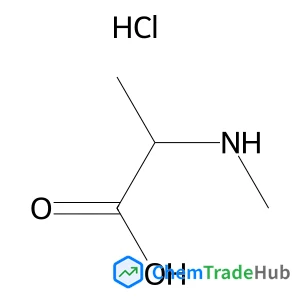
(R)-2-(Methylamino)propanoic acid hydrochloride
CAS Number:
1155878-14-0
Molecular Formula:
C4H10ClNO2
Recommended Suppliers






Disclaimer
This page provides academic journal information for reference and research purposes only. We are not affiliated with any journal publishers and do not handle publication submissions. For publication-related inquiries, please contact the respective journal publishers directly.
If you notice any inaccuracies in the information displayed, please contact us at support@chemtradehub.com. We will promptly review and address your concerns.