


Solid and liquid charge-transfer complex formation between 1-methylnaphthalene and 1-alkyl-cyanopyridinium bis{(trifluoromethyl)sulfonyl}imide ionic liquids
Literature Information
Publication Date
2010-01-18
DOI
10.1039/B921160H
Impact Factor
3.676
Authors
Daniel T. Bowron, Simon J. Teat
View Original
Abstract
Liquid charge-transfer (CT) complexes were observed to form on contacting electron-rich aromatics with electron withdrawing group appended 1-alkyl-4-cyanopyridinium ionic liquids (ILs). Cooling below the melting point of the ionic liquid resulted in crystallisation of ionic liquid from the complex for 2-cyano and 3-cyano pyridinium isomers and in the formation of a 1 : 1 IL : aromatic crystalline CT-complex with the 4-cyanopyridinium isomer. The liquid structure of a 1 : 1 mixture of 1-methyl-4-cyanopyridinium bis{(trifluoromethyl)sulfonyl}imide with 1-methylnaphthalene has been probed by neutron diffraction experiments and molecular dynamics simulations. A high degree of correlation between the experimental data and the simulations was found with a significant displacement of the anions from around the cation by the aromatic species and the resulting structure having π–π stacks between the cations and the aromatic.
Recommended Journals

Bio-Medical Materials and Engineering

Advanced Powder Technology

Construction and Building Materials

Main Group Metal Chemistry

Computational Materials Science

Cement and Concrete Composites

Diamond and Related Materials

Journal of Physical Organic Chemistry

Journal of Computer-Aided Molecular Design

Advanced Composite Materials
Related Literature
On the physics of both surface overcharging and charge reversal at heterophase interfaces
Zhi-Yong Wang, Pengli Zhang, Zengwei Ma
2018-01-04
Paper
DOI: 10.1039/C7CP08117K
The role played by ethanol in achieving the successive versus simultaneous mechanism of excited-state double proton transfer in dipyrido[2,3-a:3′,2′-i]carbazole
Jianhui Han, Xiaochun Liu, Hui Li, Hang Yin, Huifang Zhao, Lina Ma, Yaodong Song, Ying Shi
2018-10-03
Paper
DOI: 10.1039/C8CP05716H
Thermally induced hopping model for long-range triplet excitation energy transfer in DNA
2018-01-26
Paper
DOI: 10.1039/C7CP07811K
Ab initio calculations of heavy-actinide hexahalide compounds: do these heavy actinides behave like their isoelectronic lanthanide analogues?
Cristian Celis-Barros, María J. Beltrán-Leiva
2017-12-22
Paper
DOI: 10.1039/C7CP06585J
Guanidinium/ammonium competition and proton transfer in the interaction of the amino acid arginine with the tetracarboxylic 18-crown-6 ionophore
Juan Ramón Avilés-Moreno, Giel Berden, Jos Oomens, Bruno Martínez-Haya
2018-01-05
Paper
DOI: 10.1039/C7CP07975C
Insights into the dissociative ionization of glycine by PEPICO experiments
Paola Bolognesi, Alicja Domaracka, Patrick Rousseau, Mattea Carmen Castrovilli, Robert Richter, Subhojyoti Chatterjee, Feng Wang, Lorenzo Avaldi
2018-08-15
Paper
DOI: 10.1039/C8CP03473G
Theoretical study on photo-induced processes of 1-methyl-3-(N-(1,8-naphthalimidyl)ethyl)imidazolium halide species: an application of constrained density functional theory
Takao Otsuka, Hironori Izawa, Kenji Morihashi
2017-12-08
Paper
DOI: 10.1039/C7CP07877C
A hybrid hydrazine redox flow battery with a reversible electron acceptor
Swapnil Varhade, Zahid M. Bhat, Ravikumar Thimmappa, Mruthyunjayachari C. Devendrachari, Alagar R. Kottaichamy, Manu Gautam, Shahid P. Shafi, Musthafa Ottakam Thotiyl
2018-07-31
Paper
DOI: 10.1039/C8CP03768J
Ultrafast fluorescence dynamics of DNA-based silver clusters
Zakhar Reveguk, Roman Lysenko, Ruslan Ramazanov, Alexei Kononov
2018-10-11
Paper
DOI: 10.1039/C8CP05727C
You might also like
Compound Q&A
Is 6-(3-Fluorophenyl)picolinic acid (CAS: 887982-40-3) safe?
6-(3-Fluorophenyl)picolinic acid is generally considered safe for laboratory use...
887982-40-36-(3-Fluorophenyl)pi...
Compound Q&A
What industries use (3R)-3-Pyrrolidinol (CAS: 2799-21-5)?
(3R)-3-Pyrrolidinol is used in the pharmaceutical industry as a precursor for dr...
2799-21-5(3R)-3-Pyrrolidinol
Compound Q&A
What precautions should be taken when handling (4R,5R)-4,5-Diethoxycarbonyl-2,2-dimethyldioxolane (CAS: 59779-75-8)?
When handling (4R,5R)-4,5-Diethoxycarbonyl-2,2-dimethyldioxolane (CAS: 59779-75-...
59779-75-8(4R,5R)-4,5-Diethoxy...
Compound Q&A
How is 1-(6-Chloroimidazo[1,2-b]pyridazin-3-yl)ethanone (CAS: 90734-71-7) typically synthesized?
1-(6-Chloroimidazo[1,2-b]pyridazin-3-yl)ethanone is often synthesized via a mult...
90734-71-71-(6-Chloroimidazo[1...
Compound Q&A
What is the market or research trend for N-Ethyl-3,4-dimethylbenzylamine (CAS: 39180-83-1)?
The market for N-Ethyl-3,4-dimethylbenzylamine (CAS: 39180-83-1) remains steady,...
39180-83-1N-Ethyl-3,4-dimethyl...
Compound Q&A
What is Tert-butyl 3-(pyrrolidin-1-yl)azetidine-1-carboxylate (CAS: 1019008-21-9)?
Tert-butyl 3-(pyrrolidin-1-yl)azetidine-1-carboxylate is a chemical compound wit...
1019008-21-9Tert-butyl 3-(pyrrol...
Compound Q&A
What regulatory guidelines apply to 1-Bromo-3-chloro-2,4-dimethoxybenzene (CAS: 1228956-93-1)?
1-Bromo-3-chloro-2,4-dimethoxybenzene (CAS: 1228956-93-1) falls under the classi...
1228956-93-11-Bromo-3-chloro-2,4...
Compound Q&A
Is 8-Bromo-2-methyl-3,4-dihydroisoquinolin-1(2H)-one (CAS: 1368622-07-4) safe?
The safety of 8-Bromo-2-methyl-3,4-dihydroisoquinolin-1(2H)-one (CAS: 1368622-07...
1368622-07-48-Bromo-2-methyl-3,4...
Compound Q&A
Is Benzyl [(3S)-2,6-dioxo-3-piperidinyl]carbamate (CAS: 22785-43-9) safe?
Benzyl [(3S)-2,6-dioxo-3-piperidinyl]carbamate is generally safe when handled wi...
22785-43-9Benzyl [(3S)-2,6-dio...
Compound Q&A
How should 1-{[4-(4,4,5,5-Tetramethyl-1,3,2-dioxaborolan-2-yl)phenyl]sulfonyl}pyrrolidine (CAS: 928657-21-0) be stored?
1-{[4-(4,4,5,5-Tetramethyl-1,3,2-dioxaborolan-2-yl)phenyl]sulfonyl}pyrrolidine s...
928657-21-01-{[4-(4,4,5,5-Tetra...
Source Journal
Physical Chemistry Chemical Physics

CiteScore:
5.5
Self-citation Rate:
10.3%
Articles per Year:
3036
Physical Chemistry Chemical Physics (PCCP) is an international journal co-owned by 19 physical chemistry and physics societies from around the world. This journal publishes original, cutting-edge research in physical chemistry, chemical physics and biophysical chemistry. To be suitable for publication in PCCP, articles must include significant innovation and/or insight into physical chemistry; this is the most important criterion that reviewers and Editors will judge against when evaluating submissions. The journal has a broad scope and welcomes contributions spanning experiment, theory, computation and data science. Topical coverage includes spectroscopy, dynamics, kinetics, statistical mechanics, thermodynamics, electrochemistry, catalysis, surface science, quantum mechanics, quantum computing and machine learning. Interdisciplinary research areas such as polymers and soft matter, materials, nanoscience, energy, surfaces/interfaces, and biophysical chemistry are welcomed if they demonstrate significant innovation and/or insight into physical chemistry. Joined experimental/theoretical studies are particularly appreciated when complementary and based on up-to-date approaches.
Recommended Compounds
![2-[({[(2-Methyl-2-propanyl)oxy]carbonyl}amino)methyl]isonicotinic acid structure](https://static.chemtradehub.com/structs/473/473924-63-9-973b.webp "2-[({[(2-Methyl-2-propanyl)oxy]carbonyl}amino)methyl]isonicotinic acid structure")
2-[({[(2-Methyl-2-propanyl)oxy]carbonyl}amino)methyl]isonicotinic acid
CAS Number:
473924-63-9
Molecular Formula:
C12H16N2O4
![[4-Chloro-3-(diethylcarbamoyl)phenyl]boronic acid structure](https://static.chemtradehub.com/structs/871/871332-68-2-0e3b.webp "[4-Chloro-3-(diethylcarbamoyl)phenyl]boronic acid structure")
[4-Chloro-3-(diethylcarbamoyl)phenyl]boronic acid
CAS Number:
871332-68-2
Molecular Formula:
C11H15BClNO3
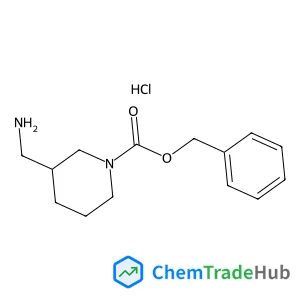
Benzyl 3-(aminomethyl)piperidine-1-carboxylate hydrochloride
CAS Number:
1186663-23-9
Molecular Formula:
C14H21ClN2O2
Recommended Suppliers





Disclaimer
This page provides academic journal information for reference and research purposes only. We are not affiliated with any journal publishers and do not handle publication submissions. For publication-related inquiries, please contact the respective journal publishers directly.
If you notice any inaccuracies in the information displayed, please contact us at support@chemtradehub.com. We will promptly review and address your concerns.