












Growth dynamics and kinetics of monolayer and multilayer graphene on a 6H-SiC(0001) substrate
Literature Information
Publication Date
2010-09-20
DOI
10.1039/B927452A
Impact Factor
3.676
Authors
Siew Wai Poon, Wei Chen, Andrew T. S. Wee, Eng Soon Tok
View Original
Abstract
Using Scanning Tunnelling Microscopy (STM), the transformation from the commonly known carbon-rich (6√3×6√3)R30° reconstructed surface to graphene on the 6H-SiC(0001) substrate is systematically investigated with the aid of adsorbing cobalt (Co) which acts as a tracer to map the evolution of these surfaces. The formation of graphene is observed to begin from the step-edges as Si desorption occurs and the growth process continues akin to that of a step flow growth mode. Analysis of the surface step-height evolution at various stages of graphitization shows that as the initial (6√3×6√3)R30° surface converts to form graphene, three Si–C bilayers beneath collapse to regenerate a C-rich structure which also has a (6√3×6√3)R30° periodicity at the interface between graphene and the SiC bulk. Based on these observations, a structural mechanism for the growth of mono- and multilayer graphene is proposed. In addition, we also examine the rate at which the initial (6√3×6√3)R30° surface coverts to graphene as a function of time and temperature. Kinetic analysis of the growth process reveals that the transformation occurs with an activation energy of 3.0 ± 0.4 eV, a value close to the breaking of a Si–C bond.
Related Literature
Pressure-induced chemical reactions in the N2(H2)2 compound: from the N2 and H2 species to ammonia and back down into hydrazine
D. Laniel, V. Svitlyk, G. Weck, P. Loubeyre
2018-01-09
Paper
DOI: 10.1039/C7CP07989C
Multiionic effects on the capacitance of porous electrodes
M. L. Jiménez, S. Ahualli, P. Arenas-Guerrero, M. M. Fernández, G. Iglesias, A. V. Delgado
2018-01-16
Paper
DOI: 10.1039/C7CP06778J
Photophysics and peripheral ring size dependent aggregate emission of cross-conjugated enediynes: applications to white light emission and vapor sensing
Anuja Singh, Avik Kumar Pati, Ashok Kumar Mishra
2018-01-05
Paper
DOI: 10.1039/C7CP08091C
Thermal reduction of ceria nanostructures on rhodium(111) and re-oxidation by CO2
Benjamin Hagman, Uta Hejral, Johan Gustafson
2018-07-03
Paper
DOI: 10.1039/C8CP01505H
Anomalous fluorescence enhancement and fluorescence quenching of graphene quantum dots by single walled carbon nanotubes
Ruma Das, Gone Rajender
2018-01-10
Paper
DOI: 10.1039/C7CP06994D
Correction: Necessary and sufficient conditions for the successful three-phase photocatalytic reduction of CO2 by H2O over heterogeneous photocatalysts
2018-07-26
Correction
DOI: 10.1039/C8CP91824D
La–La bonded dimetallofullerenes [La2@C2n]−: species for stabilizing C2n (2n = 92–96) besides La2C2@C2n
Qiao-Zhi Li, Ling He, Shigeru Nagase, Xiang Zhao
2018-04-23
Paper
DOI: 10.1039/C8CP01371C
Anisotropic and amphoteric characteristics of diverse carbenes
D. ChangMo Yang, Jenica Marie L. Madridejos, Amir Hajibabaei, Chunggi Baig, Kwang S. Kim
2018-03-15
Paper
DOI: 10.1039/C8CP00457A
Unravelling the mechanisms of interference between overlapping resonances
2018-01-10
Communication
DOI: 10.1039/C7CP07769F
You might also like
Compound Q&A
Is 6-(3-Fluorophenyl)picolinic acid (CAS: 887982-40-3) safe?
6-(3-Fluorophenyl)picolinic acid is generally considered safe for laboratory use...
887982-40-36-(3-Fluorophenyl)pi...
Compound Q&A
What industries use (3R)-3-Pyrrolidinol (CAS: 2799-21-5)?
(3R)-3-Pyrrolidinol is used in the pharmaceutical industry as a precursor for dr...
2799-21-5(3R)-3-Pyrrolidinol
Compound Q&A
What precautions should be taken when handling (4R,5R)-4,5-Diethoxycarbonyl-2,2-dimethyldioxolane (CAS: 59779-75-8)?
When handling (4R,5R)-4,5-Diethoxycarbonyl-2,2-dimethyldioxolane (CAS: 59779-75-...
59779-75-8(4R,5R)-4,5-Diethoxy...
Compound Q&A
How is 1-(6-Chloroimidazo[1,2-b]pyridazin-3-yl)ethanone (CAS: 90734-71-7) typically synthesized?
1-(6-Chloroimidazo[1,2-b]pyridazin-3-yl)ethanone is often synthesized via a mult...
90734-71-71-(6-Chloroimidazo[1...
Compound Q&A
What is the market or research trend for N-Ethyl-3,4-dimethylbenzylamine (CAS: 39180-83-1)?
The market for N-Ethyl-3,4-dimethylbenzylamine (CAS: 39180-83-1) remains steady,...
39180-83-1N-Ethyl-3,4-dimethyl...
Compound Q&A
What is Tert-butyl 3-(pyrrolidin-1-yl)azetidine-1-carboxylate (CAS: 1019008-21-9)?
Tert-butyl 3-(pyrrolidin-1-yl)azetidine-1-carboxylate is a chemical compound wit...
1019008-21-9Tert-butyl 3-(pyrrol...
Compound Q&A
What regulatory guidelines apply to 1-Bromo-3-chloro-2,4-dimethoxybenzene (CAS: 1228956-93-1)?
1-Bromo-3-chloro-2,4-dimethoxybenzene (CAS: 1228956-93-1) falls under the classi...
1228956-93-11-Bromo-3-chloro-2,4...
Compound Q&A
Is 8-Bromo-2-methyl-3,4-dihydroisoquinolin-1(2H)-one (CAS: 1368622-07-4) safe?
The safety of 8-Bromo-2-methyl-3,4-dihydroisoquinolin-1(2H)-one (CAS: 1368622-07...
1368622-07-48-Bromo-2-methyl-3,4...
Compound Q&A
Is Benzyl [(3S)-2,6-dioxo-3-piperidinyl]carbamate (CAS: 22785-43-9) safe?
Benzyl [(3S)-2,6-dioxo-3-piperidinyl]carbamate is generally safe when handled wi...
22785-43-9Benzyl [(3S)-2,6-dio...
Compound Q&A
How should 1-{[4-(4,4,5,5-Tetramethyl-1,3,2-dioxaborolan-2-yl)phenyl]sulfonyl}pyrrolidine (CAS: 928657-21-0) be stored?
1-{[4-(4,4,5,5-Tetramethyl-1,3,2-dioxaborolan-2-yl)phenyl]sulfonyl}pyrrolidine s...
928657-21-01-{[4-(4,4,5,5-Tetra...
Source Journal
Physical Chemistry Chemical Physics

CiteScore:
5.5
Self-citation Rate:
10.3%
Articles per Year:
3036
Physical Chemistry Chemical Physics (PCCP) is an international journal co-owned by 19 physical chemistry and physics societies from around the world. This journal publishes original, cutting-edge research in physical chemistry, chemical physics and biophysical chemistry. To be suitable for publication in PCCP, articles must include significant innovation and/or insight into physical chemistry; this is the most important criterion that reviewers and Editors will judge against when evaluating submissions. The journal has a broad scope and welcomes contributions spanning experiment, theory, computation and data science. Topical coverage includes spectroscopy, dynamics, kinetics, statistical mechanics, thermodynamics, electrochemistry, catalysis, surface science, quantum mechanics, quantum computing and machine learning. Interdisciplinary research areas such as polymers and soft matter, materials, nanoscience, energy, surfaces/interfaces, and biophysical chemistry are welcomed if they demonstrate significant innovation and/or insight into physical chemistry. Joined experimental/theoretical studies are particularly appreciated when complementary and based on up-to-date approaches.
Recommended Compounds
![2-Methyl-2-propanyl [(2S)-1-hydroxy-3-(4-hydroxyphenyl)-2-propanyl]carbamate structure](https://static.chemtradehub.com/structs/833/83345-46-4-eec2.webp "2-Methyl-2-propanyl [(2S)-1-hydroxy-3-(4-hydroxyphenyl)-2-propanyl]carbamate structure")
2-Methyl-2-propanyl [(2S)-1-hydroxy-3-(4-hydroxyphenyl)-2-propanyl]carbamate
CAS Number:
83345-46-4
Molecular Formula:
C14H21NO4
![[4-Chloro-3-(diethylcarbamoyl)phenyl]boronic acid structure](https://static.chemtradehub.com/structs/871/871332-68-2-0e3b.webp "[4-Chloro-3-(diethylcarbamoyl)phenyl]boronic acid structure")
[4-Chloro-3-(diethylcarbamoyl)phenyl]boronic acid
CAS Number:
871332-68-2
Molecular Formula:
C11H15BClNO3
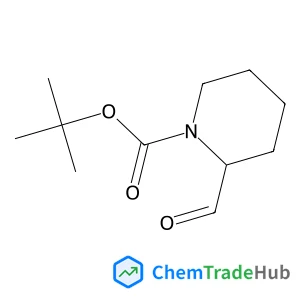
2-Methyl-2-propanyl (2R)-2-formyl-1-piperidinecarboxylate
CAS Number:
134526-69-5
Molecular Formula:
C11H19NO3
Recommended Suppliers






Disclaimer
This page provides academic journal information for reference and research purposes only. We are not affiliated with any journal publishers and do not handle publication submissions. For publication-related inquiries, please contact the respective journal publishers directly.
If you notice any inaccuracies in the information displayed, please contact us at support@chemtradehub.com. We will promptly review and address your concerns.