












Double layer, diluent and anode effects upon the electrodeposition of aluminium from chloroaluminate based ionic liquids
Literature Information
Publication Date
2009-11-18
DOI
10.1039/B917351J
Impact Factor
3.676
Authors
Andrew P. Abbott, Fulian Qiu, Karl S. Ryder
View Original
Abstract
The deposition of aluminium from a chloroaluminate based ionic liquid was studied to elucidate the effect of a diluent (toluene) and electrolyte (LiCl) on the deposit morphology. A wide variety of analytical techniques was applied to this system to determine the speciation and mechanism of material growth. These included: 27Al NMR, FAB-MS, cyclic voltammetry, chronocoulometry, chronopotentiometry, scanning electron microscopy and atomic force microscopy. It was found that under-potential deposition (upd) causes a change in the way in which metal grows on the electrode surface. Metal grows in two regimes which are believed to be nano-material and bulk material. The addition of toluene causes a change in speciation and a decrease in upd which in turn changes the morphology of the deposit obtained and can lead to mirror finish aluminium. The addition of LiCl has the opposite effect encouraging upd and leading to larger crystallites and a dark grey deposit. It is also shown for the first time that under many conditions the rate of the anodic dissolution process is overall rate controlling and one effect of the addition of toluene is to increase the rate of anodic dissolution.
Related Literature
Phase transition-like behavior of the water monolayer close to the polarized surface of a nanotube
Li Zeng, Xiaoyan Zhou, Xiao Huang, Hangjun Lu
2018-07-17
Paper
DOI: 10.1039/C8CP03083A
Atomistic insights into the exothermic self-sustained alloying of Al-shell/Ni-core nanoparticle triggered by laser irradiation
Yiming Rong, Pengfei Ji, Mengzhe He, Yuwen Zhang, Yong Tang
2018-07-12
Paper
DOI: 10.1039/C8CP03017K
X3 synthon geometries in two-dimensional halogen-bonded 1,3,5-tris(3,5-dibromophenyl)benzene self-assembled nanoarchitectures on Au(111)-( )
David Peyrot, Mathieu G. Silly, Fabien Silly
2017-12-19
Paper
DOI: 10.1039/C7CP06488H
Anomalous fluorescence enhancement and fluorescence quenching of graphene quantum dots by single walled carbon nanotubes
Ruma Das, Gone Rajender
2018-01-10
Paper
DOI: 10.1039/C7CP06994D
Correction: Necessary and sufficient conditions for the successful three-phase photocatalytic reduction of CO2 by H2O over heterogeneous photocatalysts
2018-07-26
Correction
DOI: 10.1039/C8CP91824D
Effects of surface hydroxylation on adhesion at zinc/silica interfaces
Alexey Koltsov, Jean-Michel Mataigne
2018-05-18
Paper
DOI: 10.1039/C8CP02139B
Insights into the dissociative ionization of glycine by PEPICO experiments
Paola Bolognesi, Alicja Domaracka, Patrick Rousseau, Mattea Carmen Castrovilli, Robert Richter, Subhojyoti Chatterjee, Feng Wang, Lorenzo Avaldi
2018-08-15
Paper
DOI: 10.1039/C8CP03473G
Photophysics and peripheral ring size dependent aggregate emission of cross-conjugated enediynes: applications to white light emission and vapor sensing
Anuja Singh, Avik Kumar Pati, Ashok Kumar Mishra
2018-01-05
Paper
DOI: 10.1039/C7CP08091C
Rotationally resolved electronic spectroscopy of 3-cyanoindole and the 3-cyanoindole–water complex
Michael Schneider, Marie-Luise Hebestreit, Mirko Matthias Lindic, Hilda Parsian, América Yareth Torres-Boy, Leonardo Álvarez-Valtierra, W. Leo Meerts, Ralf Kühnemuth, Michael Schmitt
2018-08-27
Paper
DOI: 10.1039/C8CP04020F
You might also like
Compound Q&A
Is 6-(3-Fluorophenyl)picolinic acid (CAS: 887982-40-3) safe?
6-(3-Fluorophenyl)picolinic acid is generally considered safe for laboratory use...
887982-40-36-(3-Fluorophenyl)pi...
Compound Q&A
What industries use (3R)-3-Pyrrolidinol (CAS: 2799-21-5)?
(3R)-3-Pyrrolidinol is used in the pharmaceutical industry as a precursor for dr...
2799-21-5(3R)-3-Pyrrolidinol
Compound Q&A
What precautions should be taken when handling (4R,5R)-4,5-Diethoxycarbonyl-2,2-dimethyldioxolane (CAS: 59779-75-8)?
When handling (4R,5R)-4,5-Diethoxycarbonyl-2,2-dimethyldioxolane (CAS: 59779-75-...
59779-75-8(4R,5R)-4,5-Diethoxy...
Compound Q&A
How is 1-(6-Chloroimidazo[1,2-b]pyridazin-3-yl)ethanone (CAS: 90734-71-7) typically synthesized?
1-(6-Chloroimidazo[1,2-b]pyridazin-3-yl)ethanone is often synthesized via a mult...
90734-71-71-(6-Chloroimidazo[1...
Compound Q&A
What is the market or research trend for N-Ethyl-3,4-dimethylbenzylamine (CAS: 39180-83-1)?
The market for N-Ethyl-3,4-dimethylbenzylamine (CAS: 39180-83-1) remains steady,...
39180-83-1N-Ethyl-3,4-dimethyl...
Compound Q&A
What is Tert-butyl 3-(pyrrolidin-1-yl)azetidine-1-carboxylate (CAS: 1019008-21-9)?
Tert-butyl 3-(pyrrolidin-1-yl)azetidine-1-carboxylate is a chemical compound wit...
1019008-21-9Tert-butyl 3-(pyrrol...
Compound Q&A
What regulatory guidelines apply to 1-Bromo-3-chloro-2,4-dimethoxybenzene (CAS: 1228956-93-1)?
1-Bromo-3-chloro-2,4-dimethoxybenzene (CAS: 1228956-93-1) falls under the classi...
1228956-93-11-Bromo-3-chloro-2,4...
Compound Q&A
Is 8-Bromo-2-methyl-3,4-dihydroisoquinolin-1(2H)-one (CAS: 1368622-07-4) safe?
The safety of 8-Bromo-2-methyl-3,4-dihydroisoquinolin-1(2H)-one (CAS: 1368622-07...
1368622-07-48-Bromo-2-methyl-3,4...
Compound Q&A
Is Benzyl [(3S)-2,6-dioxo-3-piperidinyl]carbamate (CAS: 22785-43-9) safe?
Benzyl [(3S)-2,6-dioxo-3-piperidinyl]carbamate is generally safe when handled wi...
22785-43-9Benzyl [(3S)-2,6-dio...
Compound Q&A
How should 1-{[4-(4,4,5,5-Tetramethyl-1,3,2-dioxaborolan-2-yl)phenyl]sulfonyl}pyrrolidine (CAS: 928657-21-0) be stored?
1-{[4-(4,4,5,5-Tetramethyl-1,3,2-dioxaborolan-2-yl)phenyl]sulfonyl}pyrrolidine s...
928657-21-01-{[4-(4,4,5,5-Tetra...
Source Journal
Physical Chemistry Chemical Physics

CiteScore:
5.5
Self-citation Rate:
10.3%
Articles per Year:
3036
Physical Chemistry Chemical Physics (PCCP) is an international journal co-owned by 19 physical chemistry and physics societies from around the world. This journal publishes original, cutting-edge research in physical chemistry, chemical physics and biophysical chemistry. To be suitable for publication in PCCP, articles must include significant innovation and/or insight into physical chemistry; this is the most important criterion that reviewers and Editors will judge against when evaluating submissions. The journal has a broad scope and welcomes contributions spanning experiment, theory, computation and data science. Topical coverage includes spectroscopy, dynamics, kinetics, statistical mechanics, thermodynamics, electrochemistry, catalysis, surface science, quantum mechanics, quantum computing and machine learning. Interdisciplinary research areas such as polymers and soft matter, materials, nanoscience, energy, surfaces/interfaces, and biophysical chemistry are welcomed if they demonstrate significant innovation and/or insight into physical chemistry. Joined experimental/theoretical studies are particularly appreciated when complementary and based on up-to-date approaches.
Recommended Compounds
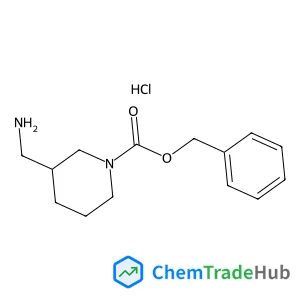
Benzyl 3-(aminomethyl)piperidine-1-carboxylate hydrochloride
CAS Number:
1186663-23-9
Molecular Formula:
C14H21ClN2O2
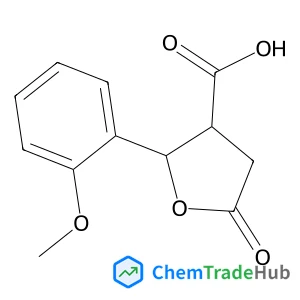
trans-2-(2-Methoxyphenyl)-5-oxotetrahydrofuran-3-carboxylic acid
CAS Number:
99226-02-5
Molecular Formula:
C12H12O5
Recommended Suppliers





Disclaimer
This page provides academic journal information for reference and research purposes only. We are not affiliated with any journal publishers and do not handle publication submissions. For publication-related inquiries, please contact the respective journal publishers directly.
If you notice any inaccuracies in the information displayed, please contact us at support@chemtradehub.com. We will promptly review and address your concerns.