











The potential role of hydrogen bonding in aprotic and protic ionic liquids
Literature Information
Publication Date
2009-07-29
DOI
10.1039/B905634C
Impact Factor
3.676
Authors
Koichi Fumino, Alexander Wulf
View Original
Abstract
Cohesion energies determine the phase behavior of materials. The understanding of interaction energies is in particular interesting for ionic liquids. Here we show experimentally that, in accord with theoretical work, the intermolecular cation–anion interactions in ionic liquids can be detected by far FTIR spectroscopy. The measured vibrational bands of aprotic and protic ionic liquids in the low-frequency range can be referred to the interaction strength between cations and anions in various combinations. It can be shown by DFT B3LYP calculations that these interactions are described by characteristic ratios between Coulomb forces and hydrogen bonds. These ratios can be tuned towards increasing hydrogen bond contributions which is reflected in important macroscopic properties of ionic liquids such as enthalpies of vaporization and viscosities. This opens a new path for tuning the desired properties of this new class of material.
Recommended Journals
Related Literature
Bulk defect chemistry and surface electronic behavior of Zn,Sn codoped In2O3 transparent conducting oxides
Steven P. Harvey, Thomas O. Mason, Christoph Körber, Andreas Klein
2009-03-10
Paper
DOI: 10.1039/B822149A
Analysis of the adsorption state and desorption kinetics of NO2 over Fe–zeolitecatalyst by FT-IR and temperature-programmed desorption
Masaoki Iwasaki, Hirofumi Shinjoh
2010-01-18
Paper
DOI: 10.1039/B923938C
Integrated experimental and computational spectroscopy study on π-stacking interaction: the anisole dimer
Nicola Schiccheri, Massimiliano Pasquini, Giovanni Piani, Giangaetano Pietraperzia, Maurizio Becucci, Vincenzo Barone
2010-09-27
Paper
DOI: 10.1039/C002992K
Correlating phase behaviour and diffusion in mesopores: perspectives revealed by pulsed field gradientNMR
Rustem Valiullin, Jörg Kärger, Roger Gläser
2009-03-16
Perspective
DOI: 10.1039/B822939B
Selective removal of acetylenes from olefin mixtures through specific physicochemical interactions of ionic liquids with acetylenes
Jung Min Lee, Jelliarko Palgunadi, Jin Hyung Kim, Srun Jung, Young-seop Choi, Minserk Cheong, Hoon Sik Kim
2009-11-07
Paper
DOI: 10.1039/B915989D
One-pot electrodeposition, characterization and photoactivity of stoichiometric copper indium gallium diselenide (CIGS) thin films for solar cells‡§
Jia Jia, Kévin Giffard, Kyle Pellarin, Carly Hewson
2010-09-13
Paper
DOI: 10.1039/C0CP00586J
Site-specific Xe additions into Cu–ZSM-5 zeolite
Takashi Yumura, Hiroki Yamashita, Hiroe Torigoe, Hisayoshi Kobayashi, Yasushige Kuroda
2010-01-19
Paper
DOI: 10.1039/B919032E
Electrochemical codeposition of sol–gel films on stainless steel: controlling the chemical and physical coating properties of biomedical implants
Gregory Favaro, Anna Radko, Abraham Jacob Domb, Daniel Mandler
2010-09-28
Paper
DOI: 10.1039/C0CP00601G
Search for the form of fullerene C60 in aqueous medium
Miroslav Gál, Magdaléna Hromadová, Jana Bulíčková, Viliam Kolivoška, Josef Cvačka, Kateřina Nováková, Ladislav Kavan, Markéta Zukalová, Lothar Dunsch
2010-09-22
Paper
DOI: 10.1039/C0CP00986E
Quantum-chemical study and FTIR jet spectroscopy of CHCl3–NH3 association in the gas phase
Michael Hippler, Susanne Hesse, Martin A. Suhm
2010-08-09
Paper
DOI: 10.1039/C0CP00530D
You might also like
Compound Q&A
Is 6-(3-Fluorophenyl)picolinic acid (CAS: 887982-40-3) safe?
6-(3-Fluorophenyl)picolinic acid is generally considered safe for laboratory use...
887982-40-36-(3-Fluorophenyl)pi...
Compound Q&A
What industries use (3R)-3-Pyrrolidinol (CAS: 2799-21-5)?
(3R)-3-Pyrrolidinol is used in the pharmaceutical industry as a precursor for dr...
2799-21-5(3R)-3-Pyrrolidinol
Compound Q&A
What precautions should be taken when handling (4R,5R)-4,5-Diethoxycarbonyl-2,2-dimethyldioxolane (CAS: 59779-75-8)?
When handling (4R,5R)-4,5-Diethoxycarbonyl-2,2-dimethyldioxolane (CAS: 59779-75-...
59779-75-8(4R,5R)-4,5-Diethoxy...
Compound Q&A
How is 1-(6-Chloroimidazo[1,2-b]pyridazin-3-yl)ethanone (CAS: 90734-71-7) typically synthesized?
1-(6-Chloroimidazo[1,2-b]pyridazin-3-yl)ethanone is often synthesized via a mult...
90734-71-71-(6-Chloroimidazo[1...
Compound Q&A
What is the market or research trend for N-Ethyl-3,4-dimethylbenzylamine (CAS: 39180-83-1)?
The market for N-Ethyl-3,4-dimethylbenzylamine (CAS: 39180-83-1) remains steady,...
39180-83-1N-Ethyl-3,4-dimethyl...
Compound Q&A
What is Tert-butyl 3-(pyrrolidin-1-yl)azetidine-1-carboxylate (CAS: 1019008-21-9)?
Tert-butyl 3-(pyrrolidin-1-yl)azetidine-1-carboxylate is a chemical compound wit...
1019008-21-9Tert-butyl 3-(pyrrol...
Compound Q&A
What regulatory guidelines apply to 1-Bromo-3-chloro-2,4-dimethoxybenzene (CAS: 1228956-93-1)?
1-Bromo-3-chloro-2,4-dimethoxybenzene (CAS: 1228956-93-1) falls under the classi...
1228956-93-11-Bromo-3-chloro-2,4...
Compound Q&A
Is 8-Bromo-2-methyl-3,4-dihydroisoquinolin-1(2H)-one (CAS: 1368622-07-4) safe?
The safety of 8-Bromo-2-methyl-3,4-dihydroisoquinolin-1(2H)-one (CAS: 1368622-07...
1368622-07-48-Bromo-2-methyl-3,4...
Compound Q&A
Is Benzyl [(3S)-2,6-dioxo-3-piperidinyl]carbamate (CAS: 22785-43-9) safe?
Benzyl [(3S)-2,6-dioxo-3-piperidinyl]carbamate is generally safe when handled wi...
22785-43-9Benzyl [(3S)-2,6-dio...
Compound Q&A
How should 1-{[4-(4,4,5,5-Tetramethyl-1,3,2-dioxaborolan-2-yl)phenyl]sulfonyl}pyrrolidine (CAS: 928657-21-0) be stored?
1-{[4-(4,4,5,5-Tetramethyl-1,3,2-dioxaborolan-2-yl)phenyl]sulfonyl}pyrrolidine s...
928657-21-01-{[4-(4,4,5,5-Tetra...
Source Journal
Physical Chemistry Chemical Physics

CiteScore:
5.5
Self-citation Rate:
10.3%
Articles per Year:
3036
Physical Chemistry Chemical Physics (PCCP) is an international journal co-owned by 19 physical chemistry and physics societies from around the world. This journal publishes original, cutting-edge research in physical chemistry, chemical physics and biophysical chemistry. To be suitable for publication in PCCP, articles must include significant innovation and/or insight into physical chemistry; this is the most important criterion that reviewers and Editors will judge against when evaluating submissions. The journal has a broad scope and welcomes contributions spanning experiment, theory, computation and data science. Topical coverage includes spectroscopy, dynamics, kinetics, statistical mechanics, thermodynamics, electrochemistry, catalysis, surface science, quantum mechanics, quantum computing and machine learning. Interdisciplinary research areas such as polymers and soft matter, materials, nanoscience, energy, surfaces/interfaces, and biophysical chemistry are welcomed if they demonstrate significant innovation and/or insight into physical chemistry. Joined experimental/theoretical studies are particularly appreciated when complementary and based on up-to-date approaches.
Recommended Compounds
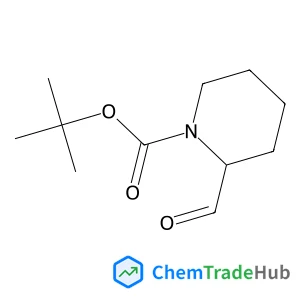
2-Methyl-2-propanyl (2R)-2-formyl-1-piperidinecarboxylate
CAS Number:
134526-69-5
Molecular Formula:
C11H19NO3

Recommended Suppliers






Disclaimer
This page provides academic journal information for reference and research purposes only. We are not affiliated with any journal publishers and do not handle publication submissions. For publication-related inquiries, please contact the respective journal publishers directly.
If you notice any inaccuracies in the information displayed, please contact us at support@chemtradehub.com. We will promptly review and address your concerns.