












Electrochemical codeposition of sol–gel films on stainless steel: controlling the chemical and physical coating properties of biomedical implants
Literature Information
Publication Date
2010-09-28
DOI
10.1039/C0CP00601G
Impact Factor
3.676
Authors
Gregory Favaro, Anna Radko, Abraham Jacob Domb, Daniel Mandler
View Original
Abstract
The electrochemically assisted codeposition of sol–gel thin films on stainless steel is described. Specifically, electrodeposition of films based on aminopropyltriethoxysilane (APTS), and its codeposition with propyltrimethoxysilane (PrTMOS) and phenyltrimethoxysilane (PhTMOS) has been accomplished by applying negative potentials. The latter increases the concentration of hydroxyl ions on the stainless steel surface and thus catalyzes the condensation and deposition of the sol–gel films. The films were characterized by profilometry, electrochemical impedance spectroscopy (EIS), alternating current voltammetry (ACV), goniometry, atomic force microscopy (AFM) and scanning electron microscopy (SEM). AFM and SEM analysis of codeposited APTS ∶ PrTMOS films disclosed the structural changes induced by altering the deposition solution composition and the applied potential. Codeposited APTS ∶ PhTMOS did not show any structural differences from their electrodeposited homopolymers, while Nano Scratch Test clearly revealed the changes in the elastic and adhesion properties, suggesting the formation of an APTS ∶ PhTMOS composite. EIS of the films showed good resistance towards penetration of hydrophilic species, such as hexacyanoferrate. ACV measurements of the homo and codeposits showed the decrease of the interfacial capacity as a result of the electrochemical deposition. In essence, controllable sol–gel films with tunable chemical and physical properties based on controlling the combination of the precursors, pH and electrochemical properties can be electrodeposited on conducting surfaces. The application of this approach has been demonstrated by coating a stainless steel coronary stent.
Related Literature
A photoelectron imaging and quantum chemistry study of the deprotonated indole anion
Michael A. Parkes, Jonathan Crellin, Alice Henley, Helen H. Fielding
2018-05-21
Paper
DOI: 10.1039/C8CP01902A
Full-dimensional analytical potential energy surface describing the gas-phase Cl + C2H6 reaction and kinetics study of rate constants and kinetic isotope effects
Cipriano Rangel, Joaquin Espinosa-Garcia
2018-01-03
Paper
DOI: 10.1039/C7CP07592H
Effects of surface hydroxylation on adhesion at zinc/silica interfaces
Alexey Koltsov, Jean-Michel Mataigne
2018-05-18
Paper
DOI: 10.1039/C8CP02139B
Anisotropic and amphoteric characteristics of diverse carbenes
D. ChangMo Yang, Jenica Marie L. Madridejos, Amir Hajibabaei, Chunggi Baig, Kwang S. Kim
2018-03-15
Paper
DOI: 10.1039/C8CP00457A
Guanidinium/ammonium competition and proton transfer in the interaction of the amino acid arginine with the tetracarboxylic 18-crown-6 ionophore
Juan Ramón Avilés-Moreno, Giel Berden, Jos Oomens, Bruno Martínez-Haya
2018-01-05
Paper
DOI: 10.1039/C7CP07975C
Thermoelectric Bi2Te3−xSex alloys for efficient thermal to electrical energy conversion
Omer Meroz, Yaniv Gelbstein
2018-01-02
Paper
DOI: 10.1039/C7CP06176E
Polydopamine and eumelanin models in various oxidation states
Chun-Teh Chen, Markus J. Buehler
2018-10-09
Paper
DOI: 10.1039/C8CP05037F
Multiionic effects on the capacitance of porous electrodes
M. L. Jiménez, S. Ahualli, P. Arenas-Guerrero, M. M. Fernández, G. Iglesias, A. V. Delgado
2018-01-16
Paper
DOI: 10.1039/C7CP06778J
Harvesting visible light with MoO3 nanorods modified by Fe(iii) nanoclusters for effective photocatalytic degradation of organic pollutants
U. Alam, S. Kumar, J. Koch, C. Tegenkamp, M. Muneer
2018-01-17
Paper
DOI: 10.1039/C7CP08206A
‘Nano on micro’ hierarchical porous all carbon structures: an insight into interfacial interactions with bacteria
Shriram Janghela, Nagendra Singh Neeraj, Kavita Agarwal, Debmalya Roy, Kingsuk Mukhopadhyay, Namburi Eswara Prasad
2018-11-06
Paper
DOI: 10.1039/C8CP05570J
You might also like
Compound Q&A
Is 6-(3-Fluorophenyl)picolinic acid (CAS: 887982-40-3) safe?
6-(3-Fluorophenyl)picolinic acid is generally considered safe for laboratory use...
887982-40-36-(3-Fluorophenyl)pi...
Compound Q&A
What industries use (3R)-3-Pyrrolidinol (CAS: 2799-21-5)?
(3R)-3-Pyrrolidinol is used in the pharmaceutical industry as a precursor for dr...
2799-21-5(3R)-3-Pyrrolidinol
Compound Q&A
What precautions should be taken when handling (4R,5R)-4,5-Diethoxycarbonyl-2,2-dimethyldioxolane (CAS: 59779-75-8)?
When handling (4R,5R)-4,5-Diethoxycarbonyl-2,2-dimethyldioxolane (CAS: 59779-75-...
59779-75-8(4R,5R)-4,5-Diethoxy...
Compound Q&A
How is 1-(6-Chloroimidazo[1,2-b]pyridazin-3-yl)ethanone (CAS: 90734-71-7) typically synthesized?
1-(6-Chloroimidazo[1,2-b]pyridazin-3-yl)ethanone is often synthesized via a mult...
90734-71-71-(6-Chloroimidazo[1...
Compound Q&A
What is the market or research trend for N-Ethyl-3,4-dimethylbenzylamine (CAS: 39180-83-1)?
The market for N-Ethyl-3,4-dimethylbenzylamine (CAS: 39180-83-1) remains steady,...
39180-83-1N-Ethyl-3,4-dimethyl...
Compound Q&A
What is Tert-butyl 3-(pyrrolidin-1-yl)azetidine-1-carboxylate (CAS: 1019008-21-9)?
Tert-butyl 3-(pyrrolidin-1-yl)azetidine-1-carboxylate is a chemical compound wit...
1019008-21-9Tert-butyl 3-(pyrrol...
Compound Q&A
What regulatory guidelines apply to 1-Bromo-3-chloro-2,4-dimethoxybenzene (CAS: 1228956-93-1)?
1-Bromo-3-chloro-2,4-dimethoxybenzene (CAS: 1228956-93-1) falls under the classi...
1228956-93-11-Bromo-3-chloro-2,4...
Compound Q&A
Is 8-Bromo-2-methyl-3,4-dihydroisoquinolin-1(2H)-one (CAS: 1368622-07-4) safe?
The safety of 8-Bromo-2-methyl-3,4-dihydroisoquinolin-1(2H)-one (CAS: 1368622-07...
1368622-07-48-Bromo-2-methyl-3,4...
Compound Q&A
Is Benzyl [(3S)-2,6-dioxo-3-piperidinyl]carbamate (CAS: 22785-43-9) safe?
Benzyl [(3S)-2,6-dioxo-3-piperidinyl]carbamate is generally safe when handled wi...
22785-43-9Benzyl [(3S)-2,6-dio...
Compound Q&A
How should 1-{[4-(4,4,5,5-Tetramethyl-1,3,2-dioxaborolan-2-yl)phenyl]sulfonyl}pyrrolidine (CAS: 928657-21-0) be stored?
1-{[4-(4,4,5,5-Tetramethyl-1,3,2-dioxaborolan-2-yl)phenyl]sulfonyl}pyrrolidine s...
928657-21-01-{[4-(4,4,5,5-Tetra...
Source Journal
Physical Chemistry Chemical Physics

CiteScore:
5.5
Self-citation Rate:
10.3%
Articles per Year:
3036
Physical Chemistry Chemical Physics (PCCP) is an international journal co-owned by 19 physical chemistry and physics societies from around the world. This journal publishes original, cutting-edge research in physical chemistry, chemical physics and biophysical chemistry. To be suitable for publication in PCCP, articles must include significant innovation and/or insight into physical chemistry; this is the most important criterion that reviewers and Editors will judge against when evaluating submissions. The journal has a broad scope and welcomes contributions spanning experiment, theory, computation and data science. Topical coverage includes spectroscopy, dynamics, kinetics, statistical mechanics, thermodynamics, electrochemistry, catalysis, surface science, quantum mechanics, quantum computing and machine learning. Interdisciplinary research areas such as polymers and soft matter, materials, nanoscience, energy, surfaces/interfaces, and biophysical chemistry are welcomed if they demonstrate significant innovation and/or insight into physical chemistry. Joined experimental/theoretical studies are particularly appreciated when complementary and based on up-to-date approaches.
Recommended Compounds
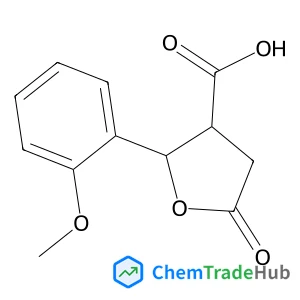
trans-2-(2-Methoxyphenyl)-5-oxotetrahydrofuran-3-carboxylic acid
CAS Number:
99226-02-5
Molecular Formula:
C12H12O5

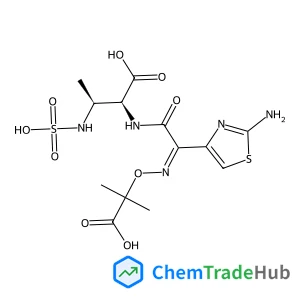
Aztreonam USP Related Compound A (Open-ring Aztreonam)
CAS Number:
87500-74-1
Molecular Formula:
C13H19N5O9S2
Recommended Suppliers






Disclaimer
This page provides academic journal information for reference and research purposes only. We are not affiliated with any journal publishers and do not handle publication submissions. For publication-related inquiries, please contact the respective journal publishers directly.
If you notice any inaccuracies in the information displayed, please contact us at support@chemtradehub.com. We will promptly review and address your concerns.