












Integrated experimental and computational spectroscopy study on π-stacking interaction: the anisole dimer
Literature Information
Publication Date
2010-09-27
DOI
10.1039/C002992K
Impact Factor
3.676
Authors
Nicola Schiccheri, Massimiliano Pasquini, Giovanni Piani, Giangaetano Pietraperzia, Maurizio Becucci, Vincenzo Barone
View Original
Abstract
Integrated experimental and computational results help to clarify the nature of the intermolecular interactions in a simple, isolated π-stacked dimer prepared in a molecular beam. The properties of bimolecular anisole complexes are examined and discussed in terms of the local/supramolecular nature of the electronic wavefunctions. Experimental resonance-enhanced multi-photon ionization spectra of clusters with different isotopic compositions confirmed the fundamentally localized nature of the S1 ← S0 electronic transition. A detail analysis of the experimental results however shows the existence of non-negligible excitonic coupling for the excited-state wavefunctions leading to the doubling of the single-molecule vibronic levels in the S1 state, with a splitting of about 30 cm−1. Theoretical simulation of the vibrationally resolved electronic spectra and computations of the excitonic coupling convincingly support the experimental findings. The overall combined experimental/theoretical study allows a detailed description of the stacking interaction in the anisole dimer.
Related Literature
La–La bonded dimetallofullerenes [La2@C2n]−: species for stabilizing C2n (2n = 92–96) besides La2C2@C2n
Qiao-Zhi Li, Ling He, Shigeru Nagase, Xiang Zhao
2018-04-23
Paper
DOI: 10.1039/C8CP01371C
Guanidinium/ammonium competition and proton transfer in the interaction of the amino acid arginine with the tetracarboxylic 18-crown-6 ionophore
Juan Ramón Avilés-Moreno, Giel Berden, Jos Oomens, Bruno Martínez-Haya
2018-01-05
Paper
DOI: 10.1039/C7CP07975C
Conflicting effect of chemical doping on the thermoelectric response of ordered PEDOT aggregates
Alessandra Catellani, Arrigo Calzolari
2018-01-25
Paper
DOI: 10.1039/C7CP07898F
On the mechanism of rapid metal exchange between thiolate-protected gold and gold/silver clusters: a time-resolved in situ XAFS study
Bei Zhang, Olga V. Safonova, Stephan Pollitt, Giovanni Salassa, Annelies Sels, Rania Kazan, Yuming Wang, Günther Rupprechter, Noelia Barrabés, Thomas Bürgi
2018-01-29
Paper
DOI: 10.1039/C7CP08272J
Ordering of lipid membranes altered by boron nitride nanosheets
Yonghui Zhang, Zhen Li, Chun Chan, Jiale Ma, Chunyi Zhi, Xiaolin Cheng
2017-11-22
Paper
DOI: 10.1039/C7CP07136A
Solute clustering in undersaturated solutions – systematic dependence on time, temperature and concentration
K. Renuka Devi, Dikshitkumar Khamar, Donal Mealey, Dominic Cheuk, Jacek Zeglinski
2018-05-21
Paper
DOI: 10.1039/C8CP01509K
Linear humidity response of carbon dot-modified molybdenum disulfide
Guili He, Da Huang, Zhi Yang, Yutong Han, Jun Hu, Nantao Hu, Yanjie Su, Zhihua Zhou, Yafei Zhang, Yan Zhang
2018-01-04
Paper
DOI: 10.1039/C7CP07125F
A hybrid hydrazine redox flow battery with a reversible electron acceptor
Swapnil Varhade, Zahid M. Bhat, Ravikumar Thimmappa, Mruthyunjayachari C. Devendrachari, Alagar R. Kottaichamy, Manu Gautam, Shahid P. Shafi, Musthafa Ottakam Thotiyl
2018-07-31
Paper
DOI: 10.1039/C8CP03768J
Friction induced structural transformations of water monolayers at graphene/Cu interfaces
Haifang Cai, Yufeng Guo, Wanlin Guo
2018-01-09
Paper
DOI: 10.1039/C7CP08035B
You might also like
Compound Q&A
Is 6-(3-Fluorophenyl)picolinic acid (CAS: 887982-40-3) safe?
6-(3-Fluorophenyl)picolinic acid is generally considered safe for laboratory use...
887982-40-36-(3-Fluorophenyl)pi...
Compound Q&A
What industries use (3R)-3-Pyrrolidinol (CAS: 2799-21-5)?
(3R)-3-Pyrrolidinol is used in the pharmaceutical industry as a precursor for dr...
2799-21-5(3R)-3-Pyrrolidinol
Compound Q&A
What precautions should be taken when handling (4R,5R)-4,5-Diethoxycarbonyl-2,2-dimethyldioxolane (CAS: 59779-75-8)?
When handling (4R,5R)-4,5-Diethoxycarbonyl-2,2-dimethyldioxolane (CAS: 59779-75-...
59779-75-8(4R,5R)-4,5-Diethoxy...
Compound Q&A
How is 1-(6-Chloroimidazo[1,2-b]pyridazin-3-yl)ethanone (CAS: 90734-71-7) typically synthesized?
1-(6-Chloroimidazo[1,2-b]pyridazin-3-yl)ethanone is often synthesized via a mult...
90734-71-71-(6-Chloroimidazo[1...
Compound Q&A
What is the market or research trend for N-Ethyl-3,4-dimethylbenzylamine (CAS: 39180-83-1)?
The market for N-Ethyl-3,4-dimethylbenzylamine (CAS: 39180-83-1) remains steady,...
39180-83-1N-Ethyl-3,4-dimethyl...
Compound Q&A
What is Tert-butyl 3-(pyrrolidin-1-yl)azetidine-1-carboxylate (CAS: 1019008-21-9)?
Tert-butyl 3-(pyrrolidin-1-yl)azetidine-1-carboxylate is a chemical compound wit...
1019008-21-9Tert-butyl 3-(pyrrol...
Compound Q&A
What regulatory guidelines apply to 1-Bromo-3-chloro-2,4-dimethoxybenzene (CAS: 1228956-93-1)?
1-Bromo-3-chloro-2,4-dimethoxybenzene (CAS: 1228956-93-1) falls under the classi...
1228956-93-11-Bromo-3-chloro-2,4...
Compound Q&A
Is 8-Bromo-2-methyl-3,4-dihydroisoquinolin-1(2H)-one (CAS: 1368622-07-4) safe?
The safety of 8-Bromo-2-methyl-3,4-dihydroisoquinolin-1(2H)-one (CAS: 1368622-07...
1368622-07-48-Bromo-2-methyl-3,4...
Compound Q&A
Is Benzyl [(3S)-2,6-dioxo-3-piperidinyl]carbamate (CAS: 22785-43-9) safe?
Benzyl [(3S)-2,6-dioxo-3-piperidinyl]carbamate is generally safe when handled wi...
22785-43-9Benzyl [(3S)-2,6-dio...
Compound Q&A
How should 1-{[4-(4,4,5,5-Tetramethyl-1,3,2-dioxaborolan-2-yl)phenyl]sulfonyl}pyrrolidine (CAS: 928657-21-0) be stored?
1-{[4-(4,4,5,5-Tetramethyl-1,3,2-dioxaborolan-2-yl)phenyl]sulfonyl}pyrrolidine s...
928657-21-01-{[4-(4,4,5,5-Tetra...
Source Journal
Physical Chemistry Chemical Physics

CiteScore:
5.5
Self-citation Rate:
10.3%
Articles per Year:
3036
Physical Chemistry Chemical Physics (PCCP) is an international journal co-owned by 19 physical chemistry and physics societies from around the world. This journal publishes original, cutting-edge research in physical chemistry, chemical physics and biophysical chemistry. To be suitable for publication in PCCP, articles must include significant innovation and/or insight into physical chemistry; this is the most important criterion that reviewers and Editors will judge against when evaluating submissions. The journal has a broad scope and welcomes contributions spanning experiment, theory, computation and data science. Topical coverage includes spectroscopy, dynamics, kinetics, statistical mechanics, thermodynamics, electrochemistry, catalysis, surface science, quantum mechanics, quantum computing and machine learning. Interdisciplinary research areas such as polymers and soft matter, materials, nanoscience, energy, surfaces/interfaces, and biophysical chemistry are welcomed if they demonstrate significant innovation and/or insight into physical chemistry. Joined experimental/theoretical studies are particularly appreciated when complementary and based on up-to-date approaches.
Recommended Compounds
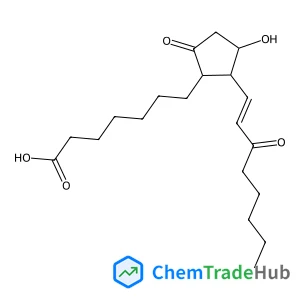
(11alpha,13E)-11-Hydroxy-9,15-dioxoprost-13-en-1-oic acid
CAS Number:
22973-19-9
Molecular Formula:
C20H32O5
![2-[({[(2-Methyl-2-propanyl)oxy]carbonyl}amino)methyl]isonicotinic acid structure](https://static.chemtradehub.com/structs/473/473924-63-9-973b.webp "2-[({[(2-Methyl-2-propanyl)oxy]carbonyl}amino)methyl]isonicotinic acid structure")
2-[({[(2-Methyl-2-propanyl)oxy]carbonyl}amino)methyl]isonicotinic acid
CAS Number:
473924-63-9
Molecular Formula:
C12H16N2O4
Recommended Suppliers




Disclaimer
This page provides academic journal information for reference and research purposes only. We are not affiliated with any journal publishers and do not handle publication submissions. For publication-related inquiries, please contact the respective journal publishers directly.
If you notice any inaccuracies in the information displayed, please contact us at support@chemtradehub.com. We will promptly review and address your concerns.