













Quantum-chemical study and FTIR jet spectroscopy of CHCl3–NH3 association in the gas phase
Literature Information
Publication Date
2010-08-09
DOI
10.1039/C0CP00530D
Impact Factor
3.676
Authors
Michael Hippler, Susanne Hesse, Martin A. Suhm
View Original
Abstract
High level ab initio quantum chemical calculations have been performed on the association of chloroform with ammonia in the gas phase (counterpoise corrected MP2 and coupled-cluster CCSD(T) calculations with 6-311++G(d,p) basis functions). Minimum energy equilibrium structures have been found for CHCl3–NH3 dimer, CHCl3–(NH3)2 trimer and CHCl3–(NH3)3 tetramer. Association is characterised by a CH⋯N hydrogen bond between a chloroform and an ammonia molecule, with further ammonia units attached by hydrogen bonds to ammonia and by an electrostatic NH⋯Cl interaction to chloroform. Cooperative effects provide additional stabilisation. The complexes exhibit characteristic shifts of vibrational bands and change of IR intensity; in particular there is a pronounced progressive shift of the CH-stretching vibration towards lower wavenumber with each unit of ammonia attached in the complex. The shift is accompanied by an up to 600 fold increase in IR intensity. The experimental FTIR jet spectra have provided firm evidence of CHCl3–NH3 association, with the clearest effects seen in the region of the CH-stretching vibration. First tentative assignments have been made based on the dependence of relative intensities of cluster features on the concentration of monomers, and assignments have been corroborated by the quantum chemical calculations. The present combined ab initio and FTIR spectroscopy study reveals the structure and energetics of cluster formation and intermolecular bonding in CHCl3–NH3 association.
Related Literature
Triphenylamine based yellowish-orange light emitting organic dyes (donor–π–acceptor) for hybrid WLEDs and OLEDs: synthesis, characterization and theoretical study
Aravind Babu Kajjam, P. Shyam Vinod Kumar, V. Subramanian, Sivakumar Vaidyanathan
2018-01-15
Paper
DOI: 10.1039/C7CP08670A
Atomistic insights into the exothermic self-sustained alloying of Al-shell/Ni-core nanoparticle triggered by laser irradiation
Yiming Rong, Pengfei Ji, Mengzhe He, Yuwen Zhang, Yong Tang
2018-07-12
Paper
DOI: 10.1039/C8CP03017K
On the physics of both surface overcharging and charge reversal at heterophase interfaces
Zhi-Yong Wang, Pengli Zhang, Zengwei Ma
2018-01-04
Paper
DOI: 10.1039/C7CP08117K
Why does the Y326I mutant of monoamine oxidase B decompose an endogenous amphetamine at a slower rate than the wild type enzyme? Reaction step elucidated by multiscale molecular simulations
Urška Jug, Janez Mavri, Jernej Stare
2018-01-23
Paper
DOI: 10.1039/C7CP07069A
On the mechanism of rapid metal exchange between thiolate-protected gold and gold/silver clusters: a time-resolved in situ XAFS study
Bei Zhang, Olga V. Safonova, Stephan Pollitt, Giovanni Salassa, Annelies Sels, Rania Kazan, Yuming Wang, Günther Rupprechter, Noelia Barrabés, Thomas Bürgi
2018-01-29
Paper
DOI: 10.1039/C7CP08272J
Theoretical study on photo-induced processes of 1-methyl-3-(N-(1,8-naphthalimidyl)ethyl)imidazolium halide species: an application of constrained density functional theory
Takao Otsuka, Hironori Izawa, Kenji Morihashi
2017-12-08
Paper
DOI: 10.1039/C7CP07877C
Experimental strategies for 13C–15N dipolar NMR spectroscopy in liquid crystals at the natural isotopic abundance
Lukas Jackalin, Boris B. Kharkov, Andrei V. Komolkin
2018-08-08
Paper
DOI: 10.1039/C8CP04161J
Polydopamine and eumelanin models in various oxidation states
Chun-Teh Chen, Markus J. Buehler
2018-10-09
Paper
DOI: 10.1039/C8CP05037F
Low-temperature solution-processed vanadium oxide as hole transport layer for efficient and stable perovskite solar cells
Qiang Guo, Chenyun Wang, Jinyan Li, Yiming Bai, Fuzhi Wang, Lin Liu, Bing Zhang, Ahmed Alsaedi, Zhan’ao Tan
2018-08-01
Paper
DOI: 10.1039/C8CP03223H
Phase transition-like behavior of the water monolayer close to the polarized surface of a nanotube
Li Zeng, Xiaoyan Zhou, Xiao Huang, Hangjun Lu
2018-07-17
Paper
DOI: 10.1039/C8CP03083A
You might also like
Compound Q&A
Is 6-(3-Fluorophenyl)picolinic acid (CAS: 887982-40-3) safe?
6-(3-Fluorophenyl)picolinic acid is generally considered safe for laboratory use...
887982-40-36-(3-Fluorophenyl)pi...
Compound Q&A
What industries use (3R)-3-Pyrrolidinol (CAS: 2799-21-5)?
(3R)-3-Pyrrolidinol is used in the pharmaceutical industry as a precursor for dr...
2799-21-5(3R)-3-Pyrrolidinol
Compound Q&A
What precautions should be taken when handling (4R,5R)-4,5-Diethoxycarbonyl-2,2-dimethyldioxolane (CAS: 59779-75-8)?
When handling (4R,5R)-4,5-Diethoxycarbonyl-2,2-dimethyldioxolane (CAS: 59779-75-...
59779-75-8(4R,5R)-4,5-Diethoxy...
Compound Q&A
How is 1-(6-Chloroimidazo[1,2-b]pyridazin-3-yl)ethanone (CAS: 90734-71-7) typically synthesized?
1-(6-Chloroimidazo[1,2-b]pyridazin-3-yl)ethanone is often synthesized via a mult...
90734-71-71-(6-Chloroimidazo[1...
Compound Q&A
What is the market or research trend for N-Ethyl-3,4-dimethylbenzylamine (CAS: 39180-83-1)?
The market for N-Ethyl-3,4-dimethylbenzylamine (CAS: 39180-83-1) remains steady,...
39180-83-1N-Ethyl-3,4-dimethyl...
Compound Q&A
What is Tert-butyl 3-(pyrrolidin-1-yl)azetidine-1-carboxylate (CAS: 1019008-21-9)?
Tert-butyl 3-(pyrrolidin-1-yl)azetidine-1-carboxylate is a chemical compound wit...
1019008-21-9Tert-butyl 3-(pyrrol...
Compound Q&A
What regulatory guidelines apply to 1-Bromo-3-chloro-2,4-dimethoxybenzene (CAS: 1228956-93-1)?
1-Bromo-3-chloro-2,4-dimethoxybenzene (CAS: 1228956-93-1) falls under the classi...
1228956-93-11-Bromo-3-chloro-2,4...
Compound Q&A
Is 8-Bromo-2-methyl-3,4-dihydroisoquinolin-1(2H)-one (CAS: 1368622-07-4) safe?
The safety of 8-Bromo-2-methyl-3,4-dihydroisoquinolin-1(2H)-one (CAS: 1368622-07...
1368622-07-48-Bromo-2-methyl-3,4...
Compound Q&A
Is Benzyl [(3S)-2,6-dioxo-3-piperidinyl]carbamate (CAS: 22785-43-9) safe?
Benzyl [(3S)-2,6-dioxo-3-piperidinyl]carbamate is generally safe when handled wi...
22785-43-9Benzyl [(3S)-2,6-dio...
Compound Q&A
How should 1-{[4-(4,4,5,5-Tetramethyl-1,3,2-dioxaborolan-2-yl)phenyl]sulfonyl}pyrrolidine (CAS: 928657-21-0) be stored?
1-{[4-(4,4,5,5-Tetramethyl-1,3,2-dioxaborolan-2-yl)phenyl]sulfonyl}pyrrolidine s...
928657-21-01-{[4-(4,4,5,5-Tetra...
Source Journal
Physical Chemistry Chemical Physics

CiteScore:
5.5
Self-citation Rate:
10.3%
Articles per Year:
3036
Physical Chemistry Chemical Physics (PCCP) is an international journal co-owned by 19 physical chemistry and physics societies from around the world. This journal publishes original, cutting-edge research in physical chemistry, chemical physics and biophysical chemistry. To be suitable for publication in PCCP, articles must include significant innovation and/or insight into physical chemistry; this is the most important criterion that reviewers and Editors will judge against when evaluating submissions. The journal has a broad scope and welcomes contributions spanning experiment, theory, computation and data science. Topical coverage includes spectroscopy, dynamics, kinetics, statistical mechanics, thermodynamics, electrochemistry, catalysis, surface science, quantum mechanics, quantum computing and machine learning. Interdisciplinary research areas such as polymers and soft matter, materials, nanoscience, energy, surfaces/interfaces, and biophysical chemistry are welcomed if they demonstrate significant innovation and/or insight into physical chemistry. Joined experimental/theoretical studies are particularly appreciated when complementary and based on up-to-date approaches.
Recommended Compounds
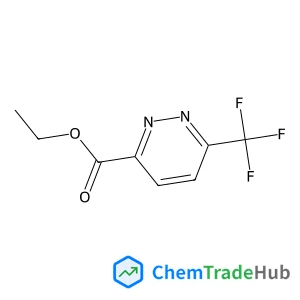
Ethyl 6-(trifluoromethyl)pyridazine-3-carboxylate
CAS Number:
1192155-06-8
Molecular Formula:
C8H7F3N2O2
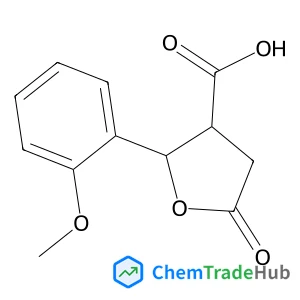
trans-2-(2-Methoxyphenyl)-5-oxotetrahydrofuran-3-carboxylic acid
CAS Number:
99226-02-5
Molecular Formula:
C12H12O5
Recommended Suppliers






Disclaimer
This page provides academic journal information for reference and research purposes only. We are not affiliated with any journal publishers and do not handle publication submissions. For publication-related inquiries, please contact the respective journal publishers directly.
If you notice any inaccuracies in the information displayed, please contact us at support@chemtradehub.com. We will promptly review and address your concerns.